
★★★★★
"Coastline was wonderful to work with. They repaired and replaced our roof because of Milton. From beginning to end the roof was done in 2 days..."Sharon T.Hurricane Milton roof replacement, Florida Gulf Coast
Stay inside, off the roof and off any ladder. Put buckets and towels under the drips, move furniture and electronics away, and keep everyone clear of a sagging ceiling. If water is near wiring, cut power only from a dry spot. Photograph the damage for your insurer, then call a roofer for a same-day tarp.
Water coming through the ceiling makes you want to fix it right now. The safe moves are small ones, and every one of them happens indoors. Here is what to do in order, what to leave alone, and what your insurer expects while you wait.
Protect people first, then contain the water. Every step here happens indoors. The roof waits for a crew.
No climbing, no ladder, and no going outside while the storm is still blowing.
If water is near a light, fan, outlet or switch, don't touch it. Turn off power at the breaker only if you can reach the panel from a dry spot without touching water or anything wet. If you would have to stand in water to get there, stay away and call an electrician, as the CDC advises. If you see smoke or flames, get everyone out and call 911 from outside. More on water dripping from a light or ceiling fan.
A bulge means water is pooled above it. Keep people and pets out from under it.
Set buckets or a trash can under each drip (never under a light or fan), with towels around them and a plastic sheet underneath. Move furniture, rugs and valuables out of the wet area. Unplug electronics only if your hands, the floor, the cord and the outlet are all dry. If any of them is wet, leave it alone.
Photograph and video the drip, the ceiling and anything soaked. Keep damaged belongings for the adjuster to see.
Call a licensed roofer. While you wait, you can text photos of the ceiling to (941) 345-0072.
Get everyone out from under it, and out of the room if it is sagging badly or cracking. If you drain it, follow the American Red Cross method exactly, safety steps first.
The Red Cross says a sagging ceiling "got wet," which makes it "heavy and dangerous," and that it will have to be replaced. Its method, in its own words:
Slide a bucket into place first without stepping under the bulge (our common sense, not a Red Cross step).
This is our advice, not the Red Cross's. If the bulge is at or near a light fixture, ceiling fan or any wiring, don't poke it and don't stand near it. Treat it as an electrical hazard. If the ceiling is sagging badly or cracking, or you don't have the eye protection, hard hat and long stick, don't try it: get everyone out, close off the room, and call us.
Not for good. From inside the house you can only control where the water goes. The temporary fix that actually stops a leak goes on the outside, as a tarp or a temporary repair, once it is safe to work up there.
Here is what does help from the inside:
What does not work: roof cement or caulk smeared on the underside of the roof deck. The water is coming in from outside, so sealing the inside face only moves where it comes out, and the wood stays wet.
The real temporary fix is on the outside. Florida DFS says your insurance contract requires you to make temporary repairs to prevent further damage, and NRCA and OSHA explain why that roof work belongs to a roofer, not a homeowner on a ladder. We can put on a temporary repair or a tarp, then find the source once the roof is dry. If your leak only shows up in the heaviest storms, read why a roof leaks only in heavy rain.
Because a wet, storm-damaged roof hurts even professionals. The National Roofing Contractors Association tells homeowners to assess roof damage from ground level and not attempt repairs on their own. That includes tarping.
In 2024, roofers had a fatal work injury rate of 48.7 per 100,000 full-time equivalent workers, with 104 deaths, according to the Bureau of Labor Statistics. In its chart of selected occupations, only logging workers and fishing and hunting workers were higher.
OSHA warns that workers who go up to install tarps "are at risk of falls, electrocutions and other hazards." Its advice to crews: "Do not walk on a tarp. A tarped roof will be very slippery, especially when wet."
OSHA tells employers not to let workers "work on top of a damaged roof until after the strength and structural integrity of the roof has been determined." After a storm, nobody has checked yours yet.
From 2017 to 2021, U.S. emergency departments treated an estimated 181,400 ladder-related fall injuries among adults 65 and older, the Consumer Product Safety Commission reports.
Stop further damage, photograph it, and keep every receipt. The Florida Department of Financial Services (DFS) says it plainly: "You are required by your insurance contract to make temporary repairs to prevent further damage."
| Item | What to do | Who says so |
|---|---|---|
| Photos | Photograph the damage before temporary repairs, if you can. | Florida DFS |
| Temporary repairs | Have reasonable ones made, like a roofer's tarp, to stop more damage. Keep records. | Florida DFS |
| Receipts | Keep every receipt for emergency materials and work. | Florida DFS, Triple-I (Insurance Information Institute) |
| Damaged belongings | Don't throw them out until the insurer has inspected. | Florida DFS |
| Permanent repairs | "Don't make extensive permanent repairs until the claims adjuster has assessed the damage." | Triple-I (Insurance Information Institute) |
| Reporting | Report the claim as soon as possible. | Florida DFS |
We're a roofing contractor, not a lawyer, public adjuster or insurance agent, so read your own policy or ask a licensed professional about your situation. Claim deadlines are covered in spotting storm damage you can't see from the ground.
We run 24/7 emergency tarping, and in most cases we tarp the same day across Manatee, South Pinellas and South Hillsborough. The tarp goes on once it is safe to work on the roof.
We answer every call we can, and if we miss it we call you back the same day. We secure the roof, document the damage with photos for your insurance claim, and schedule the permanent repair as soon as the weather allows. Most homeowner policies cover emergency tarping after a covered loss, but not all do, so check yours.
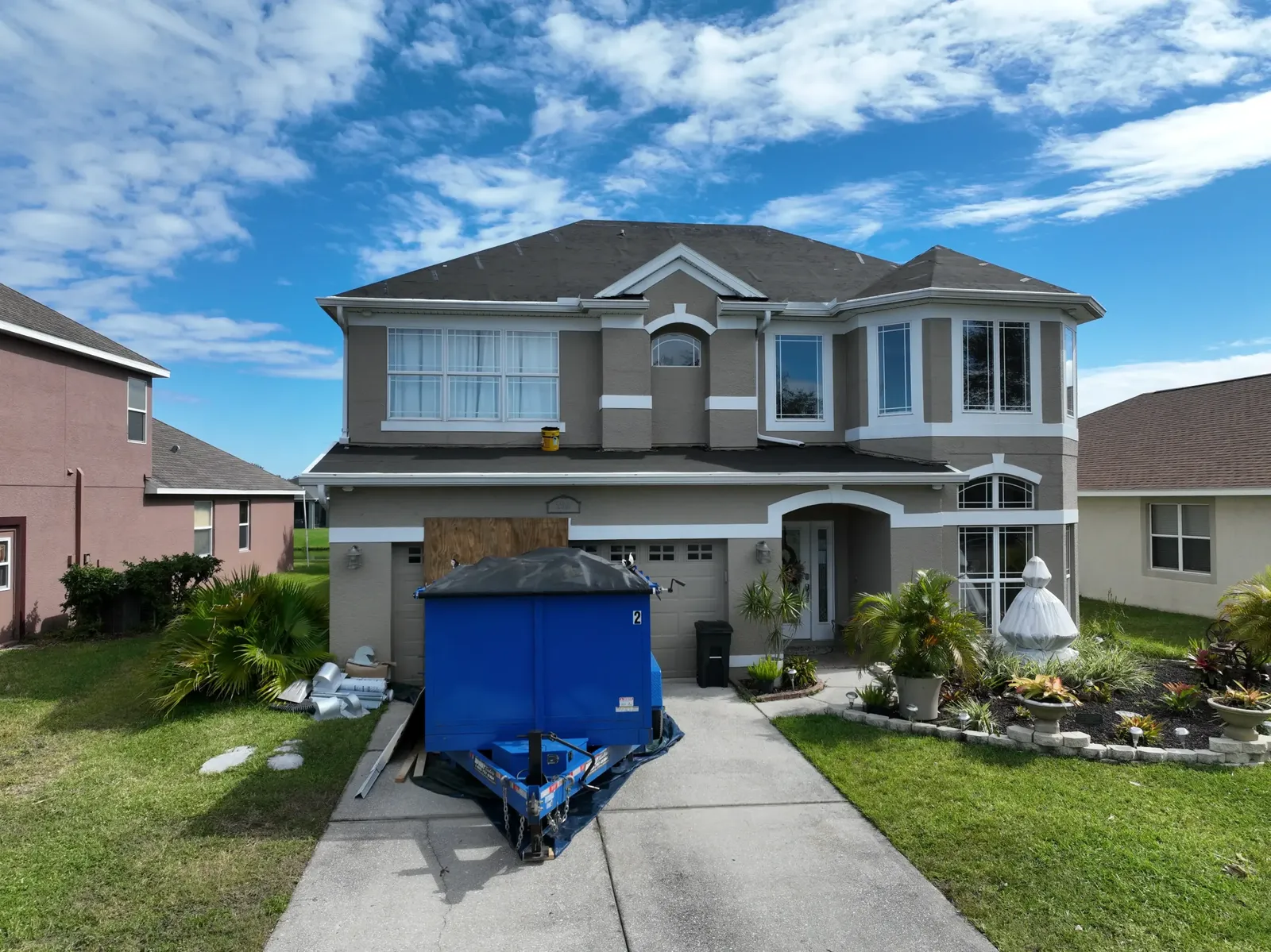
It's a free federal program: the U.S. Army Corps of Engineers, on behalf of FEMA, covers damaged roofs with fiber-reinforced sheeting until permanent repairs can be made. It isn't an emergency line. It starts only after FEMA assigns the mission at the state's request, for named counties. After Hurricane Milton, it was open only to primary residences or permanently occupied rentals with less than 50 percent structural damage, and roofs that were flat or made of metal, clay, slate or asbestos tile did not qualify. Report anyone charging for it to the FEMA Disaster Fraud Hotline, 1-866-720-5721. Blue tarp up for months? See signs a storm tarp has failed.
The tarp buys time; it is not the fix. Next comes an inspection to find where the water got in, then a repair or replacement plan.
Our roof inspection is Free, with no trip fee and no diagnostic fee. It is drone-assisted, and the written photo report is yours to keep and share with your adjuster. For where Gulf Coast leaks usually start, see what to do when your roof is leaking.
If a repair will stop it, that's what we'll recommend. Repairs carry our 1-year workmanship warranty unless otherwise noted in the contract. If the storm took shingles off, read what missing shingles mean for your roof. How a tarp call runs is on our 24/7 emergency tarping service page.
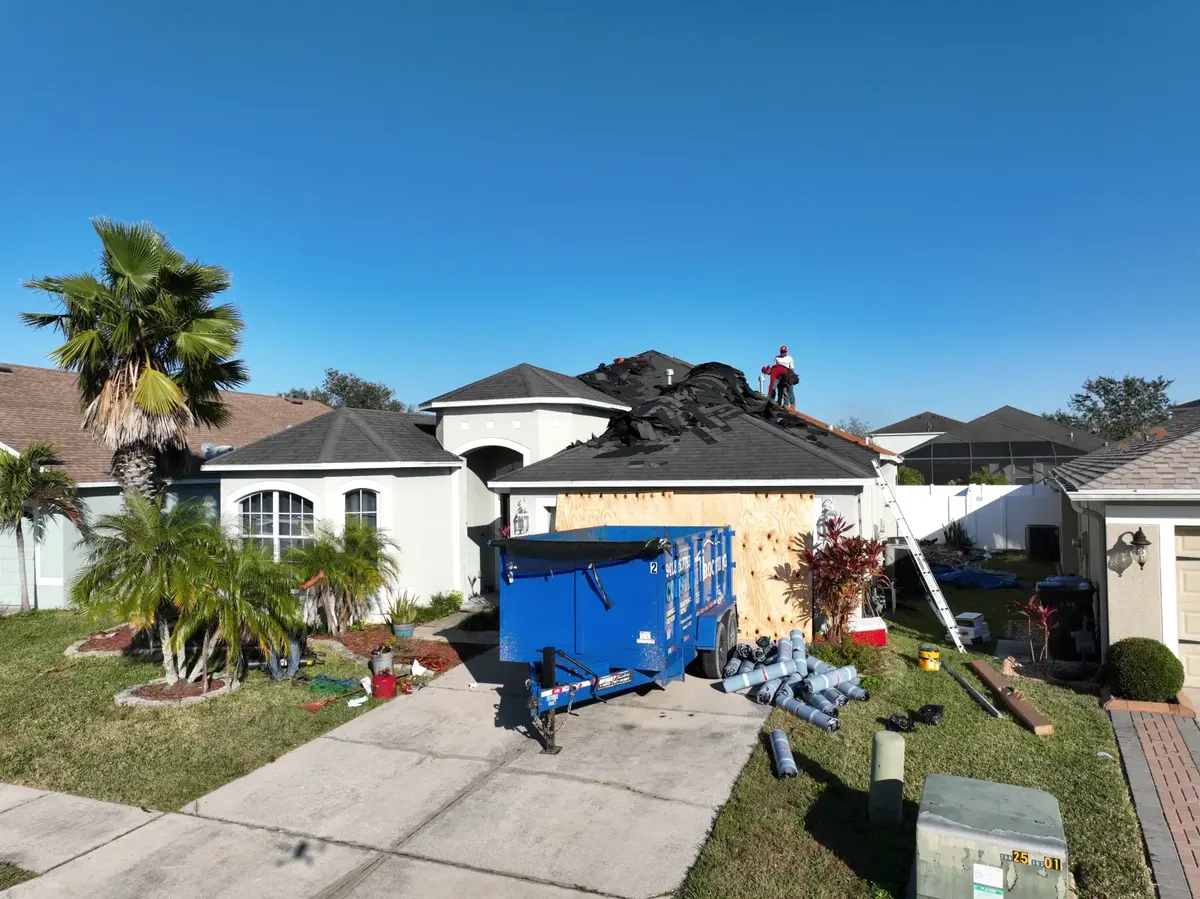
"Coastline was wonderful to work with. They repaired and replaced our roof because of Milton. From beginning to end the roof was done in 2 days..."Sharon T.Hurricane Milton roof replacement, Florida Gulf Coast
"Very quick and professional. We only had one problem which was my grandma's roof and they also check the ceiling for any leaks. Thank you Coastline."Christian P.Roof repair, Florida Gulf Coast
"Fast and professional service."Dawn K.Roofing customer, Florida Gulf Coast
A licensed electrician should check it first. The CDC's guidance for homes that took on water is to have an electrician check the electrical system before turning the power on again. We're roofers, not electricians: we stop the water, and an electrician clears the wiring.
Do both the same day. Your policy expects you to prevent further damage, and DFS says to report the claim as soon as possible. Take your indoor photos before cleanup.
Yes. The rain stopped, not the leak. The opening is still there for the next storm. If all you have now is a dry stain, our guide to a water stain on the ceiling helps you tell whether it is the roof.
Please don't. Any patch means a ladder and a wet roof, the exact risk NRCA and OSHA warn about. Keep your work indoors: buckets, towels, photos and a call for a tarp.
The temporary fix that works is a tarp or a temporary repair on the outside of the roof, put on by a roofer once it is safe. Until then, contain the water inside: buckets and towels in the room, and a bucket on a board across the attic joists if you can get there safely.
Use the dry days. Note when it leaked and which way the wind blew, watch the gutters from a window during the next downpour, and get the source traced before the next storm. Our guide to leaks that only happen in heavy rain covers the usual causes.
24/7 emergency tarping, same-day in most cases across Manatee, South Pinellas and South Hillsborough. Stay inside and let the crew handle the roof. Afterward, a free inspection with a written photo report, no trip or diagnostic fee.
Leave your name and number. We typically call back the same day during business hours. Consent to texts is not required.