
1
Drone diagnostic flight
We fly the roof from above before anyone walks on it. Drone photos pinpoint cracked tiles, slipped courses, ridge mortar failures, and flashing problems without breaking more tile in the process.
Concrete and clay tile roofs commonly last 50+ years on Florida homes. The underlayment underneath does not. Coastline repairs cracked tiles, fixes flashing, re-beds ridge tiles, and re-underlays existing tile when the original is still sound. We use drone diagnostics to find the leaks other roofers walk right over. Two of our most-shared reviews start with "two other companies tried first."
A water stain on a tile-roof ceiling almost never starts where you see it. Tiles shed water, but the actual waterproofing layer is the underlayment underneath. When that fails, water travels along the deck and shows up rooms away from the source. We diagnose tile leaks with drone photography from above and trace the path back to the failure. Most tile-roof homeowners we meet do not need a full replacement. They need the right repair, done correctly the first time.
Both last decades. Here's how we steer the choice on the estimate.
Dense, durable, color baked through. The most common Florida tile by a wide margin and the easiest to find color matches for during repairs.
Traditional Mediterranean look. Color is the natural fired clay and never fades. The premium choice on Florida-style and Spanish Revival homes.
Original tile-rated underlayment does its job. Tile sheds bulk water, underlayment catches anything that gets past, deck stays dry.
Florida heat cooks the underlayment from above. The membrane gets brittle, tears at fastener points, and starts to fail in localized spots. Leaks show up in random rooms after heavy rain. The tile still looks perfect because it is. A solar attic fan moves the trapped heat out before it accelerates this underlayment breakdown, solar-powered with no monthly operating cost.
Most homeowners we meet at this stage have been told they need a full tile replacement. Often that's wrong. If the tile inventory is still sound, we can lift it, replace the underlayment with a modern high-temp membrane, and re-set the original tile. You get a new waterproofing layer and another 25 to 30 years of life out of tile that was ready to keep going. We tell you which path you're on after the drone inspection, with photos.
Tile itself is not the failure point on most 25-plus-year Florida roofs. Concrete and clay tile routinely lasts 50 years or more. What fails is the underlayment beneath it. Understanding that distinction can save you tens of thousands of dollars.
We remove the existing tile course by course, number each tile so it goes back in its original position, strip the failed underlayment down to the deck, inspect the deck for any soft spots, install a new high-temperature tile-rated underlayment, and re-set the original tile. You end up with a fresh waterproofing layer and your existing tile back in place. Industry cost guidance puts re-underlayment at roughly 60 to 70% of the cost of a full tile replacement, because you are not paying for new material on a roof system that was only partially worn out. Pitch Roofing: Re-underlayment vs. Replacement cost context
Re-underlayment works when the tile inventory is sound. Full replacement is the correct path when: tile is cracked or spalling across more than 30% of the roof; mortar and flashing failures are widespread; the homeowner is upgrading to a different profile; or a storm event damaged the tile itself and an insurance claim is open for full replacement. Florida Building Code Section 706.1.1 also requires full code compliance when repairs exceed 25% of the total roof area, which can trigger replacement requirements on larger storm claims for roofs built before the 2007 code. Florida Building Code Section 706.1.1
| Situation | Likely path |
|---|---|
| Leaking after rain, tile looks intact | Re-underlayment |
| Cracked or broken tile on 30%+ of surface | Full replacement |
| Storm impact, insurance claim open | Inspection determines scope |
| Tile profile discontinued, poor match for repairs | Full replacement |
| 25+ years old, sound tile, deck confirmed solid | Re-underlayment |
We confirm the path in writing after the drone inspection, with photos of the underlayment condition and tile inventory count. You are never guessing.
We fly the roof from above before anyone walks on it. Drone photos pinpoint cracked tiles, slipped courses, ridge mortar failures, and flashing problems without breaking more tile in the process.
Photo report in hand, we walk you through what we found and explain which path actually fits your roof. We don't push replacement when re-underlayment is the right call.
Affected tiles are lifted, the underlayment patched or replaced, flashing renewed, and the original tile re-set when possible. Crews are trained on tile-specific handling so we don't snowball one repair into ten broken tiles.
Final photos document the completed repair. Workmanship warranty in writing. Manufacturer warranty pass-through on full installs and re-underlayment jobs.
Tile roof costs vary widely with the work needed. A spot repair on a few cracked tiles is a different conversation than a full re-underlayment. We give you a written quote with all three paths spelled out: spot repair, re-underlay with original tile retained, or full replacement. You choose with the photo evidence in hand.
"Josh was very thorough diagnosing a hard-to-find leak on a tile roof, after 2 other roofing companies tried but failed to catch the problem. ... Great work at a fair price, great service."
"Loved how Josh used his drone to identify cracked and slipped roof tiles and sent us the photos. Photos also taken of completed work."
Each city in our service area has its own tile roofing page with neighborhood-specific content, local HOA and permit context, and city-specific FAQs.
Tile trouble after a storm? See My Tile Roof Is Cracking: Repair or Replace? and Wind-Lifted Roof Tiles: Repair or Replace? for what to check first. Worried a roofer will crack tiles walking on your roof? Here is how to walk a tile roof without cracking it. Pricing a new tile roof? Here is what a tile roof costs in Florida, with sourced market ranges.
In Sarasota? See tile roof repair in Sarasota.
Concrete and clay tile roofs commonly last 50+ years in Florida. Clay tile in particular often outlives the original homeowner. The catch is that the underlayment underneath usually fails decades before the tile does. The right move at year 25 to 30 is often a re-underlayment, not a full replacement.
Yes. We replace broken tiles, fix flashing, and re-bed ridge tiles without tearing off the whole roof when the underlayment is still sound. We diagnose with a drone first so we know whether spot repair will hold or whether the underlayment is failing more broadly.
Re-underlayment lifts the existing tile, replaces the failing underlayment beneath it with a new high-temp tile-rated membrane, and re-sets the original tile back on the roof. You get a brand-new waterproofing layer and keep the original tile, which is usually still sound. Cost is meaningfully lower than tearing off and installing all-new tile.
Walking a tile roof to find a leak breaks more tiles than it finds. Drone photography from above identifies cracked tiles, slipped tiles, ridge mortar failures, and flashing issues without anyone setting foot on the roof. It's the right diagnostic tool for tile, full stop.
For concrete tile, yes, almost always. The major Florida concrete tile manufacturers maintain color and profile inventory going back decades. Clay tile color matching can be harder on older homes. We'll show you sample tiles before any repair so you can sign off on the match.
Both work. Concrete tile is the more common, more affordable choice and lasts 50+ years. Clay tile is the premium option, lasts 75 to 100+ years, and the color is fired into the clay so it never fades. On Spanish Revival and Mediterranean homes, clay is the authentic look. On most other Florida homes, concrete is the value choice.
Often yes. The licensed inspector we coordinate records the new underlayment, secondary water resistance, and any updated fastener pattern on the wind mit form. Many Florida insurers reward a re-underlayment the same way they reward a full replacement when the membrane is the failure point being corrected.
Most single-family tile re-underlayment jobs run 5 to 10 days, depending on size and tile condition. Tiles are lifted in sections, the underlayment is replaced, and tiles are re-set as we go. We give an exact timeline before the job starts.
Drone aerials and ground shots from completed Coastline jobs. No stock photos.
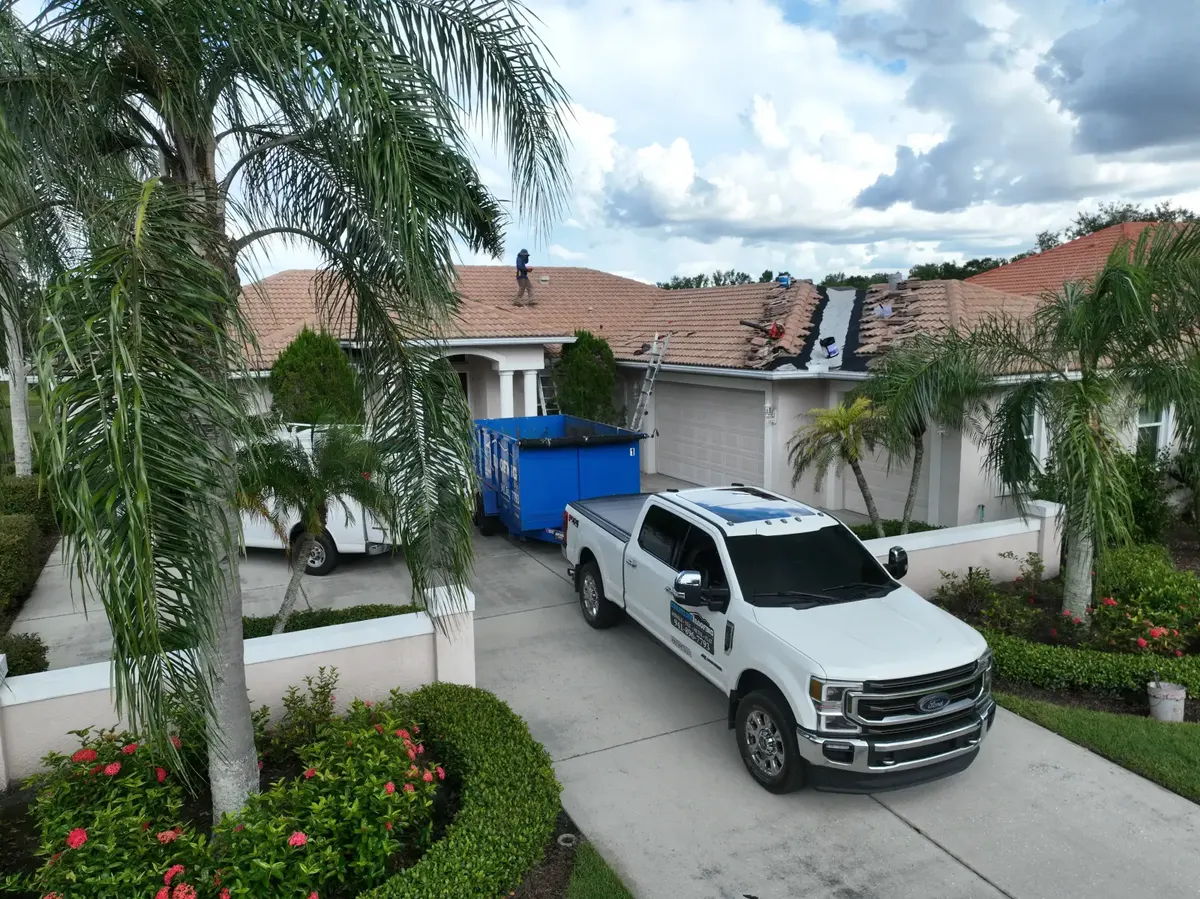
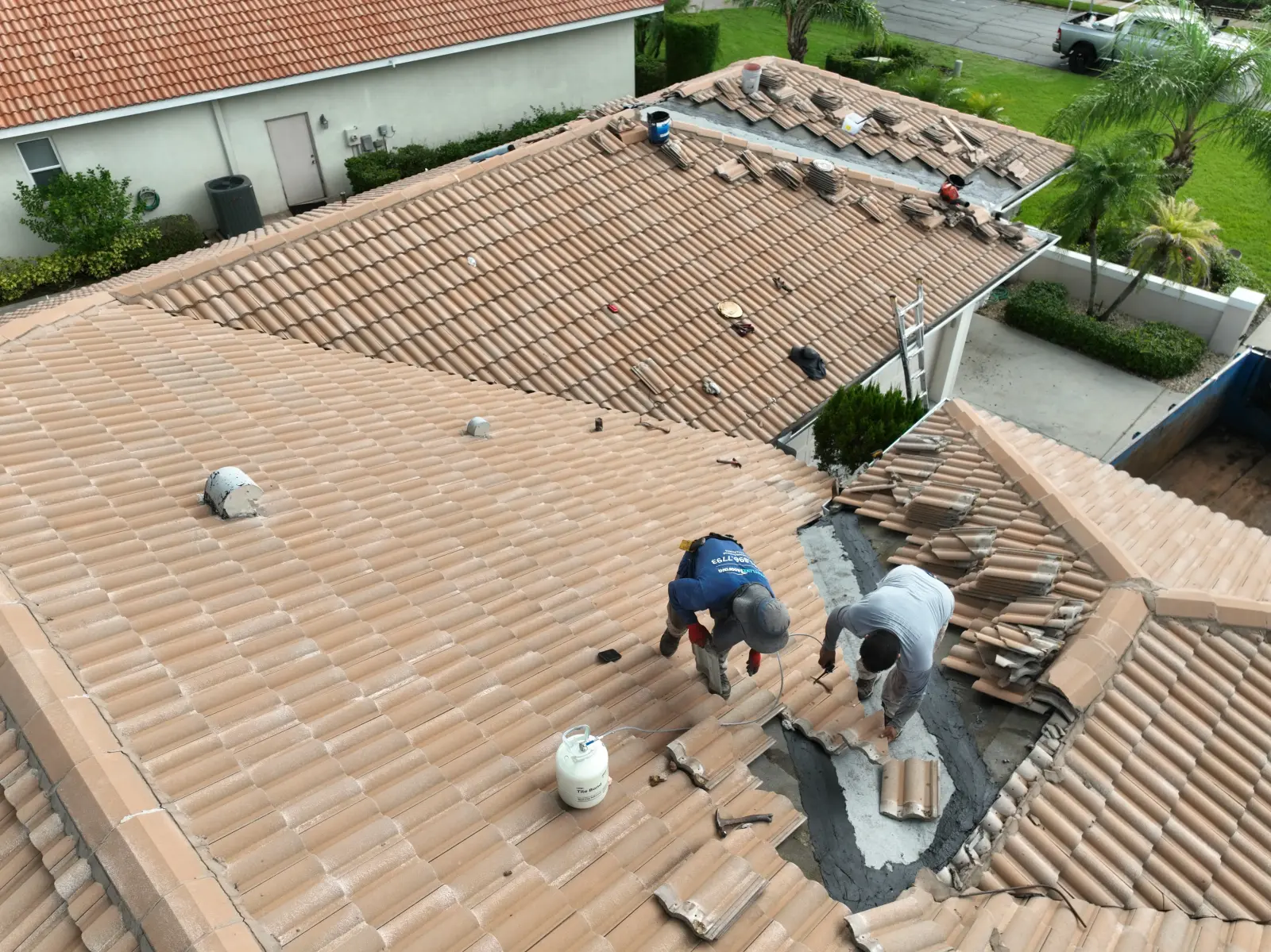
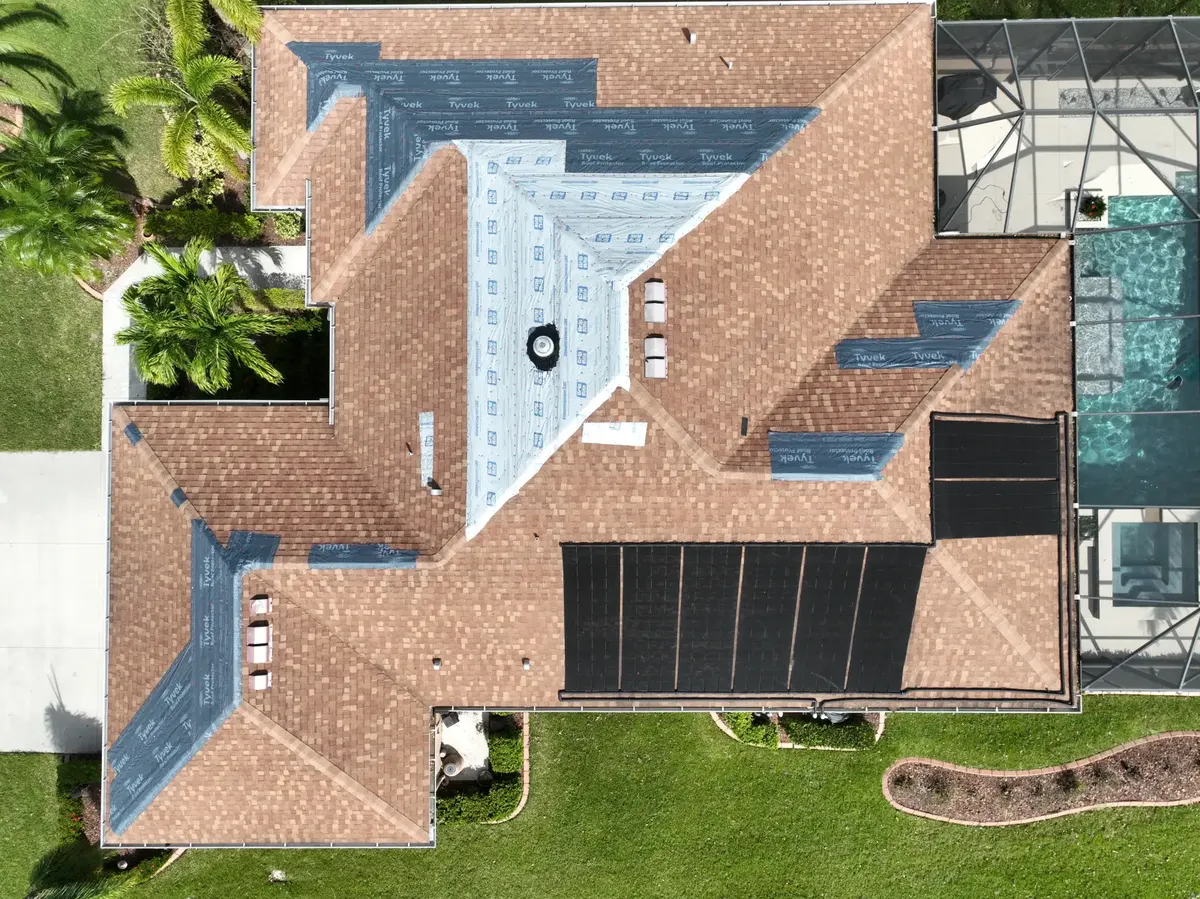
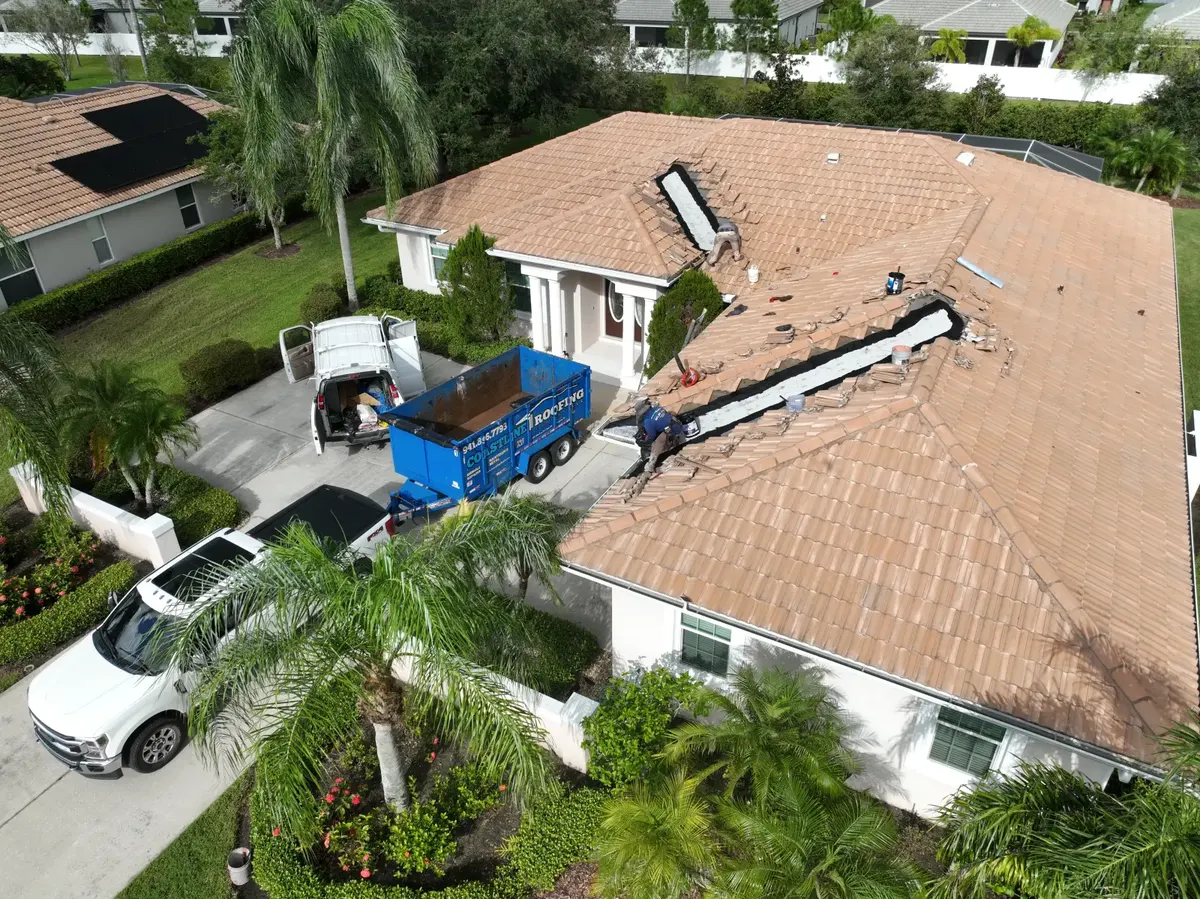
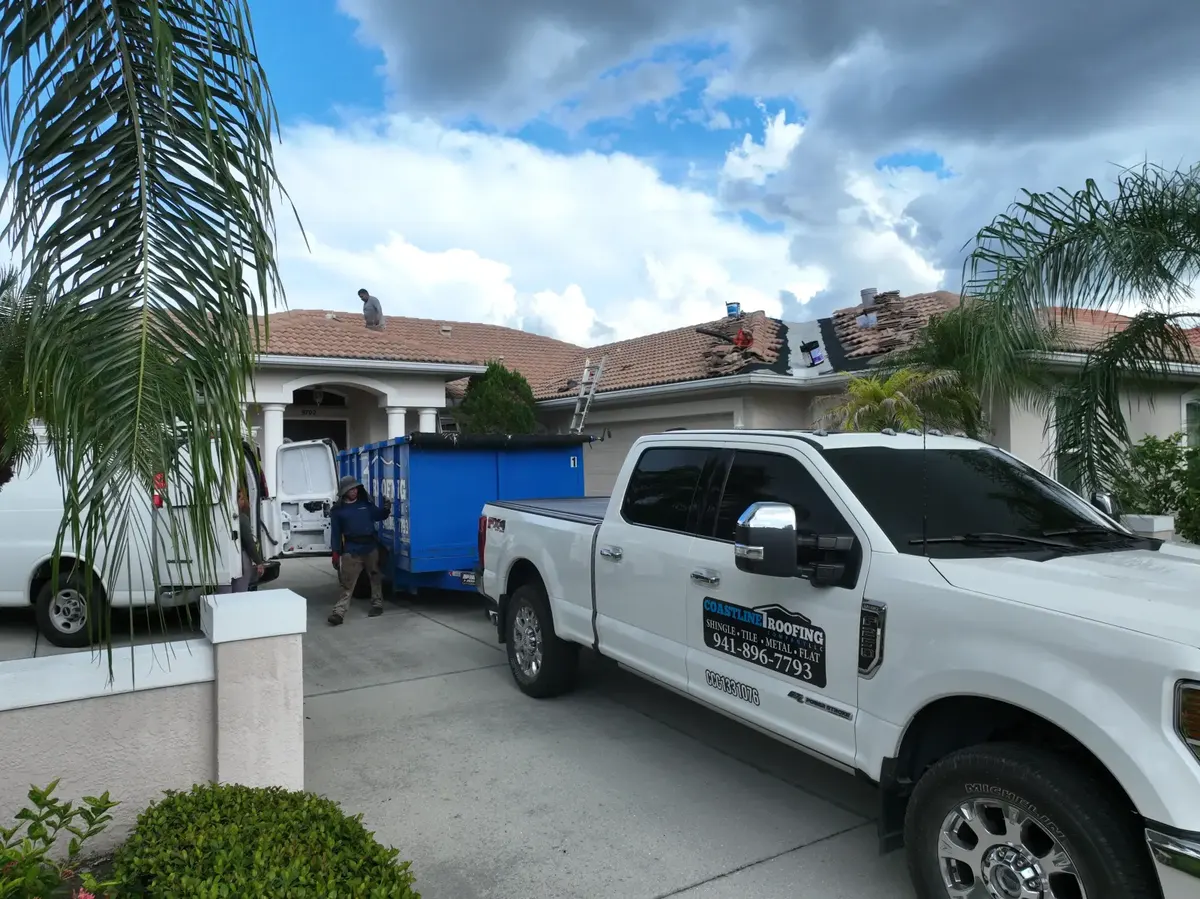
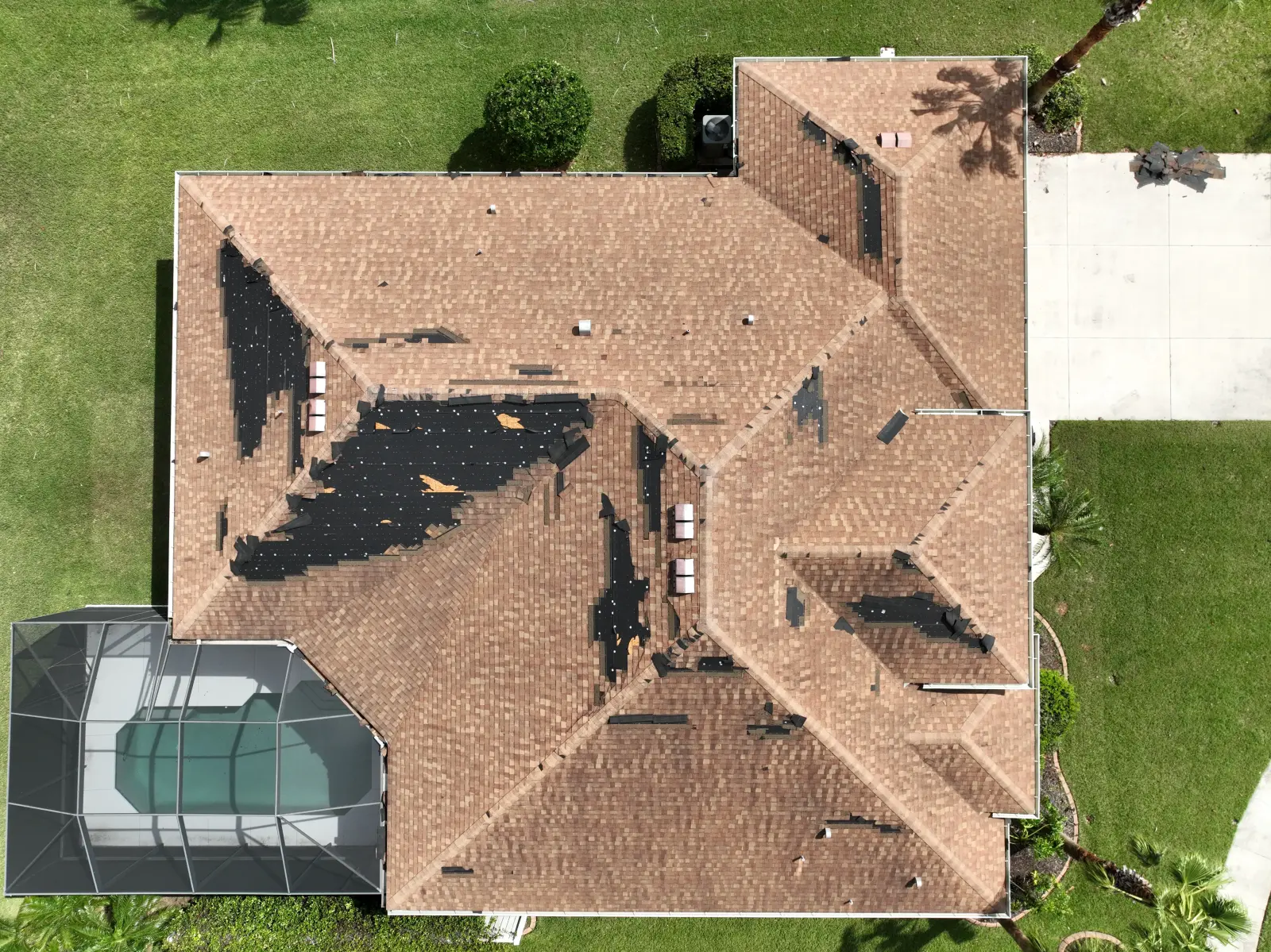
Free drone inspection, photo report, written quote with three repair paths laid out side by side.
Leave your name and number. We typically call back the same day during business hours. Consent to texts is not required.