
★★★★★
"I really lucked out. My inspection and resolution was performed all in the same day. I'm grateful."Sekina F.Same-day inspection and fix, Florida Gulf Coast
Most Florida roofs fail years before they should because they were never maintained. Algae treatment alone extends shingle life significantly, and catching a corroded fastener or pulling flashing before the next storm is the difference between a $300 service call and a $6,000 repair. Coastline provides annual roof maintenance for Bradenton and Manatee County homeowners: a paid maintenance visit covering a drone flyover, cleaning, minor repairs, and a written photo report you keep on file.
A 20-year-old shingle roof in Minnesota has been stressed by cold and ice. A 12-year-old shingle roof in Manatee County has been stressed by blistering UV, hurricane winds, 150-degree surface temperatures, salt-laden Gulf air, and a growing season that runs year-round for the organisms that eat asphalt shingles from the top down. The two roofs are not the same age. The one in Florida is much older in material terms.
What makes this worse is that most of what is shortening your roof's life is invisible from the ground. You can see the algae streaks. You cannot see the corroding fastener holding your ridge cap on, or the half-inch of separation developing between your step flashing and the chimney. You find out about those during the next major storm, when the ceiling opens up.
Annual maintenance catches these problems in the window when they cost a few hundred dollars, not a few thousand. Here is what is actually happening on an unmaintained Florida roof.
The black streaks running down the south and west slopes of Florida shingle roofs are not dirt and they are not mold. They are Gloeocapsa magma, a cyanobacteria that feeds on the limestone filler in asphalt shingles. Left untreated, it breaks down the shingle mat itself, reduces UV reflectivity (which raises attic temperatures and adds load to your AC), and can void some manufacturer warranties that require the roof to be kept free of biological growth. In Manatee County's humidity, untreated algae can visibly colonize a brand-new roof within two years. By year five on an unmaintained shingle, it has had three growing seasons to do structural damage.
Florida pine needles, palmetto fronds, and oak leaves don't blow off the roof the way northern leaves do. They fall into the low points: valleys, the shadow behind HVAC curbs, the channel around a chimney base, the corners where dormers meet the main roof. Wet debris holds moisture against the roof surface, creates a warm wet environment algae and moss love, and blocks the drainage paths the roof was designed to use. A clogged valley during a two-inch rain event can redirect water directly into a soffit instead of toward the gutter. It takes one storm for that to happen. It takes about three minutes during a maintenance visit to clear it.
Homes in Palmetto, Anna Maria Island, Longboat Key, Bradenton Beach, and anywhere within a few miles of Tampa Bay live in an accelerated corrosion environment. Salt-laden air attacks the exposed fasteners on ridge caps, step flashing, and tile clips the same way it attacks uncoated metal anywhere near the coast. A fastener that is 80 percent corroded does not fail during a calm afternoon in April. It fails during the first hurricane, when the ridge cap it was holding peels back and exposes the deck below. Annual maintenance catches fasteners at 30 percent corrosion, when the fix is a few screws, not a full ridge cap replacement.
Florida's thermal cycles are more severe than most homeowners realize. Roof surface temperatures in Manatee County reach 160 to 180 degrees Fahrenheit on summer afternoons, then drop to the low 60s on winter nights. A solar attic fan takes 20 to 40 degrees off the attic-side heat load during the worst part of that cycle, which extends shingle life and reduces the thermal stress on the same flashing joints we are inspecting. Over years, this repeated expansion and contraction causes step flashing, drip edge, and pipe boot flashing to pull slightly away from penetrations. The gap is usually less than a quarter inch. It is completely invisible from the ground, and undetectable without a close-up inspection. It is also a direct water entry point every time it rains. Soft-set flashing can be re-sealed during a maintenance visit. Flashing that has been pulling away for three years without attention often needs to be replaced entirely.
If Coastline installed your shingles, they went on as Atlas Pinnacle Pristine with factory-applied Scotchgard algae resistance. That copper-granule technology is effective, but it works best when the shingle surface is kept clean. If algae or moss establishes on a Scotchgard shingle and is allowed to sit, it can still cause granule loss and shingle mat damage even if it grows more slowly than on a standard shingle. The Atlas Pinnacle Pristine Limited Lifetime Warranty requires proper slope (minimum 4:12 for full coverage) and proper maintenance. Annual soft-wash cleaning keeps the Scotchgard protection active for the full warranty period. Pressure washing strips granules and voids it. We use soft-wash only.
Every maintenance visit starts with a drone flyover so we can identify cracked, broken, or slipped tiles, lifted or blistered shingles, bald spots where granule loss has exposed the mat, and any debris accumulation visible from above. The drone catches what a walk-and-look misses on complex rooflines. All photos are saved to the job report you receive after the visit.
Pipe boots, HVAC curbs, skylights, and ridge vents are inspected up close. Pipe boots crack and pull away from shingles over time, especially in Florida's UV environment. HVAC curbs collect debris and hold moisture at the base. Every penetration is checked for integrity, sealant condition, and proper flashing.
Valleys are cleared of debris, gutters are checked for proper attachment and drainage, and downspout flow is confirmed. A blocked valley or downspout that drains against the fascia is a water intrusion problem waiting to happen. We clear it during the visit.
On shingle roofs, the ridge cap's sealing strip is checked for adhesion and wind damage. On tile roofs, the mortar bedding at the ridge is inspected for cracking and separation. Fasteners at the ridge are checked for corrosion. Ridge is the highest-wind-load point on the roof and the first thing that fails during a named storm if it has not been maintained.
Every piece of step flashing, counter flashing, drip edge, and chimney cap flashing is checked for separation, corrosion, and proper seating. Flashing creep from thermal cycling is gradual and invisible until water is already in the wall cavity. Annual inspection catches it while it is still a re-seal, not a tear-out.
If biological growth is present, we treat it with a low-pressure soft-wash application of algaecide that kills the growth without damaging the shingles. We do not power wash. Pressure washing strips granules, reduces the shingle's remaining life, and voids most manufacturer warranties. The soft-wash treatment we use is safe for asphalt shingles, tile, and metal roofs and does not require rinsing that could saturate the landscaping below.
Minor repairs discovered during the visit are included: replacing cracked tiles, re-nailing lifted ridge caps, re-sealing pipe boots, and re-bedding minor flashing separation. Repairs under roughly one square of material (100 square feet of coverage) are included in the maintenance visit. Anything beyond that threshold is quoted separately before any work begins. You always know the cost before we touch anything.
You get a written photo report after every maintenance visit: what was found, what was repaired, what was treated, and what to keep an eye on before the next annual visit. This report is your maintenance record. It documents that the roof was properly cared for, which matters for manufacturer warranty claims and for the next buyer's inspector when you sell the house. The same report works as documentation when Citizens Insurance or your private wind carrier asks for proof of roof condition at renewal time.
The right answer depends on where you live, what your roof is made of, and what the tree coverage looks like around your home. Here is an honest breakdown by situation.
For a standard Bradenton or Palmetto home with moderate tree coverage and an asphalt shingle or tile roof, annual maintenance is the right interval. Florida's growing season means algae and debris accumulate across all twelve months, not just in spring and fall. Annual maintenance catches fastener and flashing issues before they develop into structural problems. A $300 to $500 annual maintenance visit regularly prevents $3,000 to $8,000 repair jobs. For homeowners searching for roof maintenance near Bradenton or the surrounding Manatee County areas, Coastline schedules quickly and quotes before anything is committed.
Bi-annual visits (spring and fall) make sense for homes where conditions accelerate wear faster than the annual cycle catches. This includes barrier island properties on Siesta Key, Longboat Key, Anna Maria Island, and Bradenton Beach, where salt spray corrodes exposed fasteners at two to three times the rate of inland properties. It also includes homes with heavy tree canopy in neighborhoods like downtown Bradenton where debris accumulation between visits is much heavier. Tile roofs approaching the 20 to 25 year mark on their original underlayment also benefit from more frequent checks, because early warning on underlayment failure saves the tile itself.
Hurricanes Ian and Milton both produced extensive shingle blow-off and tile cracking that was not visible from ground level and not immediately obvious from a drone pass. A post-storm maintenance check is not the same as a free damage inspection for an insurance claim. It is a systematic review of every fastener, every flashing joint, and every penetration that the storm's wind and rain touched. Storm damage found within two weeks costs a fraction of what it costs after it has been allowing water into the structure for a season.
Most shingle warranties require annual maintenance and explicitly prohibit pressure washing. The Atlas Pinnacle Pristine Limited Lifetime Warranty covers defects in materials, but the warranty exclusions include damage from improper maintenance, which the warranty defines to include allowing biological growth to establish and damage the shingle mat.
In plain terms: if algae is allowed to grow unchecked and causes granule loss or mat breakdown, the manufacturer can deny a warranty claim on the basis that the homeowner failed to maintain the roof. That is a documented exclusion, not a technicality. The warranty requires the kind of maintenance that Coastline's annual service provides.
Coastline's annual maintenance service creates a written record of every visit: what was found, what was treated, what was repaired, and when. If you ever need to make a warranty claim, that photo report from every annual visit is your documentation that the roof was properly maintained throughout its life. Without that record, a warranty claim is harder to support. With it, you have a paper trail the manufacturer cannot easily dismiss.
A roof maintenance plan for most Manatee County homes runs $350 to $500 per annual visit, depending on roof size, pitch, material type, and the extent of any cleaning or minor repairs included. Barrier island properties and larger or more complex rooflines are quoted based on their specific conditions.
The right way to think about this: a maintenance visit that finds and fixes a failing pipe boot or a corroding ridge cap fastener before hurricane season is preventing a $2,000 to $5,000 water intrusion repair. Maintenance is not a cost. It is the cheapest version of the repair that would otherwise happen in three years during a storm.
Call or text for a quote based on your roof. We will look at the address, confirm the roof type and approximate square footage, and give you a number before we schedule anything.
Get a maintenance quoteCall (941) 896-7793 or text your address to (941) 345-0072. We confirm your roof type and size and quote the visit before we schedule.
We fly the roof, inspect every penetration and flashing joint up close, clear valley and gutter debris, and document everything with photos. Most maintenance visits run 1 to 2 hours on site.
Algae treatment, re-sealed boots, re-nailed ridge caps, and any other minor repairs within the included threshold are done during the visit. Anything larger is quoted on the spot for a separate decision.
You receive a written report with photos of everything found, treated, and repaired. Keep it on file for warranty documentation and for the next buyer's inspection.
"I really lucked out. My inspection and resolution was performed all in the same day. I'm grateful."Sekina F.Same-day inspection and fix, Florida Gulf Coast
"Coastline Roofing Company was awesome. They made the process so easy, they were on time and fast and exceeded my expectations."Dave C.Roof replacement, Florida Gulf Coast
"Great customer service and quality of work. Josh and his crew helped us all the way through the process and did a great job. Full replacement done in 2 days."Casey S.Full replacement, Florida Gulf Coast
A free roof inspection is what Coastline offers to assess your roof's condition, identify problems, and give you an honest recommendation on repair versus replacement. It is a diagnostic visit with no fee attached. A maintenance visit is a paid service where we come out, clean, treat, do minor repairs, and document the condition of the roof for your records. Think of the inspection as a one-time assessment and maintenance as an annual service that keeps the roof performing correctly. They overlap in some ways but they are not the same thing.
Yes. If algae or moss is present, soft-wash algaecide treatment is included in the maintenance visit. No pressure washing. Ever. We soft-wash only: it kills the growth without stripping granules or voiding your manufacturer warranty. Our soft-wash treatment is safe for the landscaping below.
No. Proper maintenance is what keeps your warranty intact. Most major shingle warranties, including the Atlas Pinnacle Pristine Limited Lifetime Warranty, require that the roof be kept free of biological growth and prohibit pressure washing. Annual soft-wash maintenance satisfies the warranty's maintenance requirements. Failing to maintain the roof is what gives the manufacturer grounds to deny a claim. Our written maintenance reports give you the documentation to support any future warranty claim.
Yes, especially if your tile is approaching the 20 to 25 year mark. Concrete and clay tile roofs commonly last 50 years or more, but the underlayment underneath has a shorter lifespan. Annual maintenance on a tile roof covers the same items as a shingle roof: flashing, ridge mortar and bedding, fasteners on the ridge tiles, and any cracked or slipped field tiles. Finding a cracked ridge tile during maintenance costs a repair. Finding it after it has admitted water for two rainy seasons often means underlayment replacement across a section of the roof.
Minor repairs within the included threshold are completed during the visit. If we find something larger, like significant flashing separation, multiple failed pipe boots, or deck rot under a lifted shingle, we photograph it and give you a written quote before touching it. You decide whether to have it repaired on the same trip or to schedule it separately. Nothing outside the included scope is done without your approval and a price in writing first.
Most single-family homes in Manatee County run $350 to $500 for an annual maintenance visit, depending on roof size, pitch, and material. Barrier island properties and homes with larger or more complex roof systems are quoted on a case-by-case basis. Call (941) 896-7793 or text your address to (941) 345-0072 and we can give you a number before you commit to anything.
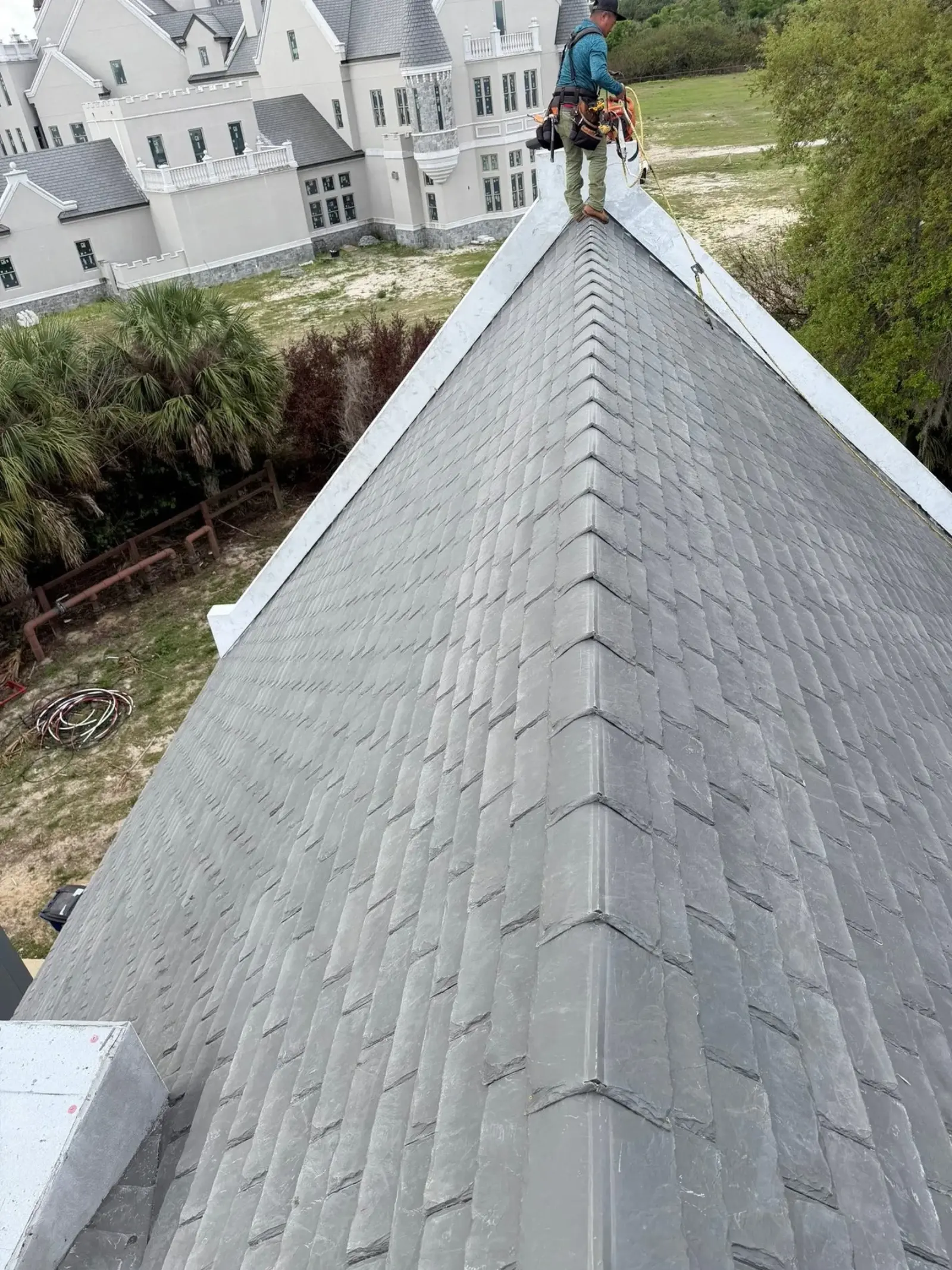
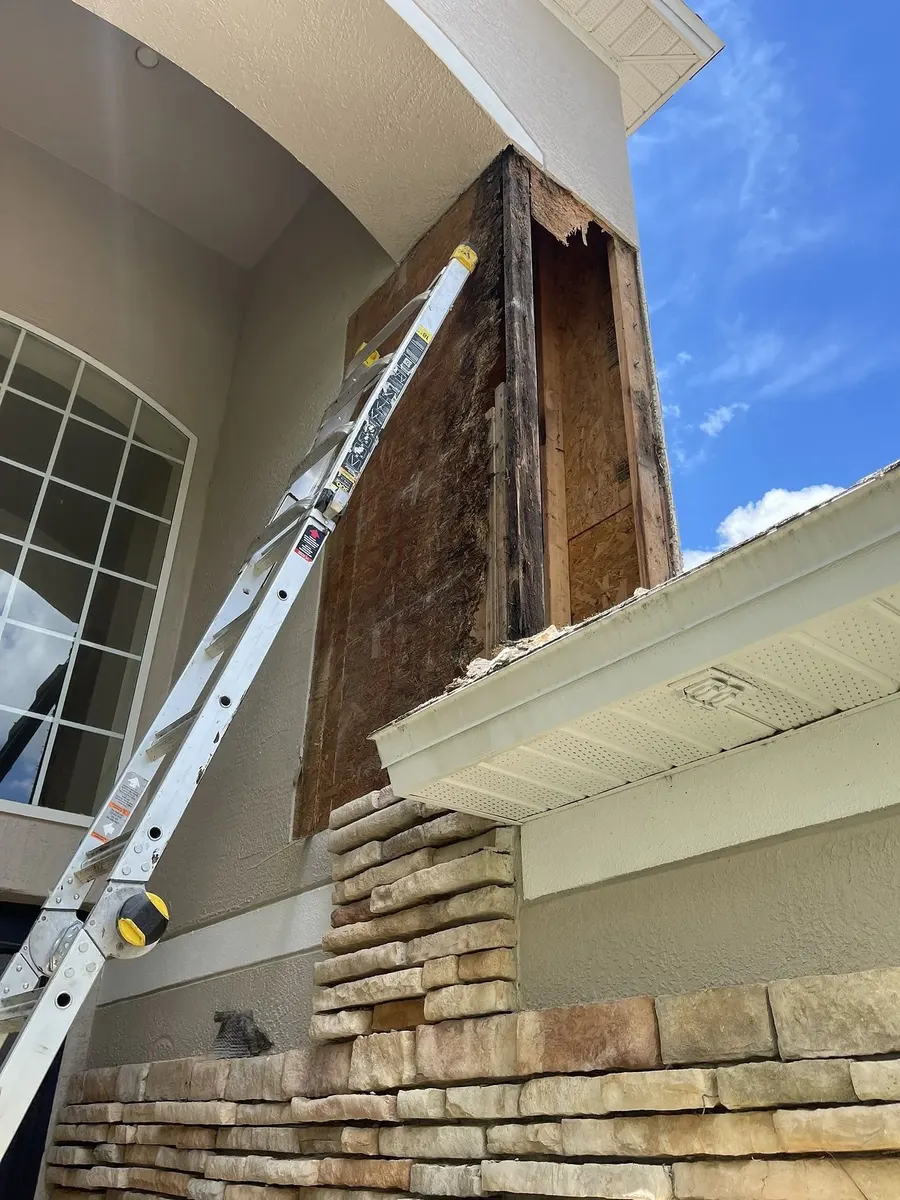
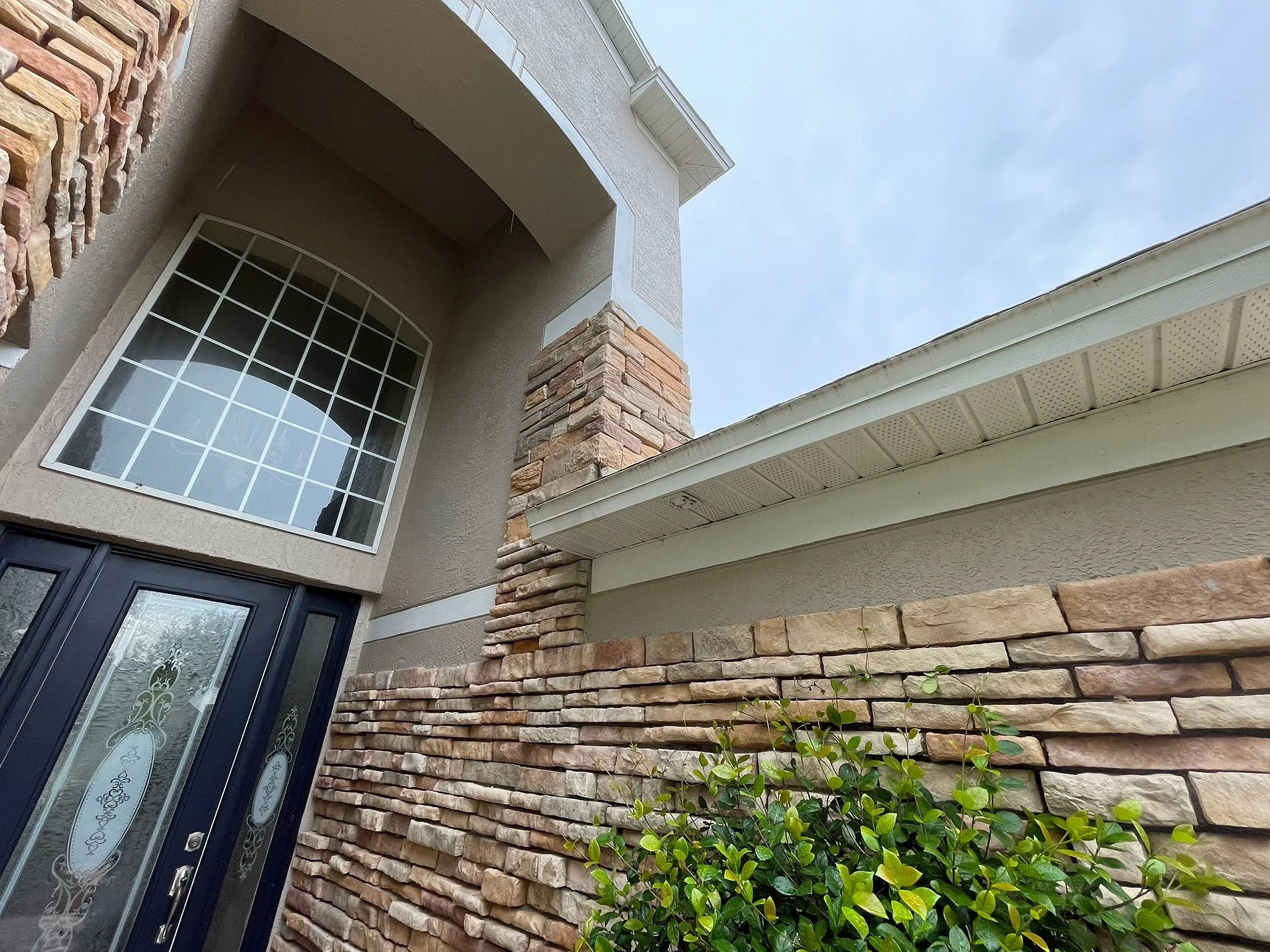
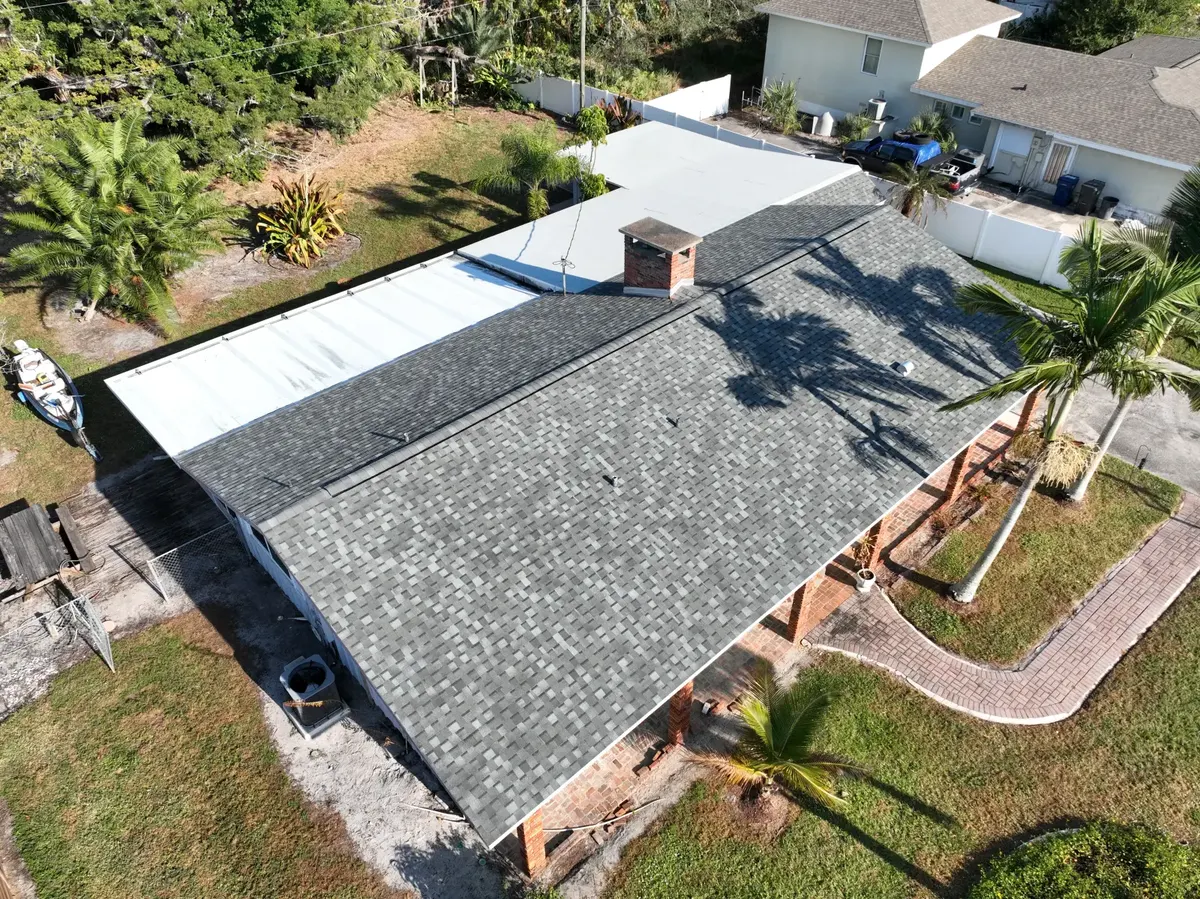
Drone aerials and ground shots from completed Coastline jobs. No stock photos.
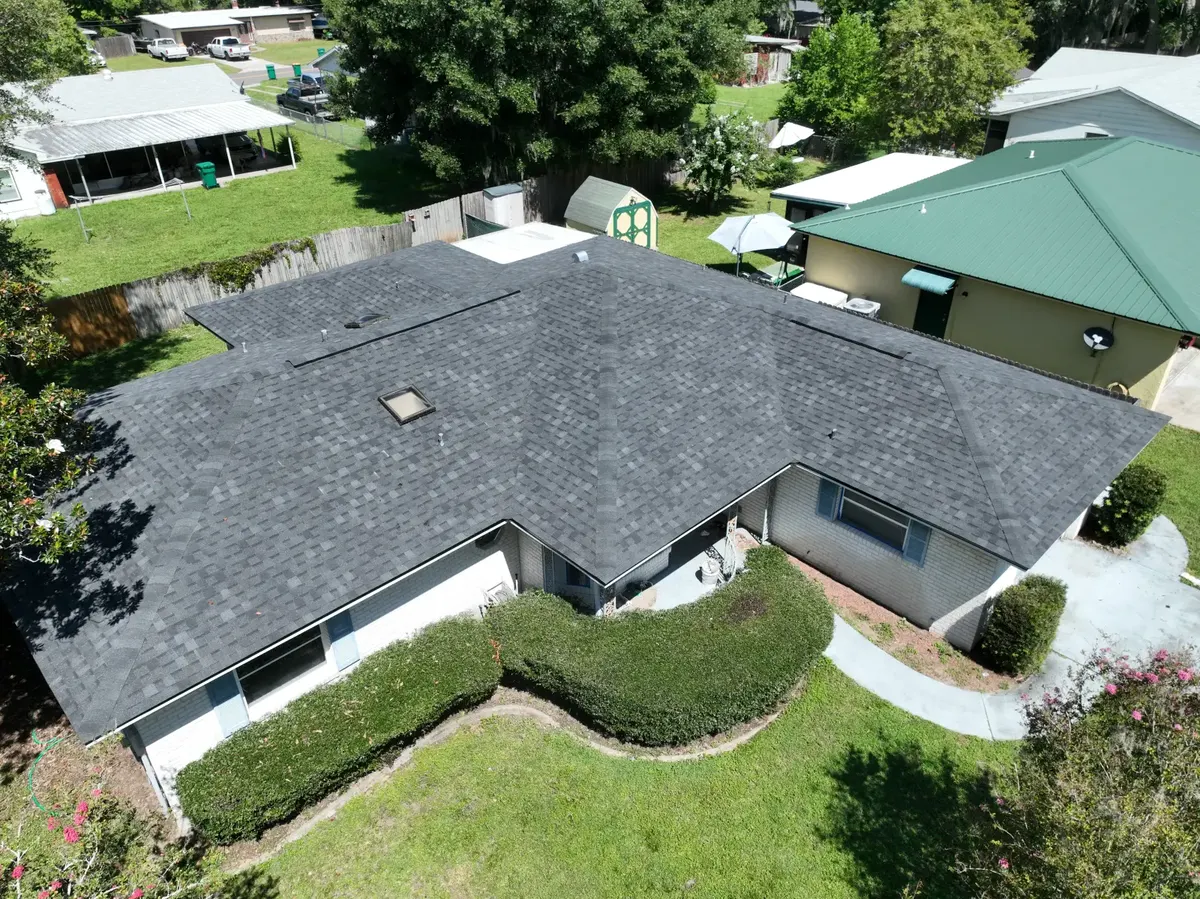
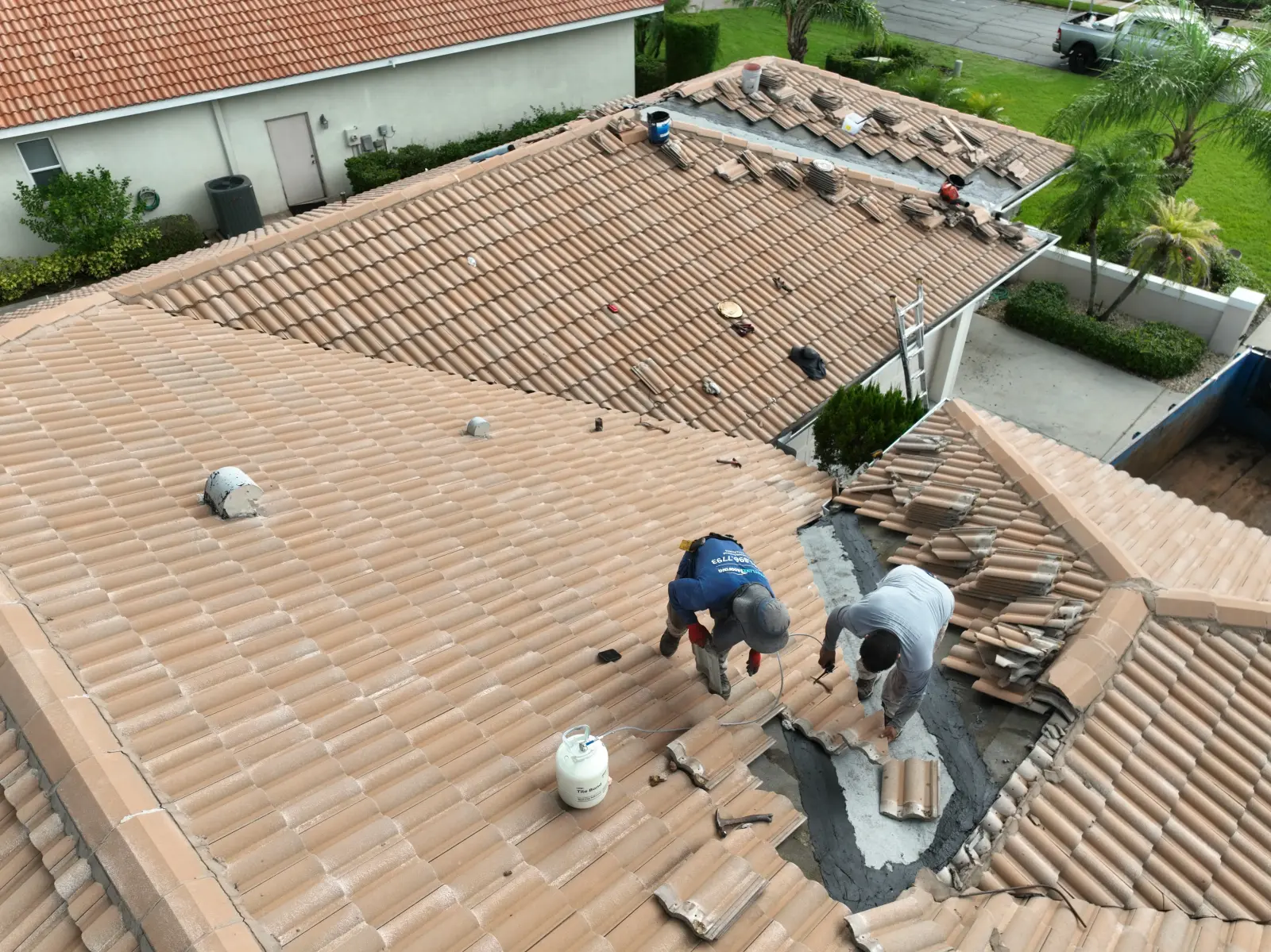
Drone inspection, algae treatment, minor repairs, and a written photo report. One visit a year. Less than the cost of what it prevents.
Leave your name and number. We typically call back the same day during business hours. Consent to texts is not required.