Active leak guide

My Roof Is Leaking. What Do I Do Right Now?

If water is coming through your ceiling right now, the next hour matters more than anything else. This guide walks you through exactly what to do to limit the damage, how to figure out where the water is getting in, and when to call our 24/7 line for emergency tarping. We are a locally owned Manatee County roofer and we respond same day on active leaks across the Florida Gulf Coast.

Licensed & InsuredFlorida CCC1331076
4.7 stars57 Google reviews
10 yearsFlorida-licensed
2,000+Roofs completed
The first hour

Do these six things right now, in this order.

Take a breath. A roof leak is stressful, but in the first hour your only job is to protect what is under the water and document what happened. You do not have to solve the roof tonight. Work through these steps in order.

  1. Move furniture and electronics out of the drip path

    Water and electronics do not mix, and a single damp couch or rug can cost more than the roof repair. Slide anything valuable out from under the active drip and away from the wet ceiling area. Unplug any electronics sitting beneath the leak. If water is running near an outlet or light fixture, treat that part of the room as live and stay clear of it.

  2. Contain the water with buckets and towels

    Put a bucket or trash can directly under the drip and lay towels around it to catch splatter. A plastic sheet or shower curtain on the floor under the bucket saves your flooring. Swap buckets before they overflow. The goal is simple: keep the water from spreading into more of the room while you handle the rest.

  3. If the ceiling is bulging, relieve the water safely

    A sagging, bulging spot on the ceiling means water is pooling above the drywall, and that pocket can let go all at once and bring a chunk of ceiling down with it. Put a bucket underneath, then use a screwdriver to poke a small hole at the lowest point of the bulge and let the water drain in a controlled stream. It feels wrong to put a hole in your ceiling, but a clean drain hole is far cheaper to patch than a collapsed ceiling. Do not stand directly under it while you do this.

  4. Photograph everything for your insurance claim

    Before you clean anything up, take clear photos and a short video of the active leak, the stained ceiling, the soaked carpet, any damaged belongings, and the buckets catching water. Timestamps matter. Florida gives you one year from the date of loss to file a claim under Florida Statute 627.70132, but your own policy often requires prompt notice within days, so do not wait. Good photos taken in the moment are the difference between a paid claim and a denied one.

  5. Note where the water is coming in, but do not climb up to look

    Mark which room, which corner, and roughly which part of the roof sits above the stain. A photo of the ceiling stain from below is useful to us. That is as far as you need to go. A wet roof, especially a tile, metal, or steep shingle roof, is one of the most dangerous surfaces in Florida, and homeowner falls send people to the ER every storm season.

  6. Do not climb onto a wet roof. Call us instead.

    This is the one rule we will not soften. Wet shingles, wet tile, and wet metal are slick, and a fall from a single-story Florida roof can be life changing. Tarping an active leak in the rain is dangerous, technical work. Call our 24/7 line at (941) 896-7793 and let a licensed crew handle the roof while you stay safe and dry inside.

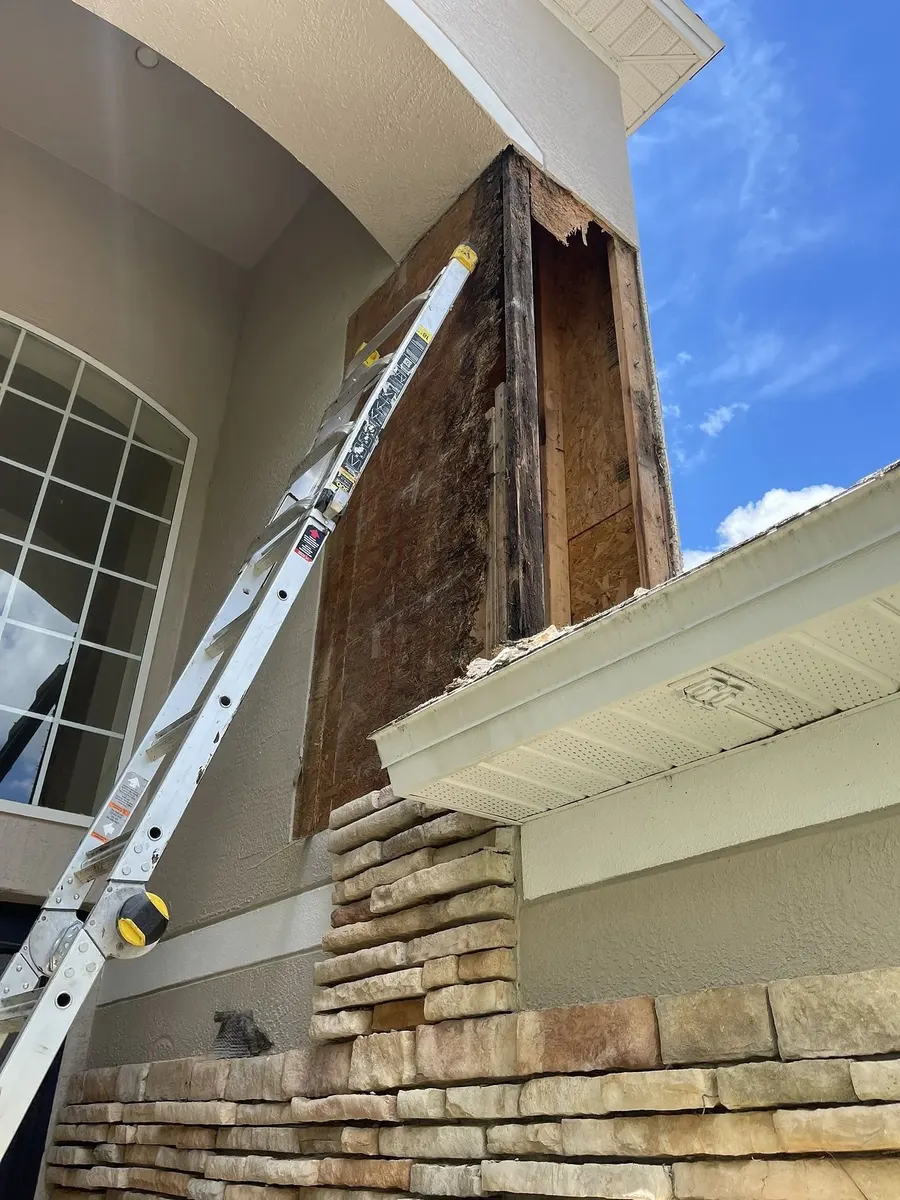
Water damage with the fascia board exposed and stained from a roof leak
Water-damaged fascia exposed during a leak diagnosis, Florida Gulf Coast.
Roofer diagnosing the source of a fascia leak and water damage
Coastline tracing a leak back to its true entry point, Florida Gulf Coast.
Why every hour counts in Florida

An open roof in Florida humidity gets expensive fast.

In a drier climate you might have a few days of grace. In Florida you do not. Our humidity does the damage for the water. Mold spores in a wet wall cavity start to germinate within 24 to 48 hours, and once a colony takes hold in your drywall and insulation, you are no longer paying for a roof repair, you are paying for mold remediation on top of it.

The water you can see dripping is a fraction of the problem. The rest is tracking sideways through your attic, soaking into insulation that loses its R-value the moment it gets wet, wicking into the top plates of your walls, and running down inside the drywall where you cannot see it. A leak that looks like a small ceiling stain on Friday can be a sagging, mold-streaked ceiling by Monday if the roof stays open through a weekend of afternoon storms.

Wet insulation rarely dries out on its own inside a sealed Florida attic. It stays damp, it smells, and it becomes a feeding ground. Drywall that has been soaked loses its strength and can let go without warning. That is why a fast, properly installed tarp is not an upsell, it is the single cheapest thing standing between a contained repair and a five-figure interior rebuild. Every hour the roof stays open, the bill grows.

Find the source

Where Florida roof leaks actually start

Here is the part most homeowners get wrong: the wet spot on your ceiling is almost never directly below the hole in your roof. Water enters at a high point, then runs along the underside of the deck, down a rafter, or across the top of the ceiling drywall before it finally drips. The real entry point is often several feet uphill from the stain. These are the usual suspects on a Gulf Coast roof.

Failed flashing and pipe boots

The rubber boot around a plumbing vent pipe is the single most common leak source we find in Florida. The UV cracks the rubber in about 8 to 12 years and water pours straight in around the pipe. Corroded valley and step flashing, where two roof planes meet a wall or each other, is a close second.

Lifted or missing shingles

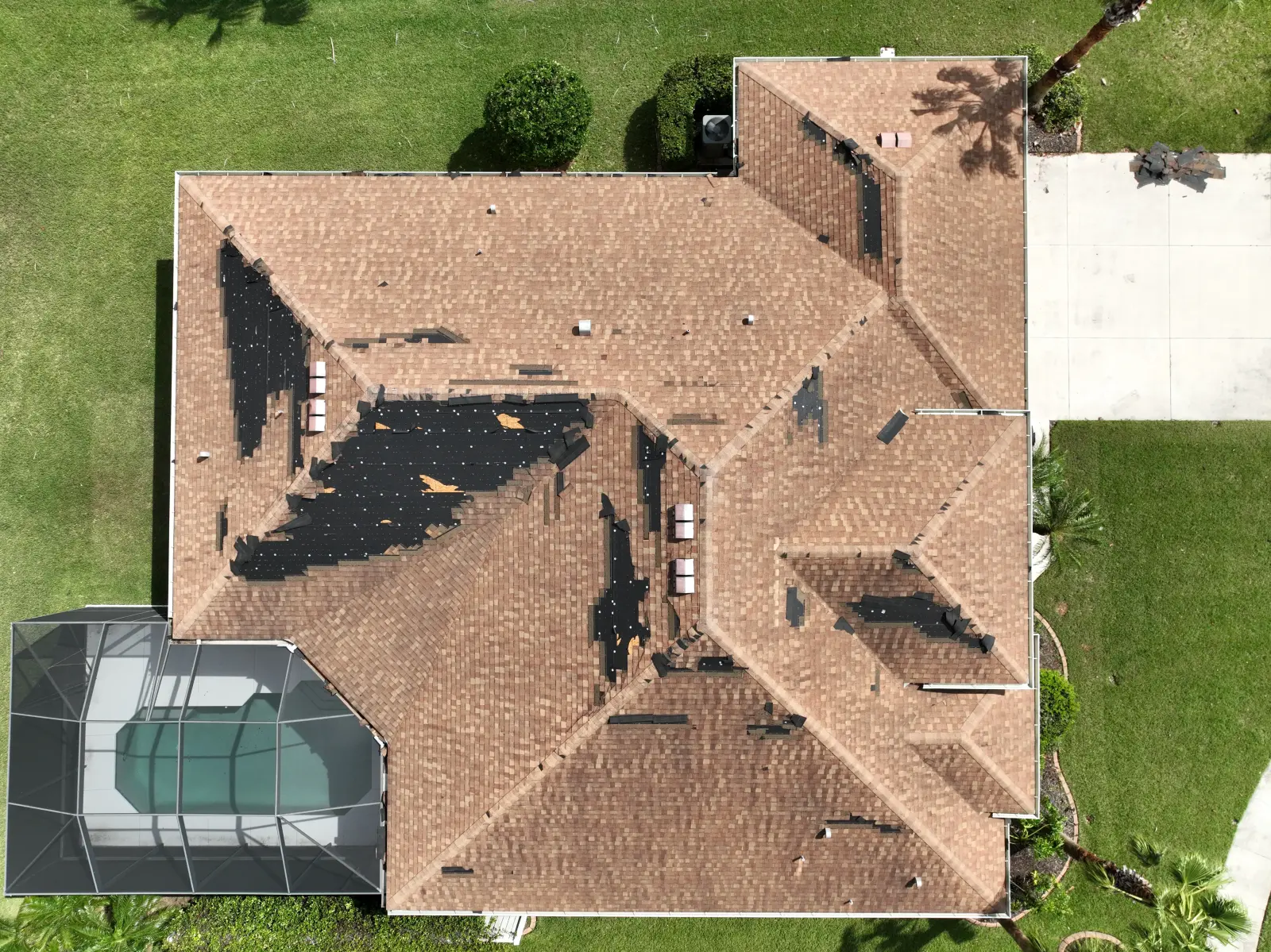
Wind during a Tampa Bay storm lifts and creases shingles or tears them off entirely, leaving the underlayment and nail heads exposed. The next rain finds the gap. If you found shingle pieces in your yard after the last storm, this is very likely your source.

Tile underlayment failure

On a tile roof, the tile itself can last 50 plus years, but the waterproof underlayment beneath it lasts only 20 to 25 in Florida sun. When that underlayment fails, the tile stays perfect-looking while water passes right through. A leak under intact tile almost always means failed underlayment.

Skylights, vents, and valleys

Anything that penetrates the roof plane is a potential leak point: skylight curbs, attic and bathroom vents, dormers, and the valleys where slopes meet and channel the most water. Old sealant fails, fasteners back out, and the joint opens up. Because water travels, the stain inside can land well away from the actual penetration.

Is this an emergency?

When to call the 24/7 line, and when you can schedule.

Call now, day or night, if: water is actively dripping during rain, a ceiling is bulging or sagging, water is anywhere near electrical fixtures or your panel, a tree limb or debris has punctured the roof, or a storm just blew shingles or tile off and more rain is on the way. These situations get worse by the hour and need a tarp or temporary dry-in tonight, not next week.

You can schedule a next-business-day visit if: the leak only shows up in heavy rain and is currently dry, you have an old stain you just noticed with no active dripping, or the weather is clear and stable for the next few days. In that case a free roof inspection with a written photo report is the right next step, and there is no trip fee.

When in doubt, call us and describe what you are seeing. We will tell you honestly whether it needs a same-day response or whether it can wait until morning. We are not going to talk you into an after-hours visit you do not need, and we are not going to leave you with an open roof overnight if you do.

How Coastline stops the damage

What happens when you call us about an active leak

Hurricane-damaged tile roof photographed in October 2024 with displaced tile letting water in
Hurricane-damaged tile roof, October 2024, Florida Gulf Coast. Displaced tile and exposed underlayment let water straight into the home until it was tarped and repaired.
Reviews

What Florida homeowners say about Coastline leak repairs

★★★★★
They came out and repaired the leaky patio roof that another company installed. The roofer showed me pictures. There were at least 2 inch gaps. The roofers fixed the problem.
Anne P.Leak repair, Florida Gulf Coast
★★★★★
Had another company put on a new roof and after inspection several issues with the work were obvious. Called in Coastline and within a week they had a crew come make needed repairs. Would use them again.
Dan H.Leak repair, Florida Gulf Coast
★★★★★
Very quick and professional. We only had one problem which was my grandma's roof and they also check the ceiling for any leaks. Thank you Coastline.
Christian P.Leak check and repair, Florida Gulf Coast

Water coming in right now? Call us.

Same-day response on active leaks. Emergency tarping, drone diagnosis, written photo report, 1-year repair warranty.

Call Text