Systems we install and repair
The flat roof systems we install and repair
Every flat roof system has strengths, failure modes, and a price point. Understanding which system is on your building, and which makes sense for the next 20 years, is the first thing we figure out on the inspection. For a side-by-side look at TPO, modified bitumen, built-up roofing and coatings, see the best flat roof material for a Florida building.
TPO (Thermoplastic Polyolefin)
Most common new install in Florida
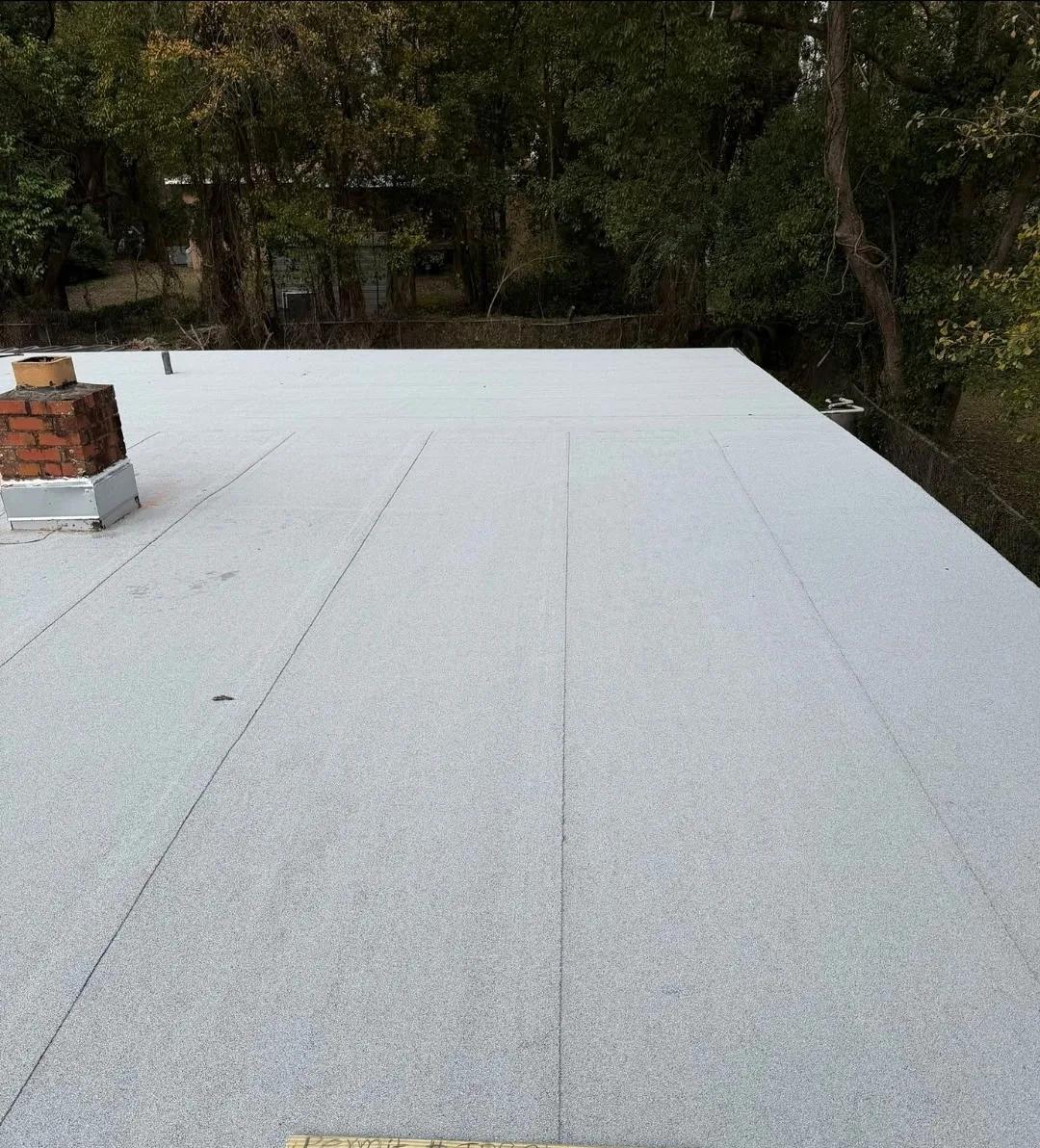
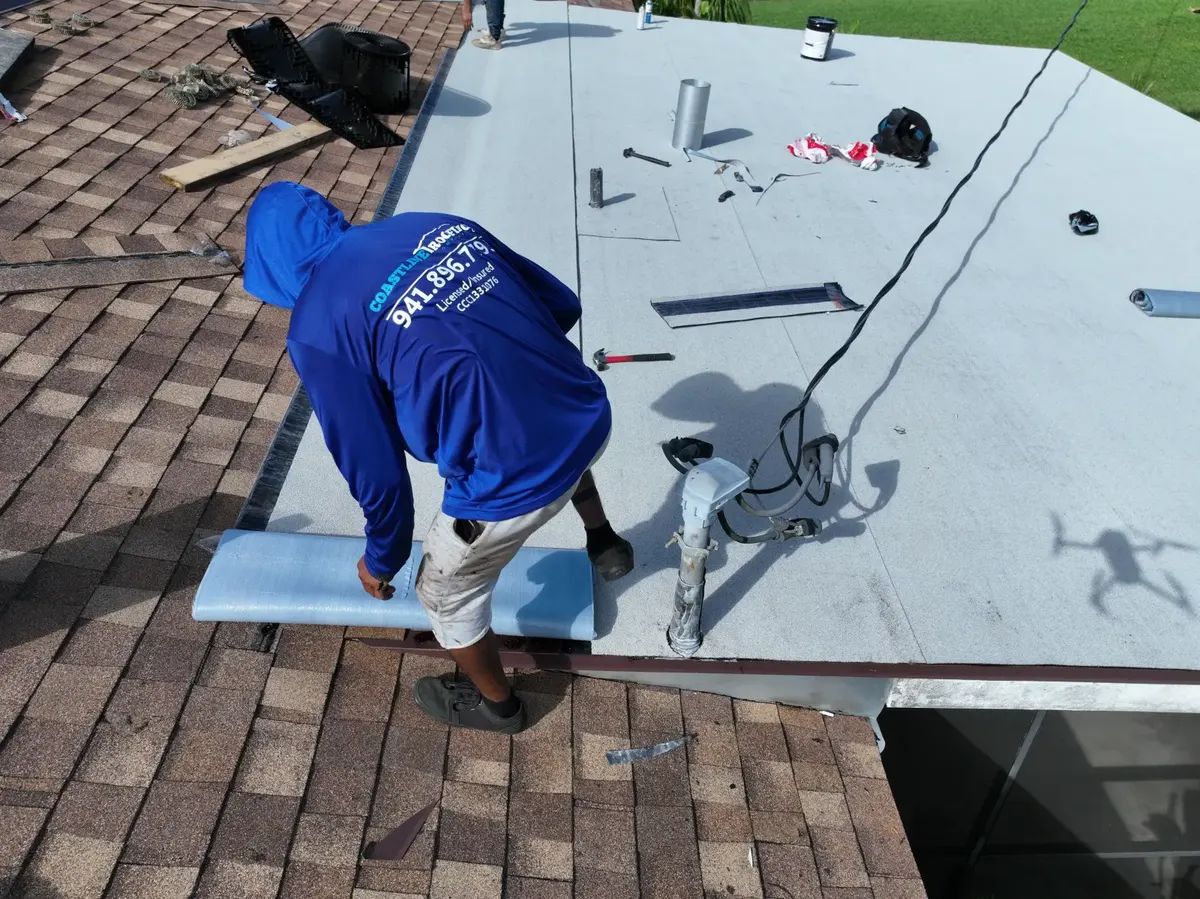
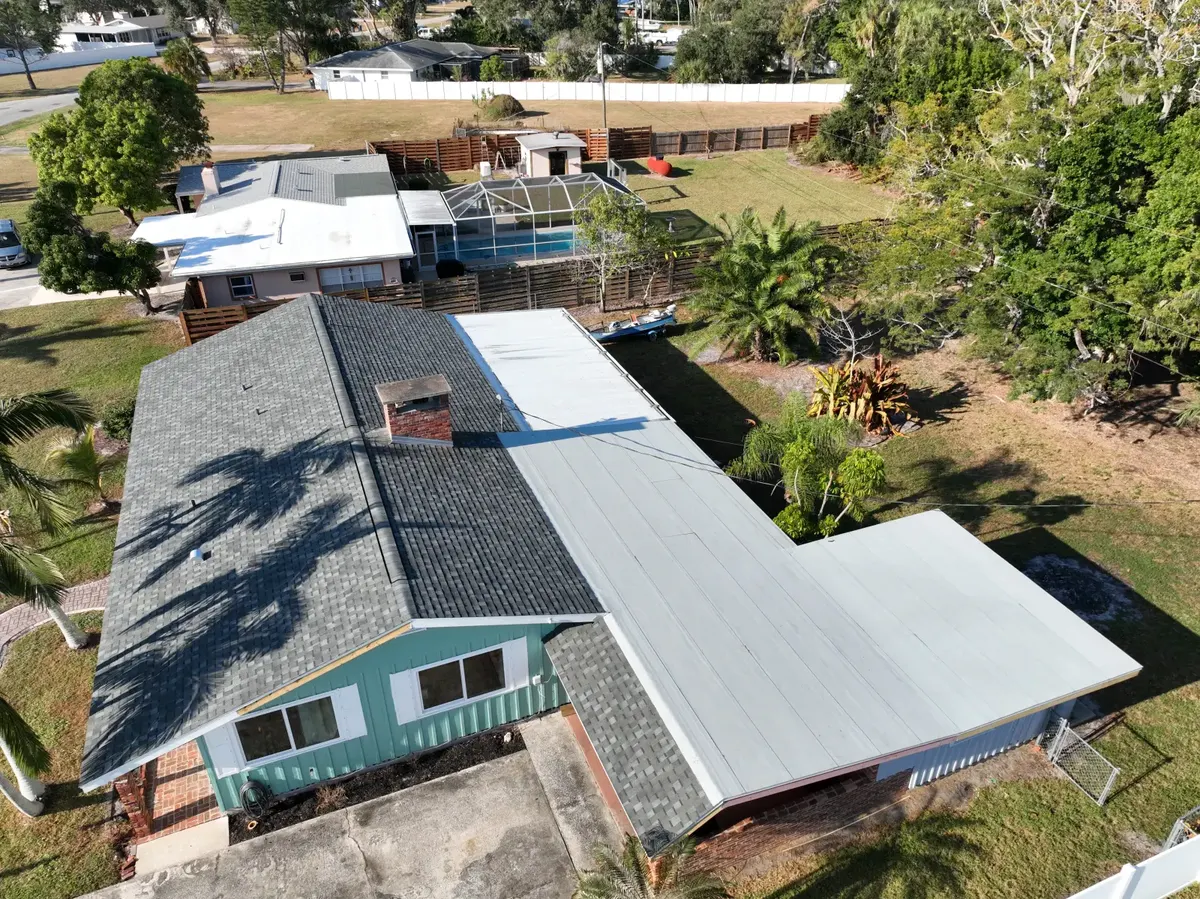
TPO is a single-ply thermoplastic membrane installed in large rolls and seamed together with a hot-air welder. There are no laps held together with caulk or tape. When done correctly, the seam is as strong as the membrane itself. That matters in Florida, where a flat roof heats up every afternoon and cools off every night, and every seam takes that movement.
The white surface is the other reason TPO is popular for flat roofs here. White single-ply membranes are cool roofs, and the EPA explains that a cool roof absorbs and transfers less heat from the sun to the building than a conventional roof, so buildings with cool roofs use less air conditioning. A reflective cool-roof surface like white TPO can qualify for utility rebates in some cases, and the reflectivity helps on commercial building HVAC loads every summer. TPO comes in different thicknesses, measured in mils, and a thicker membrane stands up better to punctures.
The failure modes are predictable. Seams at HVAC curbs, vent boots, and penetration flashings are the places to watch, because equipment vibrates and expands there and the seams take extra movement. Foot traffic is the other threat: a membrane that gets walked on regularly without walkway pads can puncture. How long a TPO roof lasts depends on how well it was installed, how thick the membrane is, and how much foot traffic it gets.
Single-ply membrane
Heat-welded seams
Reflective cool-roof surface
Best for: commercial, carports, flat residential additions
Modified Bitumen
Dominant system on existing Florida commercial roofs
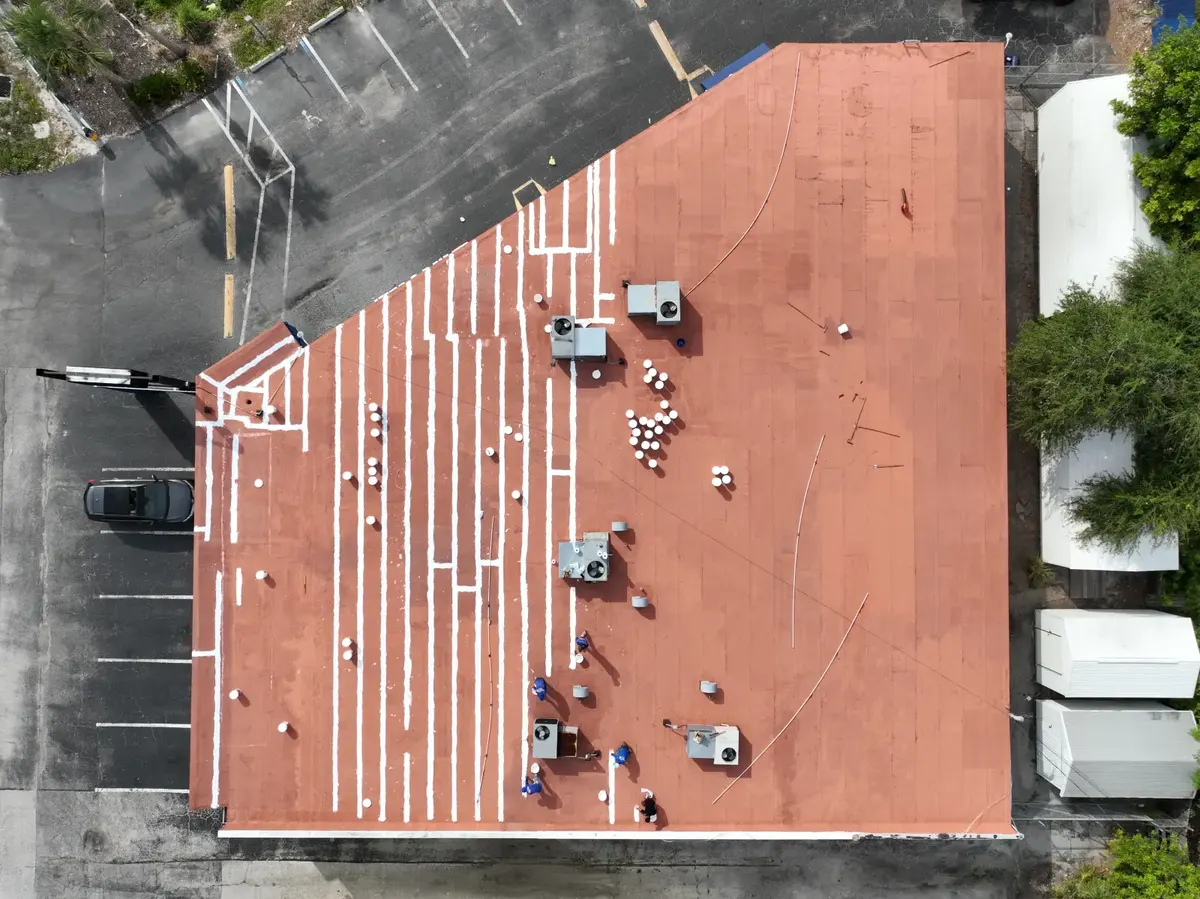
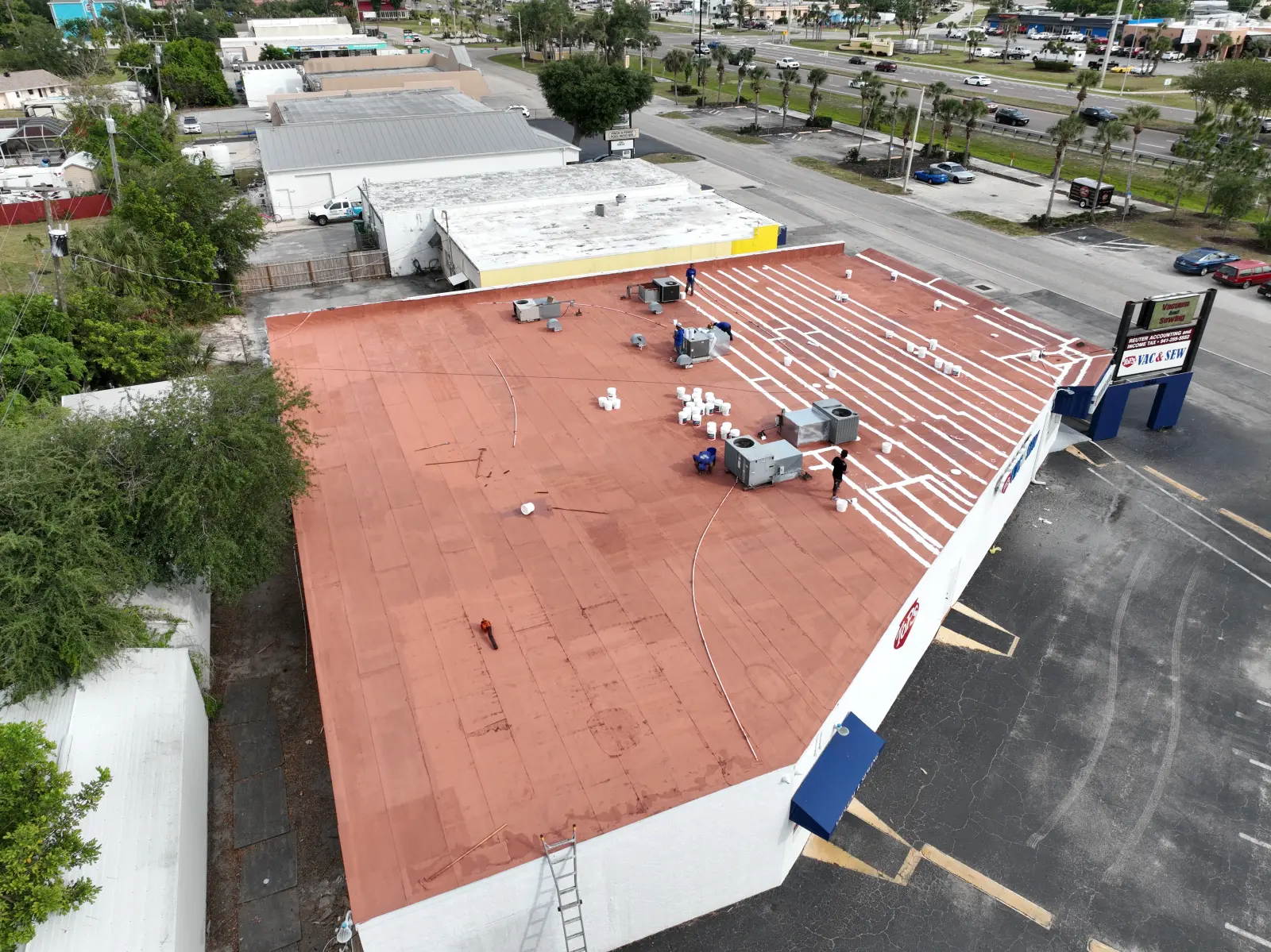
Modified bitumen is an asphalt-based membrane reinforced with polyester or fiberglass mat and rolled out in strips. The modification is either SBS (styrene-butadiene-styrene, a synthetic rubber) or APP (atactic polypropylene, a plastic polymer). SBS membranes are more flexible at low temperatures and can be torch-applied or cold-adhesive applied. APP membranes are stiffer and are almost always torch-applied. Both have been the default for commercial flat roofs across Florida since the 1980s, which means most existing flat roof systems in Manatee County are modified bitumen of some variety.
The practical consequence is that modified bitumen is common on older commercial buildings here: strip malls on Cortez Road, small industrial buildings near the Bradenton-Sarasota Airport on SR-70 east, older office properties on US-41. Many of those roofs are aging and need repair, an overlay, or full replacement. When the substrate is structurally sound and the deck is dry, a modified bitumen overlay is a legitimate option that avoids a full tear-off. When the deck has taken on moisture, there is no shortcut.
Florida failure modes are specific. Alligatoring is the most visible: the surface granules wear away, the asphalt oxidizes, and the surface cracks into a pattern that looks exactly like alligator skin. Blistering happens when moisture gets trapped between plies during installation and the trapped water turns to vapor in the Florida heat. Lap seam failure from thermal cycling is the third big one, the same thermal stress that attacks TPO seams. White mineral surface or aluminum-coated cap sheets stay cooler than black-surface systems. How long a modified bitumen roof lasts depends on those surface choices and the quality of the original install. If yours already looks like alligator skin, here is what alligatoring means and when a coating can still help.
SBS or APP formulation
Torch or cold-adhesive applied
Best for: strip malls, industrial, low-slope residential additions
Built-Up Roofing (BUR)
Older commercial buildings across Bradenton
Built-up roofing is the original flat roof system, alternating layers of reinforcing fabric and hot-applied or cold-applied bitumen, finished with a gravel aggregate or cap sheet on top. The multi-ply redundancy is its strength: a single ply failure does not mean the membrane is gone. Many large, older commercial roofs in Manatee County are BUR. The Bradenton downtown corridor, older industrial properties near Port Manatee, and early-era US-41 commercial buildings are good examples of where we encounter these systems regularly.
Coastline repairs and replaces BUR systems. On older BUR roofs with a sound substrate, we can install a modified bitumen or TPO overlay, gaining new membrane performance without the cost and disruption of full tear-off. When the substrate or deck has failed, full replacement is the right call. Common failure modes include gravel migration that exposes the bitumen beneath directly to UV, blister formation from embedded moisture between plies, and drain backup that creates persistent ponding zones.
Long service life multi-ply system
Overlay options available on sound substrate
Best for: large, older commercial buildings
Roof Coatings
Extend a sound roof without tear-off
A coating system is applied over an existing flat roof that is structurally sound but has a surface that has degraded past useful life. Elastomeric acrylic coatings, silicone coatings, and aluminum-reflective coatings are all available depending on the existing membrane type and the performance goals. Applied at the correct mil thickness to a properly prepared surface, a coating system extends the life of the roof and turns a black, heat-absorbing surface into a reflective one that cuts cooling loads. As long as the deck stays dry, a coated roof can be re-coated later instead of torn off.
The critical qualifier is substrate condition. Coating over a failed membrane, a delaminated substrate, or a deck that has already taken on moisture does not fix any of those problems. It seals water in rather than keeping it out, and the repair cost after that is substantially higher. Coastline checks the substrate for trapped moisture before recommending any coating system. If the check shows wet areas, we give you honest options: targeted repair of the wet sections before coating, or full replacement if the wet areas are widespread.
Extends the life of a sound roof
Elastomeric, silicone, or aluminum-reflective
Substrate checked for moisture before application
Not a substitute for failed membrane