
★★★★★
"Josh and his crew did an incredible job with our roof. Very familiar with the association’s requirements, timely and very communicative."John M.HOA roof replacement, Florida Gulf Coast
Updated June 2026
Shingles in the yard, bare patches on the roof, and a forecast that says more rain is coming. This is the moment that decides whether a wind event stays a quick repair or turns into a soaked attic and a ceiling collapse. Here is exactly what to do first, how to document it so your insurer pays, and why those exposed patches cannot wait for a leak to show up inside. Coastline answers storm calls across the Gulf Coast and can get a tarp on your roof fast.
You walked outside after the storm and found shingles scattered across the yard and the driveway, maybe wrapped around a fence or stuck in a hedge. Look up and you can see it: bare rectangular patches on the slope where the shingles used to be, a darker stripe of felt or a strip of bright underlayment where the roof surface is simply gone. Maybe a whole row peeled back along a ridge or an edge. Nothing is dripping inside yet, so it is tempting to think it can wait until things calm down. It cannot.
Shingles are the outer armor. Under them sits the underlayment and then the wood deck, and neither of those is built to be the waterproof layer for long. When shingles tear off, the underlayment is suddenly the only thing between your home and the sky, and on an older roof that felt is brittle, cracked, or already nail-popped. The next Florida afternoon downpour does not need a hole. It finds the bare patch, runs under the surrounding shingles, soaks the deck, and tracks along the wood until it drops through a seam in the ceiling somewhere that may not even be under the damage. By the time you see a brown stain inside, water has usually been sitting in the deck and insulation for days.
There is a second clock running too. Wind does not stop peeling a roof when the storm ends. Once shingles are gone, the exposed edge of the surrounding course has nothing holding its leading edge down. The next gust, even an ordinary afternoon sea breeze, gets under that open edge and lifts the next row, then the next. A small bare patch becomes a large one over the following week of normal Gulf Coast weather. Do not wait for the visible interior leak. The damage is already in motion the moment the shingles come off.
Use your phone and take wide shots of the whole house plus zoomed shots of every bare patch. Get the shingles lying in the yard too. A storm-damaged roof is one of the most dangerous places to be: loose granules act like ball bearings, a lifted shingle can hide a soft or rotted deck, and there may be downed power lines nearby. Stay on the ground. We bring a drone for the close-up roof images.
Note the calendar date and the name of the storm or the weather event that caused it. Insurers tie every claim to a specific date of loss, and a clear timeline protects you if the carrier later argues the damage was old wear. A quick note in your phone with the date and a one-line description is enough.
Keep the photos together, save any video, and do not throw away the shingles in the yard until you have pictures and a roofer has looked at them. Hold off on signing anything an insurance adjuster or a door-knocking contractor puts in front of you, especially an Assignment of Benefits, until you understand it. Your own photos plus a contractor's report are your leverage.
A properly installed emergency tarp buys you the days or weeks it takes to get the claim moving and the permanent repair scheduled. It keeps the next rain out of the deck and stops the wind from peeling more. Tarping is also the step that prevents a small covered claim from snowballing into a much larger interior loss. See emergency tarping for how we do it.
Get a real assessment from a licensed contractor who will show you photos of the actual damage, not a verbal guess. Coastline is licensed CCC1331076. We can usually get a tarp on the same day we take your call and document the roof in the format an adjuster expects.
On most Florida homeowners policies, wind is a covered peril. A storm that lifts and tears shingles off your roof is exactly the kind of sudden, accidental event these policies are written for, and a covered wind loss typically pays for both the damaged roof and any interior damage the resulting water caused. That is good news, but coverage only helps you if you act inside the window.
Document fast, because the claim window closes. Under Florida Statute 627.70132, a new or reopened windstorm or hurricane claim must be reported to your insurer within one year of the date the storm caused the damage, and a supplemental claim within 18 months. A year sounds like a lot, but the longer you wait the harder it is to prove the loss came from that specific storm and not from age, and the more interior damage piles up while the roof sits open. The right move is to document within days, not months.
Shingle matching is the wrinkle that catches Florida homeowners off guard. If the storm took out a section of shingles and your exact color and product line have been discontinued, which is common on roofs more than a few years old, the new shingles will not match the old ones. Florida's matching rules can require the insurer to do a wider repair, sometimes a full slope or even a full roof, so the finished result is uniform. Carriers often resist this, which is why clean documentation of what was on the roof and what is no longer available matters. For help building the claim, see our Florida roof insurance claims guide.
Only a small number of shingles are gone, the roof is relatively young, the deck under the bare patch is sound, and your existing shingle color is still being made so the patch blends in. In that case a targeted repair restores the roof without the cost of a full replacement.
Large areas are gone, the roof is already near the end of its life, the deck is soft or rotted, or the original shingle color is discontinued and cannot be matched. Patching a worn-out roof that no longer matches is throwing good money after bad, and your insurer may agree the whole roof is owed.
We will not push you toward a replacement you do not need, and we will not slap a mismatched patch on a roof that should be replaced. You get a photo report and a straight recommendation either way. Compare the two paths on our storm damage repair page.
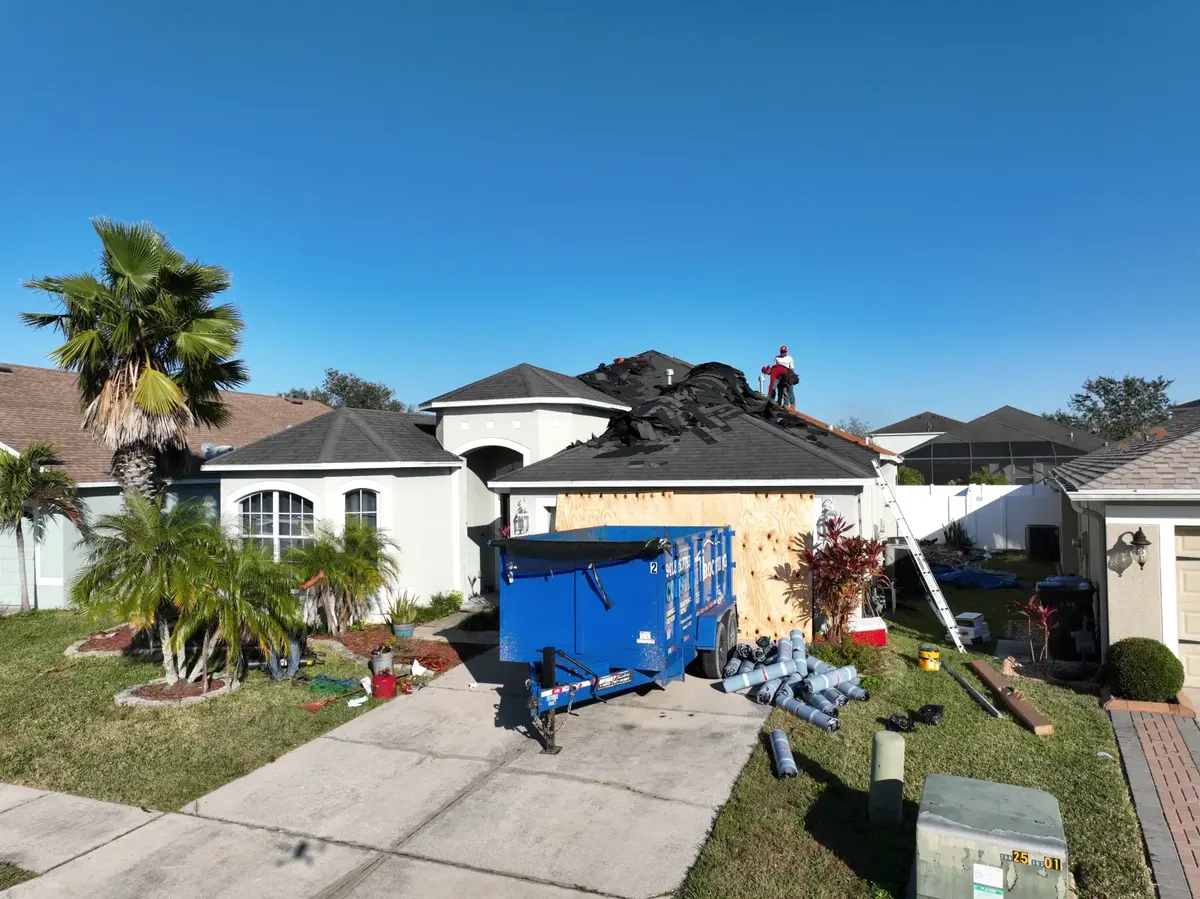
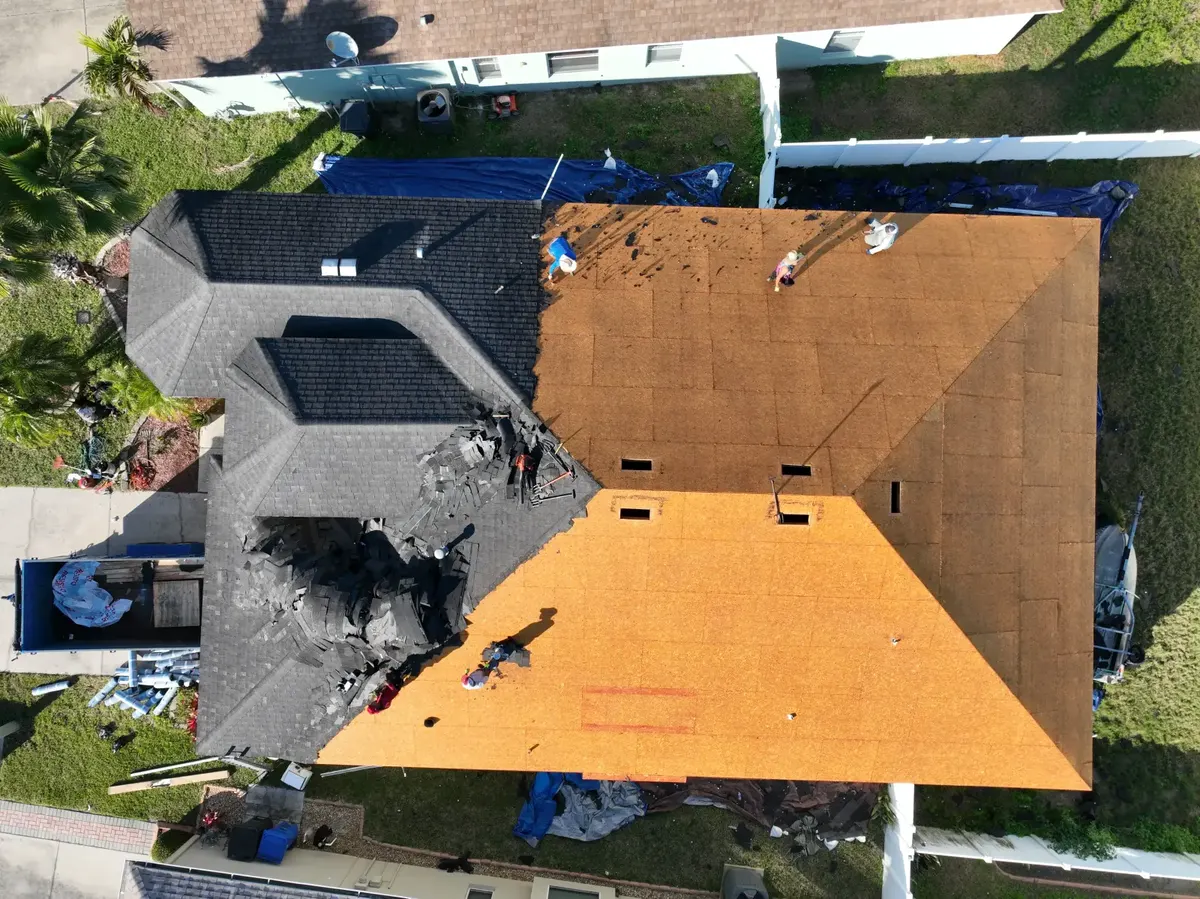
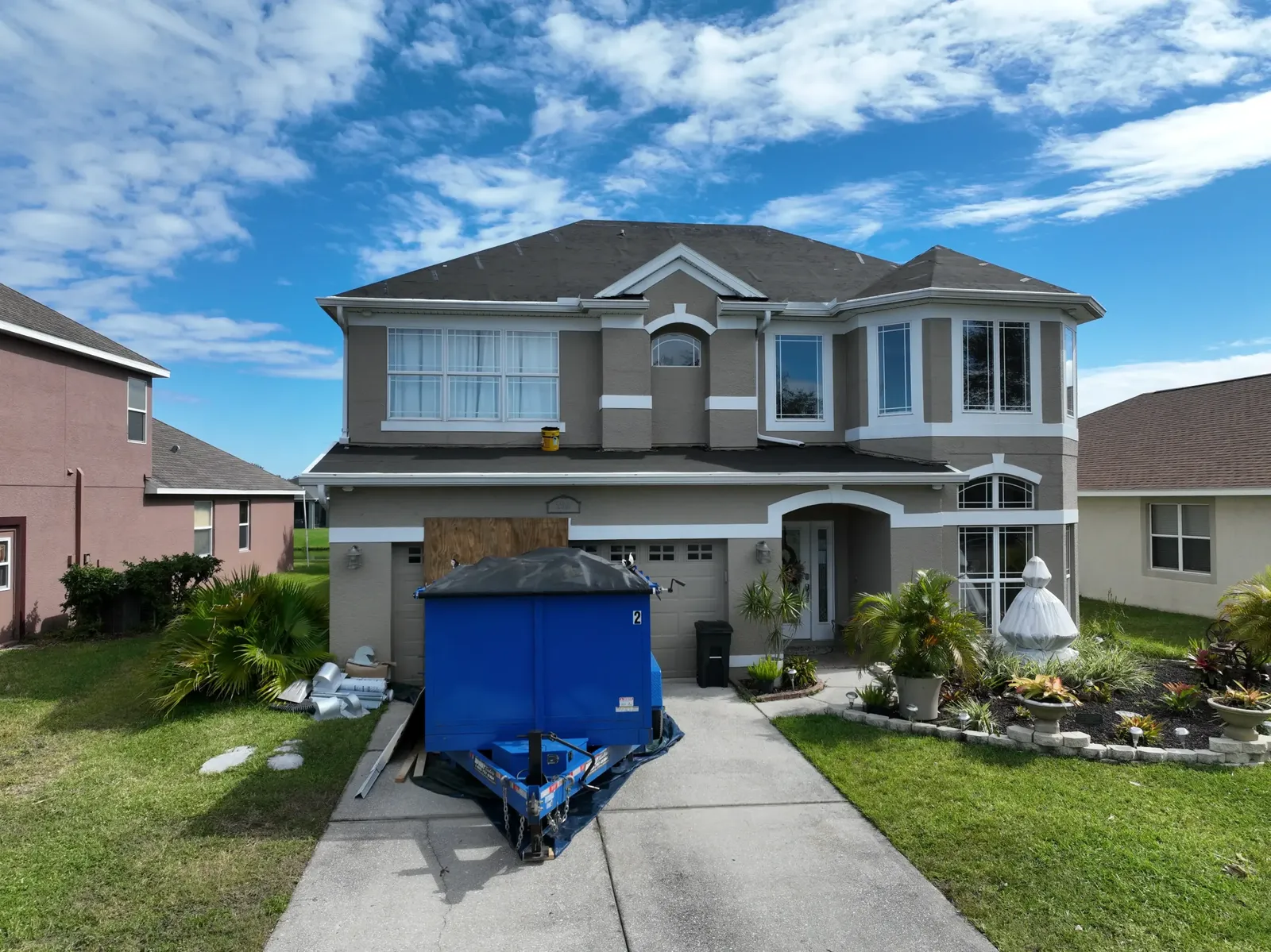
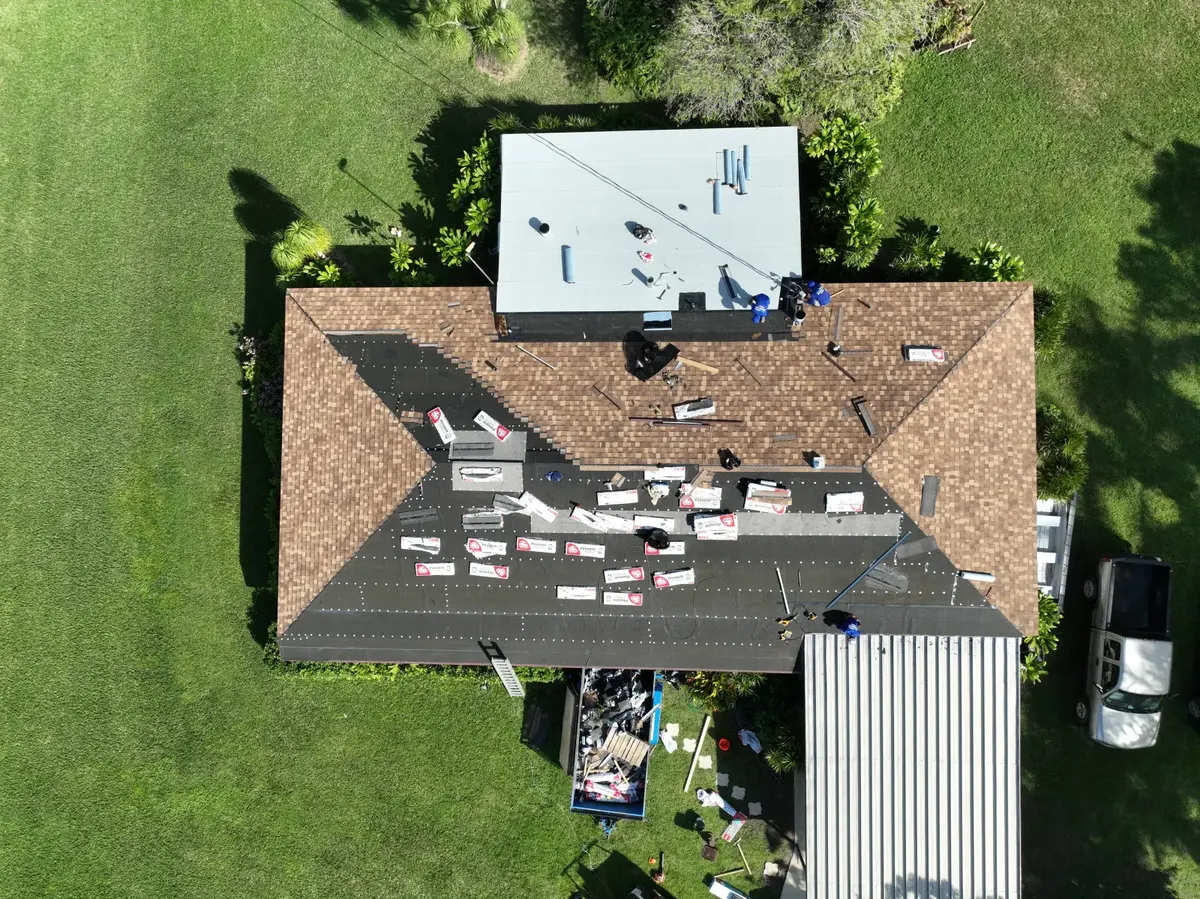
We can get a same-day emergency tarp on your roof to stop the next rain, then document the damage with drone photos in the format adjusters expect, so your claim has the evidence it needs from the start. From there we repair the damaged section or handle a full replacement, whichever your roof actually calls for. Ten years and 2,000-plus roofs on the Gulf Coast, including the heavy seasons of Hurricane Ian and Hurricane Milton, means we have seen what these storms do and we know how to put it right. Licensed CCC1331076, locally owned, with a photo report on every job.
Call (941) 896-7793"Josh and his crew did an incredible job with our roof. Very familiar with the association’s requirements, timely and very communicative."John M.HOA roof replacement, Florida Gulf Coast
"They did a good job on the repair, so I would definitely recommend them."Duke H.Roof repair, Florida Gulf Coast
"Good communication and did a great job."Rick R.Roof repair, Florida Gulf Coast
Any missing shingle exposes the underlayment and deck to water and lets the wind keep peeling from the open edge, so even one or two warrants a look. The number mostly matters for the repair-versus-replace decision, not for whether to act. A handful on a young roof with an available color is usually a repair. A large bare area, an older roof, or a discontinued color usually points to replacement. Either way, get it covered before the next rain.
No. A storm-damaged roof is genuinely dangerous: loose granules are slippery, a lifted shingle can hide a soft or rotted deck that will not hold your weight, and downed power lines may be near the house. A tarp that is not anchored correctly also tears off in the next gust and can make the claim messier. Photograph from the ground and let a licensed crew tarp it. We can usually get out the same day.
Yes. The absence of an interior leak does not mean you are safe, it means the water has not finished its trip yet. Rain enters the bare patch, soaks the deck and insulation, and travels along the wood before it ever drops through the ceiling, so by the time you see a stain the damage is days old. Waiting for the visible leak is the single most expensive mistake homeowners make after a storm.
On most Florida policies wind is a covered peril, and a storm that tears shingles off is the classic example of a covered wind loss, including the interior damage if water gets in. You generally have up to one year from the date of the storm to report a new or reopened claim under Florida Statute 627.70132, and 18 months for a supplemental claim, but you should document and report quickly. The longer you wait, the harder it is to prove the storm caused it and the more interior damage accumulates. We document the roof in the format adjusters expect.
This is common on roofs more than a few years old, and it works in your favor. When the exact color or product line is discontinued, a patch will visibly clash with the rest of the roof, and Florida's matching rules can require the insurer to do a wider repair, sometimes a full slope or full roof, so the result is uniform. Carriers often push back, so documenting what was on your roof and that it is no longer available is important. We help build that part of the file.
Same-day emergency tarping, drone documentation for your claim, then repair or replacement done right. Licensed CCC1331076.
Leave your name and number. We typically call back the same day during business hours. Consent to texts is not required.