
★★★★★
"The work was excellent. Members of the crew were very skillful and professional and did an outstanding job. I would definitely use them again."Diane G.Roof replacement, Florida Gulf Coast
Updated June 2026
You spotted a cracked, slipped, or broken tile from the driveway, or maybe a couple of them showed up after a storm. The good news first: a cracked tile is rarely the emergency it looks like, and it almost never means you need a new roof. On a Florida tile roof, the cracked tile and the actual leak are usually two different problems. Here is how to tell which one you have, and what each one really costs.
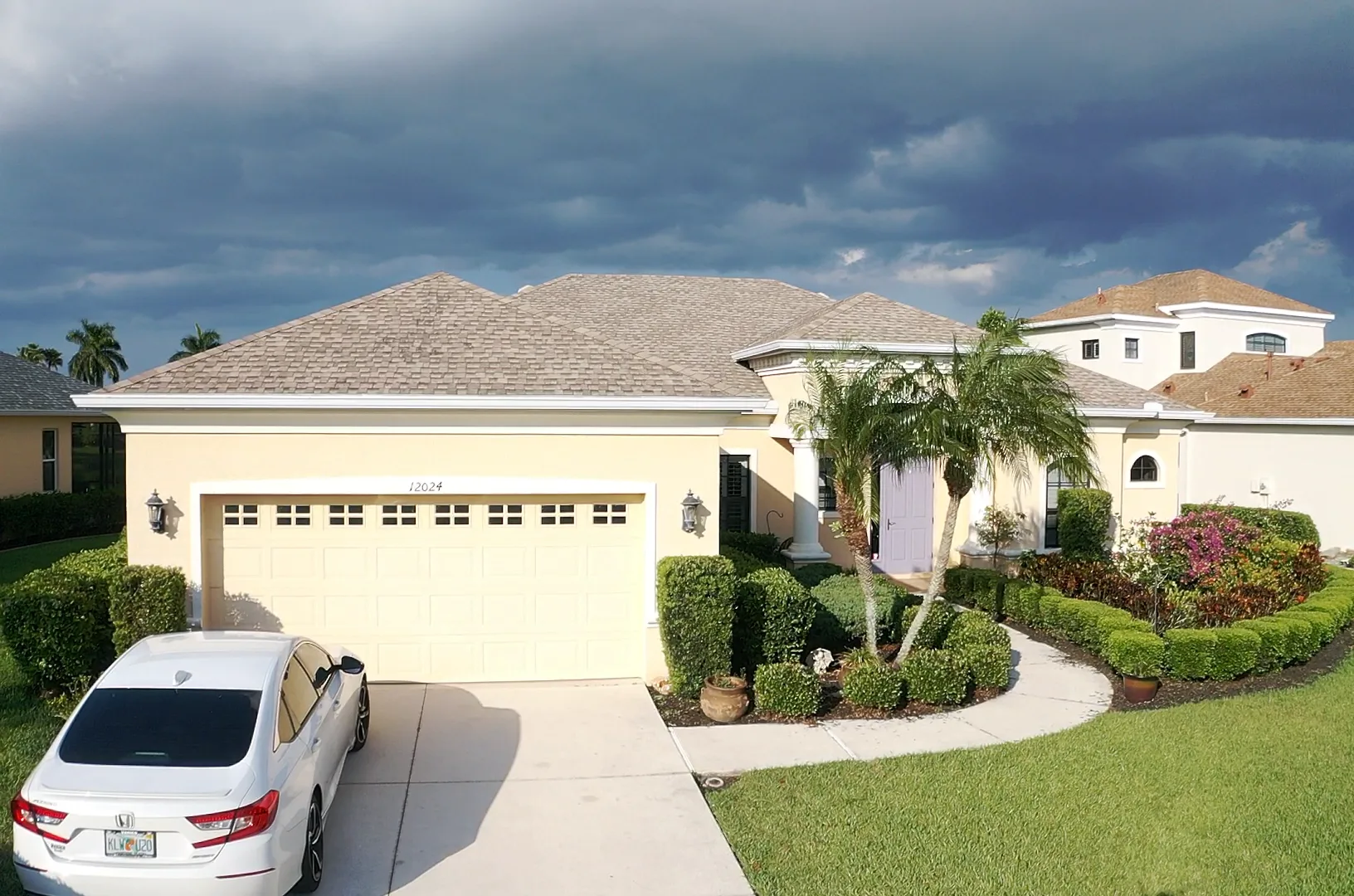
Cracked, slipped, and broken tiles are the most common thing tile-roof homeowners call us about. You see a hairline split across a field tile, a tile that has slid out of its row, or after a storm a few pieces sitting at the wrong angle. It looks like the roof is coming apart. In most cases it is not, and treating it as an emergency that demands a full replacement is exactly how homeowners get oversold.
There are four real causes, and one of them is far more common in Florida than the rest:
Foot traffic. This is the big one. Tile is brittle underfoot. Every HVAC tech, solar installer, satellite or cable technician, gutter cleaner, and pressure washer who walks your roof can crack tiles by stepping in the wrong spot. A tile is engineered to carry rain and wind, not a 200-pound person standing on the unsupported center of the piece. In Florida, where solar and AC work means people are on tile roofs constantly, walked tile is the single most preventable cause of cracking we see.
Impact from debris or hail. A wind-thrown branch, a falling palm frond, or hail will chip and split tile on impact. After a named storm you may find several cracked pieces at once, usually clustered on the windward slope.
Age and brittleness. Decades of Florida sun, heat cycling, and the freeze-thaw that even our occasional cold snaps cause will make older tile more fragile over time. A tile that would have survived a footstep at year five can split at year thirty.
Manufacturing defects. Occasionally a tile was flawed from the factory and fails earlier than its neighbors. This is the rarest cause, but it does happen, and it is why a single cracked tile in an otherwise perfect field is not a reason to panic.
Here is the reframe that changes the entire repair-or-replace question. Concrete and clay tile commonly last 50 years or more. Some clay barrel tile is still on Florida homes after 75. But the tile is not what keeps water out of your house. Under the tile sits a layer of waterproof underlayment, and in the Florida sun that underlayment lasts only about 20 to 25 years. The tile is the umbrella. The underlayment is the raincoat. The tile sheds most of the water and shields the underlayment from UV, but the underlayment is the actual waterproof barrier.
So when a homeowner with a 2002-era roof finds a cracked tile and a ceiling stain in the same month, the two are usually unrelated. The cracked tile is cosmetic. The leak is failed underlayment, a corroded flashing, or a cracked pipe boot, all of which are invisible from the ground and have nothing to do with the broken tile you can see. We pull off a single cracked tile, look underneath, and find underlayment that has gone brittle and split across the whole slope. That is the real story on most leaking Florida tile roofs.
This is why the right question is never "should I repair or replace the tile." It is "is the underlayment underneath still doing its job." Answer that, and the path becomes obvious.
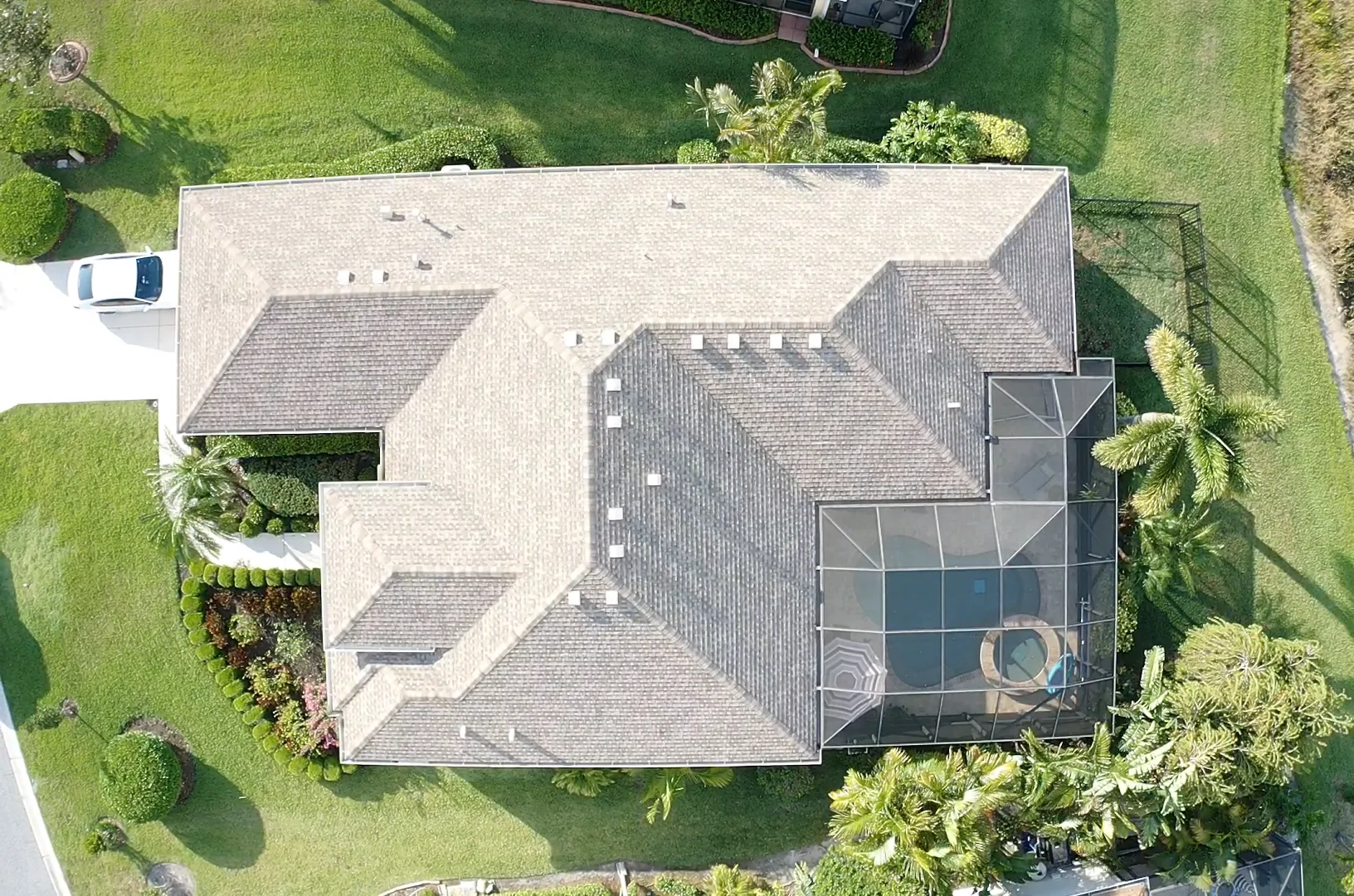
Once we know the condition of the underlayment, the deck, and the tile itself, your roof falls into one of three paths. We quote whichever one fits in writing, with photos.
The right call when the underlayment is still sound and only the tile or the metal has failed. We replace and color-match the individual cracked or slipped tiles, re-bed the ridge and hip mortar where it has washed out, and fix any failed flashing or pipe boot. No tear-off, no permit drama, and your roof keeps the life it has left. Most single cracked-tile calls end here.
The right call when the tile is in good shape but the underlayment is spent. Common on homes built in the late 1990s and 2000s that are now hitting that 20-to-25-year mark. We carefully lift and stack your existing tile, install new high-temp underlayment, and reinstall the same tile. It keeps you HOA-compliant on color and profile and costs far less than buying all new tile.
The right call when the tile itself is widely cracked and deteriorated, or the wood deck underneath has rotted past saving. Here we install a complete new tile system with modern underlayment and hurricane fastening, permitted through your county. This is the most expensive path, and it is the one we recommend least often. We will show you deck and underlayment photos before we ever suggest it.
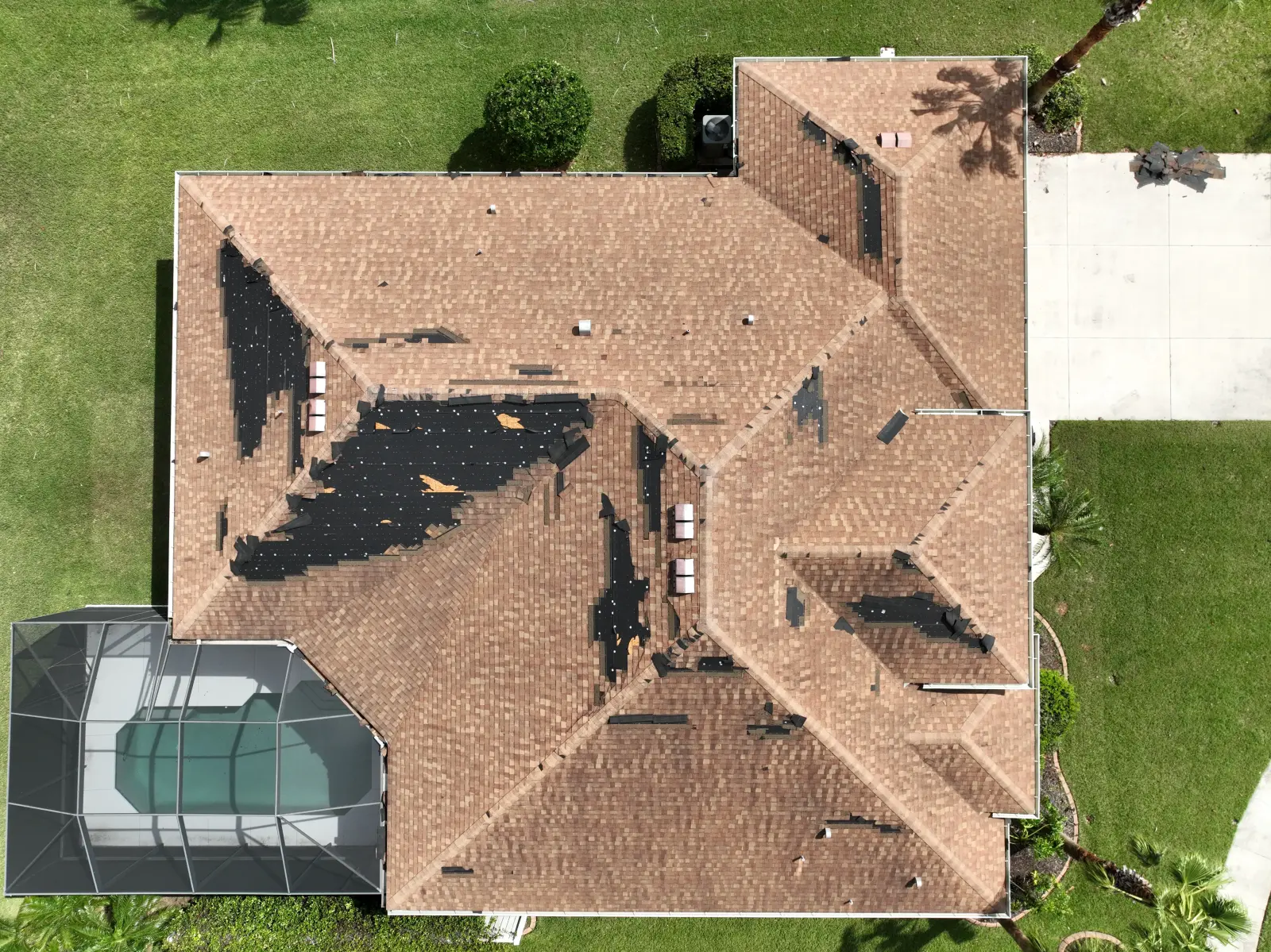
Do not walk your own tile roof to inspect it. You will crack more tiles than you find, and a wet or aged tile roof is genuinely dangerous to stand on. This is why we diagnose cracked and slipped tiles with a drone. We get every slope, valley, and penetration on camera without a single footstep on your tile.
There is one more factor that can push a tile job from path one into path two or three, and it is not the roofer's opinion. It is the Florida Building Code. Section 706.1.1 of the Florida Building Code, Existing Building, holds that not more than 25 percent of a roof section may be repaired or replaced in any 12-month period unless the entire roofing system is brought up to current code. People call it the 25 percent rule.
In plain terms: a handful of cracked tiles and a small flashing fix stay well under that line and are a clean targeted repair. But if the damage or the failed underlayment covers more than a quarter of a slope, the code can require that whole roof section to be re-underlaid to today's standard. There is an important exception. If the roof was built, repaired or replaced under the 2007 Florida Building Code or a later edition, Florida Statutes section 553.844(5) lets you repair or replace more than 25 percent without re-doing the entire roof, so the year your roof was built and permitted matters. We check that for you and tell you exactly where your roof sits relative to that threshold before any work, so the code never becomes a surprise mid-project.
"The work was excellent. Members of the crew were very skillful and professional and did an outstanding job. I would definitely use them again."Diane G.Roof replacement, Florida Gulf Coast
"My phone call was returned several minutes later by Josh who was very helpful and informative. Within several hours I received a quote based on the exact dimensions of the roof. ... These guys were professional, prompt, and extremely helpful."Andrew A.Quote, Tampa Bay home, Tampa Bay, FL
"Coastline roofing did a great job installing our new roof and gutter system. They were fast, clean and the resulting roof and gutters look great."Kyle D.Roof and gutter install, Florida Gulf Coast
Drone diagnostic. Written photo report. Repair, re-underlay, or replace, priced honestly so you are not oversold on a cosmetic crack.
Leave your name and number. We typically call back the same day during business hours. Consent to texts is not required.