The wind died down, you walked the yard, and there is no pile of broken tile to point at. That does not mean your roof is fine. High wind lifts, slips, and rotates tile without dropping a single piece, and the real damage hides under tile that still looks straight from the driveway. Here is what wind actually does to a tile roof, why so much of it is invisible from the ground, and how to decide between a targeted repair and a full replacement.
After a strong storm, the homeowners who call us fall into two groups. The first found broken tile in the flower beds and knows something is wrong. The second group is the dangerous one: nothing fell, the roof looks straight from the street, and they assume they got lucky. Tile is heavy, and that weight fools people. A concrete tile can be lifted at the nose, slid an inch down the batten, or twisted out of its lock and still sit on the roof looking perfectly normal from forty feet below.
High wind does not need to throw a tile off the roof to ruin its job. Tile sheds water because each piece overlaps and interlocks with the ones around it. Wind gets under the leading edge, breaks that interlock, and lifts the tile just enough to break the weather seal. Once that seal is gone, wind-driven rain runs sideways into the gap and reaches the underlayment, which is the actual waterproof layer under the tile. Slipped tile, rotated tile, and hairline cracks from tile slamming back down all do the same thing: they open a path to the underlayment that you cannot see from the ground.
Wind-lifted and slipped tile after a 2024 storm. Tile roof, Florida Gulf Coast.
Why minor-looking damage is the expensive kind.
The leak almost never shows up the day of the storm. It shows up weeks or months later as a brown stain on a bedroom ceiling, long after the homeowner has decided the roof survived. By then water has been tracking along the underlayment, soaking decking, and feeding mold in the attic with every rain. A few lifted tiles that would have been a half-day repair become a rotted-deck job because nobody knew to look.
Wind does specific, predictable damage to a tile system. It cracks the mortar bedding under ridge and hip tile, which is the most exposed part of the roof and the first thing to go in high wind. The Florida Building Code requires the first three rows of tile from every edge, hip, and ridge to be locked down with both fasteners and mortar or adhesive for exactly this reason: those perimeter tiles take the highest uplift pressure. Wind also works fasteners loose, and a tile that is no longer fastened is one gust away from becoming a projectile in the next storm. Hairline cracks let water in slowly and quietly. None of this is visible from the driveway, which is precisely why so many homeowners think they are fine and let the next storm finish the job.
Why we fly a drone before anyone touches the tile.
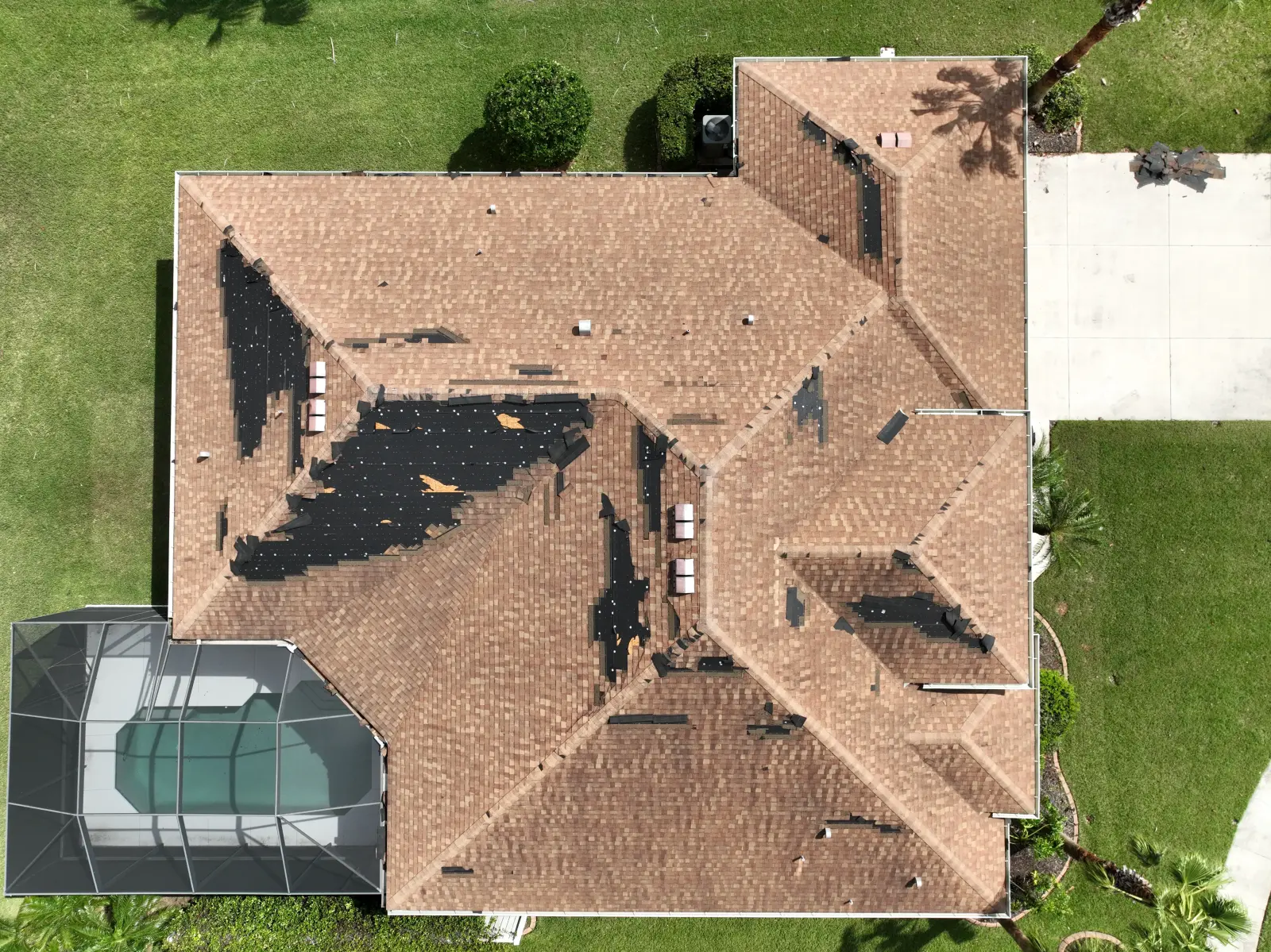
You cannot diagnose wind damage on a tile roof by walking it, and you should never let a roofer try. Walking tile cracks more tile. Every step on a concrete or clay field is a chance to crack a piece that the wind left intact, which means a careless inspection creates the exact damage it is supposed to find. We fly the entire roof with a drone first. The camera shows lifted noses, slipped courses, rotated tile, hairline cracks, and washed-out ridge mortar across every slope, valley, and hip, and we hand you the photos. You see the real failure points before anyone climbs a ladder, and we keep the foot traffic on the tile to the absolute minimum the repair requires. For the full picture on how tile and its underlayment age, see our tile roofing page, and if you are also seeing surface cracks read why tile roofs crack.
What wind damage looks like on tile
The damage a drone finds that the ground hides
Most of this is invisible from your yard. Each one is a path for water to reach the underlayment and the deck.
Lifted tile noses. Wind pries up the leading edge and breaks the interlock. The tile drops back down looking straight, but the weather seal is gone and water now runs underneath it.
Slipped and rotated tile. A tile slid down its batten or twisted out of alignment leaves a gap above it. From the ground the course still reads as a solid line of tile.
Cracked ridge and hip mortar. The mortar bedding on ridges and hips is the most wind-exposed part of the roof. It cracks and washes out first, and the cap tile above it loosens once it does.
Hairline cracks from slam-down. A tile lifted by wind and dropped back hard can hairline-crack without breaking. The crack is too fine to see from below but wide enough to wick water.
Loosened fasteners. Repeated uplift backs out fasteners over time. A tile that is no longer locked down is the one that becomes a projectile in the next named storm.
Underlayment exposed at the breaks. Wherever the tile seal opens, the underlayment underneath is taking direct wind-driven rain. That layer is what keeps your ceiling dry, and it is not built to be the front line.
Repair or replace
How we decide between a targeted repair and a full job
Targeted repair
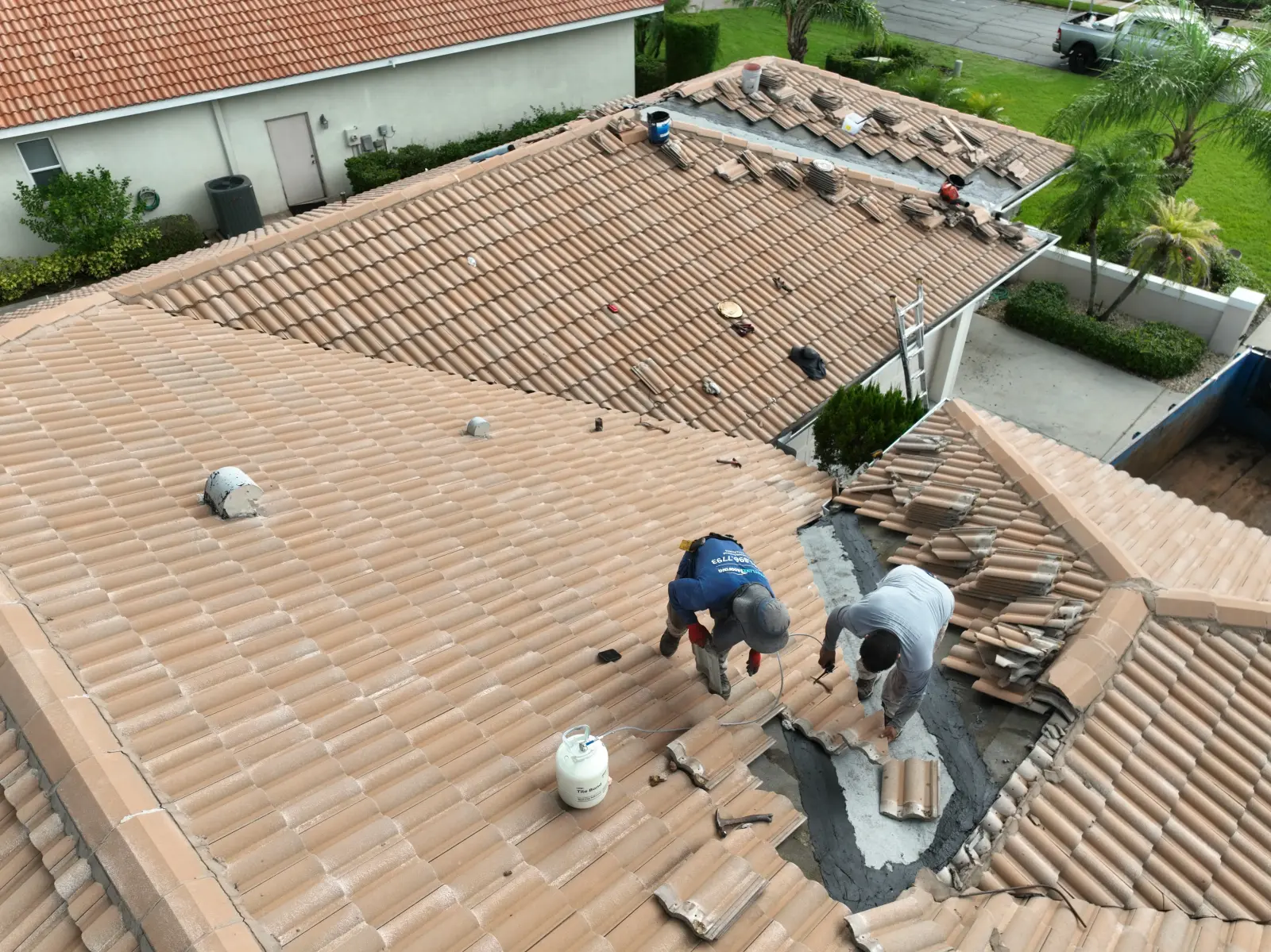
When the field tile and the underlayment underneath are still sound, we re-seat and re-fasten the lifted and slipped tile, re-bed the cracked ridge and hip mortar, and replace any cracked or broken tile with a color-matched piece. This is the right answer for most isolated wind events.
Re-underlayment, tile retained
When the tile is fine but the underlayment under it is at the end of its life, the smart move is to lift and stack your existing tile, install fresh underlayment, and reinstall the same tile. Wind damage often surfaces this on roofs that were already due. You keep your roof finish and the cost of new tile stays in your pocket.
Full replacement
When the wind damage is widespread, the deck is rotted from a leak that ran undetected, or the tile is too deteriorated to reuse, full replacement is the honest call. We show you the deck and underlayment photos that justify it. We never recommend a tear-off we cannot prove you need.
Coastal and barrier-island homes
Manatee County and the barrier islands, from Anna Maria to Longboat Key and Cortez, take the strongest wind loading in our service area. Roofs there see more uplift, more often. We weigh that exposure when we recommend a path, because a repair that holds inland may not hold a block from the Gulf.
Insurance
Wind is a covered peril. Document it before the window closes.
Wind and hurricane damage are covered perils on most Florida homeowners policies, but the clock is short. Under Florida Statute 627.70132, you generally have one year from the date of loss to file a windstorm or hurricane claim, and 18 months for a supplemental claim. The date of loss is when the storm is verified by NOAA, not when you noticed the stain on your ceiling. The longer you wait, the harder it is to tie the damage to the storm, so the move is to get the drone photos on file fast. We give you a written, dated, photo-backed report you can hand straight to your adjuster. For help with the claim itself, see our free roof inspection and our storm damage repair service.
"After a year of back-and-forth with insurance, Josh and Rob got the roof covered. We paid the difference for a standing seam metal roof. That's the only way to go if you're wanting a metal roof."
Jason J.Metal roof, insurance, Florida Gulf Coast
★★★★★
"Josh and Russell took great care of me. Their team worked really hard, were all super polite and respectful, did a great job cleaning up. Wouldn’t even know they were there except for my beautiful new roof!"
Kevin F.Roof replacement, Florida Gulf Coast
★★★★★
"Coastline did a great job re-roofing our home. Then serious flying debris from both Hurricanes Ian and later Milton damaged the shingles twice. Each time, company owner Josh sent out a skilled crew to do repairs. We are happy that our roof still looks brand new."
Jim S.Repeat customer, storm repairs, Florida Gulf Coast
From our roofs
What we see on Florida tile roofs after wind
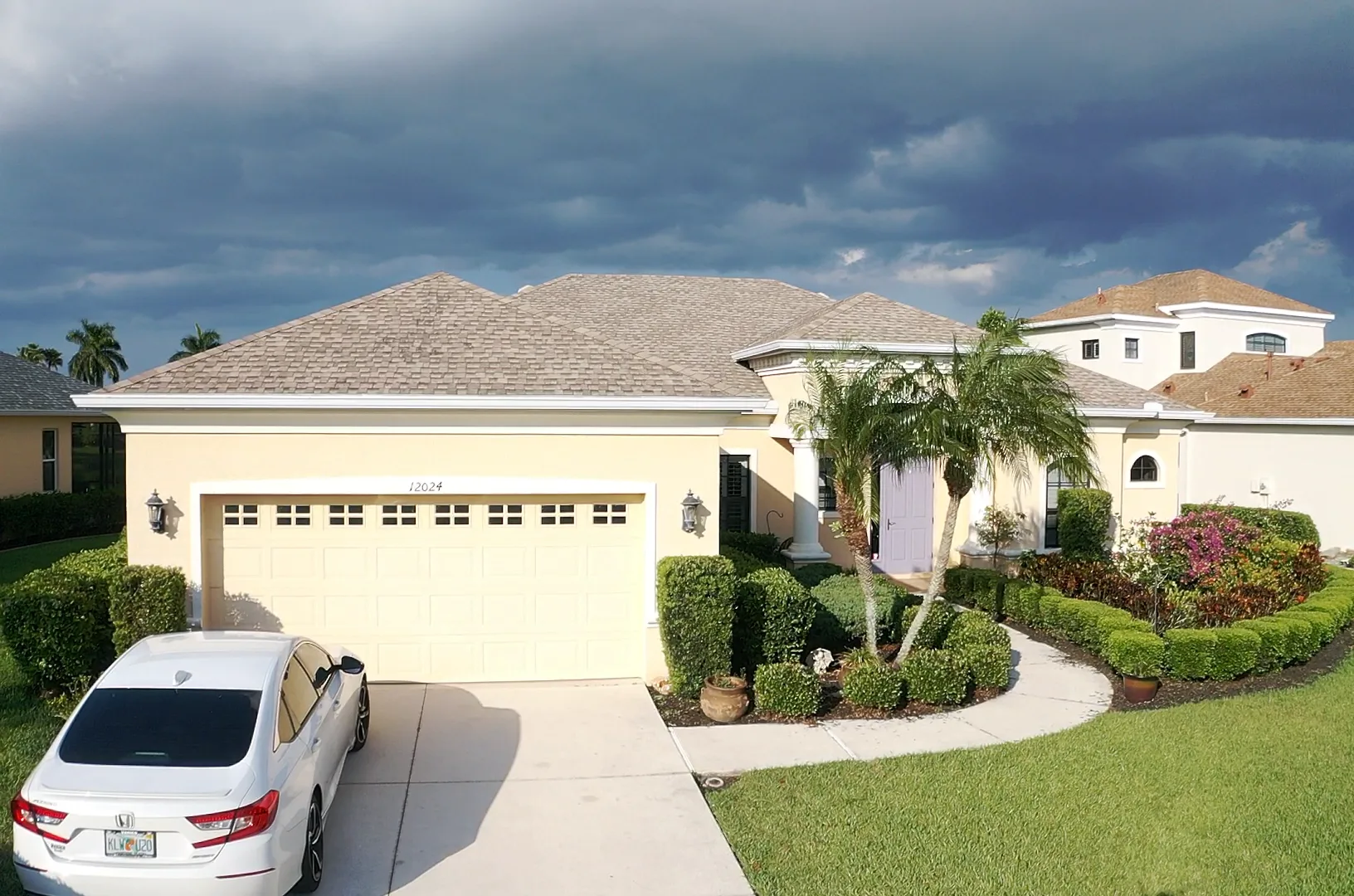
From the ground a wind-hit tile roof can look untouched. Tile roof, Manatee County, FL.Re-seating and re-fastening tile during a 2024 repair. Tile roof, Florida Gulf Coast.
There is no broken tile in my yard. Do I still need an inspection?
Yes, and this is the most common mistake we see. Tile is heavy, so wind rarely throws it clear of the roof. It lifts the nose, slips the course, or twists the tile out of its lock, and the tile drops back down looking straight from the driveway. The weather seal is broken even though nothing fell. A clean yard tells you nothing about whether the wind broke the interlock that keeps water out. A drone flyover settles it in about fifteen minutes.
Why not just have a roofer walk up and look?
Because walking a tile roof cracks tile. Every footstep on a concrete or clay field is a chance to crack a piece the wind left intact, which means a foot inspection can create the exact damage it is meant to find. We fly the full roof with a drone first, photograph every lifted, slipped, and cracked tile and every washed-out ridge, and only put a foot on the tile when the repair itself requires it.
How do I know if I need a repair or a full replacement?
It comes down to the condition of the field tile and the underlayment underneath. If both are sound and the wind only lifted, slipped, or cracked a limited area, a targeted repair is correct: re-seat and re-fasten the tile, re-bed the ridge mortar, and color-match any broken pieces. If the underlayment is at the end of its life, re-underlayment with your existing tile retained is the smart move. Full replacement is for widespread damage or a deck that rotted from an undetected leak. We show you the photos behind whichever path we recommend.
Will my insurance cover wind-lifted tile?
Wind and hurricane damage are covered perils on most Florida homeowners policies. The catch is the deadline. Under Florida Statute 627.70132, you generally have one year from the date of loss to file a windstorm or hurricane claim, with the date of loss tied to when NOAA verifies the storm. Document the damage quickly with dated photos so it can be clearly tied to the storm. We provide a written, photo-backed report for your adjuster.
I live near the water. Does that change anything?
It does. Manatee County and the barrier islands, from Anna Maria to Longboat Key and Cortez, take the strongest wind loading in our service area, so coastal roofs see more uplift more often. The Florida Building Code requires the perimeter tile rows near edges, hips, and ridges to be locked down with both fasteners and mortar or adhesive because those areas take the highest wind pressure. On a home a block from the Gulf, we weigh that exposure carefully when we recommend repair versus replacement.
What happens if I just leave the lifted tile alone?
The seal stays broken, and every rain pushes water past the tile and onto the underlayment, which is not built to be the front line. Water tracks along the underlayment, soaks the decking, and feeds mold in the attic. A half-day repair turns into a rotted-deck job, and the loosened or unfastened tile becomes a projectile in the next storm. Lifted tile does not heal. It only gets more expensive.
Find out what the wind actually did to your tile roof
Drone diagnostic, written photo report, and an honest repair-or-replace call. Free inspection, no trip fee.