
★★★★★
"Coastline Roofing did a great job for us. They replaced all the roof shingles and the flat roof, they did a great job at the best pricing ever."Oren S.Shingle and flat roof replacement, Florida Gulf Coast
For most Florida commercial and low-slope roofs, white TPO is the best all-around choice: it reflects sun and its seams are heat-welded. Modified bitumen has a longer track record here and is easier to spot-repair. Built-up roofs can last longest with upkeep, and a coating can restore a sound, dry roof without a tear-off.
A flat roof rarely gets a second look until a stain shows up on a ceiling tile. Pick the wrong membrane, or coat a roof that's already wet, and you can end up paying for the same roof twice. Here's how the four common systems stand up to Florida sun and rain.
Four: TPO, modified bitumen, built-up roofing, and liquid-applied coatings. The first three are new roofs. A coating restores the roof you already have.
TPO is a single layer of tough plastic membrane, usually white, rolled out in wide sheets. Johns Manville's installation guide calls for hot-air welding on every field seam, so the sheets are fused together, not glued.
An asphalt-based roll roofing that comes in two main types, SBS and APP. Polyglass lists four ways it goes down: torched, set in hot asphalt, bonded with cold adhesive, or self-adhered. It has a longer track record in Florida than TPO and is easier to patch.
The original flat roof: several plies of reinforcing sheet and asphalt, built up in layers on the roof. InterNACHI's life chart gives it the longest run of the group, about 30 years.
Acrylic, silicone or aluminum-reflective coating, applied as a liquid over the existing roof. It isn't a new roof. It restores one that is still sound and dry, and it skips the tear-off and the haul to the landfill.
Modified bitumen is the easiest to patch, built-up roofing has the longest listed life, and white TPO pairs welded seams with a reflective surface. For coatings, InterNACHI lists only aluminum coating, at 3 to 7 years; acrylic and silicone systems are sold with warranty terms instead.
The lifespans below are InterNACHI's national estimates. The chart says real life depends on weather, design, materials and maintenance, so treat them as a starting point, not a promise.
| What matters | TPO | Modified bitumen | Built-up (BUR) | Coating |
|---|---|---|---|---|
| Expected life | 7 to 20 years | About 20 years | About 30 years | Aluminum coating: 3 to 7 years. GAF's coating warranties run 10, 15 or 20 years, by system |
| Seams | Hot-air welded | Torched, hot-mopped, cold adhesive or self-adhered | Several overlapping plies | None; goes on as a liquid |
| Solar reflectance, new and weathered | White: 0.77 to 0.79, then 0.70 | Depends on the surface color | Depends on the surface color | White acrylic: 0.85, then 0.75 |
| Standing water | No ponding 48 hours after rain in drying weather (NRCA's drainage test) | Gaco's silicone is rated for ponding; its acrylic is not | ||
| Spot repair | Possible, but harder than mod bit | Easiest to patch | Patchable; a sound one can take an overlay | Only as good as the roof under it |
| Best fit | New commercial roofs, flat additions | Home flat sections, roofs you expect to patch | Older commercial roofs worth keeping | Sound, dry roofs with life left |
Solar reflectance is the share of sunlight a surface bounces back, so 0.70 means 70%. The TPO figures are from Carlisle and Johns Manville data sheets (new, then after 3 years outdoors), the acrylic from Gaco's A47 sheet (new, then weathered), and all of them drop as the roof weathers.
A light, reflective one. White TPO or a white coating keeps the roof surface far cooler than dark asphalt, and that's less heat baking the roof and the building under it.
A cool roof guide from the Department of Energy and Lawrence Berkeley National Laboratory says a conventional roof can reach 150°F or more on a sunny summer afternoon, while a reflective roof could stay more than 50°F cooler. The same guide explains the gap: light-colored roofing typically reflects 55 to 90% of sunlight, and most dark roofing only 5 to 20%.
Heat also ages asphalt. InterNACHI describes alligatoring, the cracked, alligator-hide look on old flat roofs, as aged asphalt that has oxidized and lost its volatile oils to the sun, the end result of asphalt's limited tolerance for heating and cooling. Modified bitumen and built-up roofs are both asphalt-based, so their top surface matters.
Fix the drainage before you pick a material. The National Roofing Contractors Association's test for proper drainage is no ponding water 48 hours after rain, in weather that allows drying.
Flat roofs aren't built dead flat. The Florida Building Code, in both its Building (commercial) and Residential volumes, calls for built-up, modified bitumen and single-ply roofs such as TPO to have a design slope of at least a quarter inch per foot, a 2% slope. (That's FRSA's transcription of the 2017 code; the state's list of 2023 residential code changes shows none to those sections.) If a roof lost that fall or never had it, the fix is rebuilding slope, often with tapered insulation, or improving the drains. Our page on why water pools on a flat roof walks through the causes.
If you're coating, the type matters. Gaco says its GacoFlex S20 and GacoRoof GR16 silicone coatings stand up to ponding water. Its GacoFlex A47 acrylic data sheet says that coating isn't intended for surfaces prone to ponding or for slopes under 2:12 (2 inches of rise per foot). A roof built to the quarter-inch minimum is far flatter than that.
GAF's coating manual, which covers its silicone coatings too, requires positive drainage and says the roof being coated should not pond water for more than 48 hours after rain stops. Correct the drainage, then coat.
When the roof is still sound, dry and draining. A coating skips the tear-off and the disposal of the old roof, but GAF's coating manual is blunt: "a coating cannot add life back to a roof already beyond its service life."
GAF's Liquid-Applied Roofing Manual sets the conditions. Three have to hold before a coating makes sense:
GAF notes that coatings generally won't find or fix existing leaks, so leaks get traced and repaired first. A roof at the end of its life needs replacing, not coating.
All wet insulation comes out before coating. If a moisture survey (infrared, nuclear or core cuts) finds moisture in 25% or more of the roof, GAF requires a complete tear-off.
On built-up and modified bitumen roofs, cracks 1/16 inch or wider get repaired, and blistered or wet membrane gets removed. Alligatored areas have to be treated before the coating goes on.
Skip the moisture check and a coating can seal wet insulation in. If the surface is cracking like dried mud, read what alligatoring means for a flat roof before you price a coating.
For a new commercial flat roof, white TPO is the standard pick in Florida. For a lanai, porch, carport or addition that's too flat for shingles, modified bitumen and TPO both work. It comes down to easy patching versus a cooler surface.
Commercial buildings. A big, open roof takes sun all day, which is where a reflective membrane with welded seams earns its keep. Modified bitumen is still a solid choice, especially where the owner expects to patch small areas over the years.
A home's flat section. Florida's residential code allows asphalt shingles only on slopes of 2:12 or steeper (Florida Building Code, Residential, Section R905.2.2), so a flatter porch or addition roof needs a membrane. For the sloped main roof, our guide to shingle, metal and tile for Florida homes picks up where this page stops.
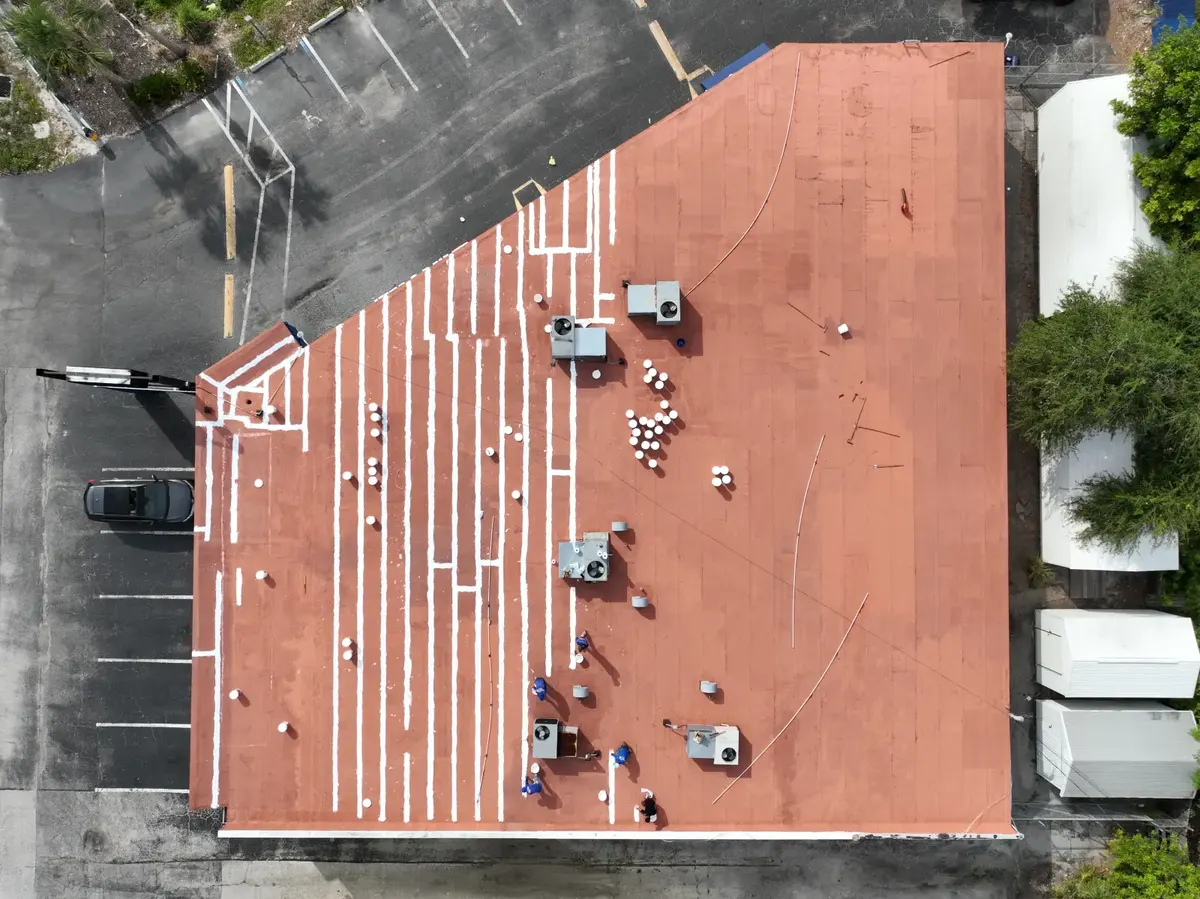
Sixty-mil heat-welded TPO, modified bitumen in both SBS and APP, and repair or replacement of built-up roofs. We also apply elastomeric acrylic, silicone and aluminum-reflective coatings, matched to the membrane that's already there.
On an older built-up roof with a sound substrate (the base the roof sits on), we can install a modified bitumen or TPO overlay instead of tearing it off.
Commercial work is scheduled to keep disruption low, with early starts, weekends, or a phased install. The crew works from a checklist, Josh reviews every job's photo report, replacements carry our 5-year workmanship warranty, and manufacturer warranties pass through to you in full. See how we handle commercial roofs and the flat roof systems we repair and replace.
It starts with a free, drone-assisted roof inspection and a written photo report you keep, with no trip fee and no diagnostic fee. You can also text photos of the roof to (941) 345-0072.
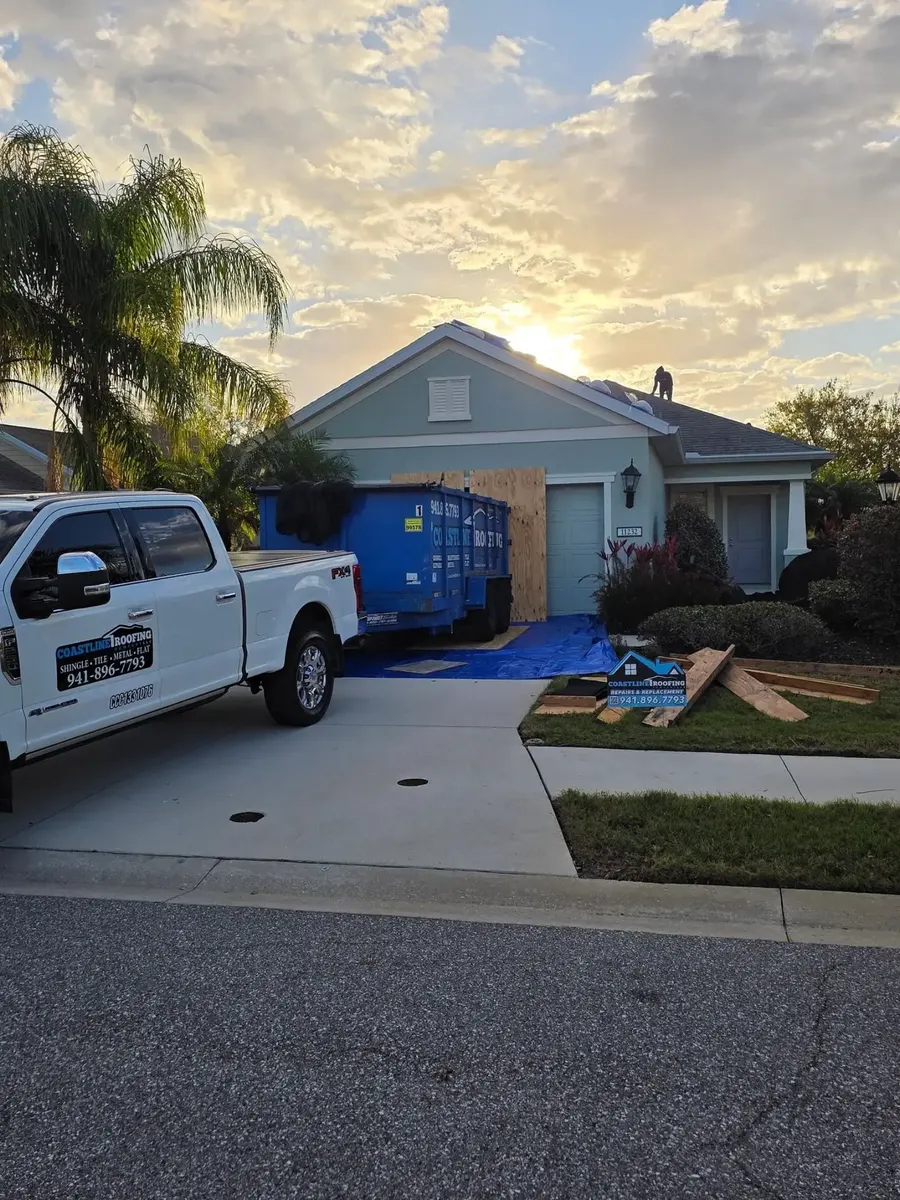
"Coastline Roofing did a great job for us. They replaced all the roof shingles and the flat roof, they did a great job at the best pricing ever."Oren S.Shingle and flat roof replacement, Florida Gulf Coast
"Josh and his professional crew did an excellent job replacing my roof."Bob A.Roof replacement, Florida Gulf Coast
"Wonderful to work with this company very good people and professional."Paul P.Roofing customer, Florida Gulf Coast
Sealant patches a spot. For the whole roof you want a coating system: silicone where any water lingers, since Gaco rates its silicone coatings for ponding, or acrylic on a roof that drains well and has more pitch. Either one needs a sound, dry roof under it.
InterNACHI's life chart lists aluminum coating at 3 to 7 years and doesn't list acrylic or silicone. GAF offers 10, 15 or 20-year warranties on its coating systems, depending on the system, but a warranty term isn't a lifespan. How long any coating lasts depends on the roof under it being sound and dry.
Sometimes. Under the Florida Building Code, Existing Building, Section 706.3 (2023 edition), the old roof has to come off down to the deck if it's water-soaked or too deteriorated to serve as a base, or if it already has two or more roof coverings. A single sound, dry layer can usually take one recover. On an older built-up roof with a sound substrate, we can install a modified bitumen or TPO overlay.
If both are near the end of their life, price them together. The joint where the flat section meets the sloped roof gets built once, and you aren't setting up a second job a few years later. If the flat section still has good years in it, a repair or a coating may be the better use of the money.
Free drone-assisted inspection with a written photo report you keep. No trip fee, no diagnostic fee, and if a repair or a coating will do the job, we'll tell you.
Leave your name and number. We typically call back the same day during business hours. Consent to texts is not required.