
★★★★★
"Coastline was able to start my work within a week after Ian. Very professional and great quality work. Work was complete in less than a week."Anthony S.Hurricane Ian replacement, Florida Gulf Coast
Updated June 2026
It rained two days ago, the sun is back out, and there are still wide puddles sitting up on your flat roof. That is called ponding, and it is the single clearest sign that something on your roof is not draining the way it was built to. A flat roof is not actually flat, and water is not supposed to stay up there. This page explains the 48-hour rule, why standing water quietly destroys a membrane, and what it takes to fix it before it finds a seam and gets into the building.
Start with the thing most people get wrong: a flat roof is not flat. Every low-slope and commercial roof is built with a slight pitch, usually around a quarter inch of fall per foot, that steers rainwater toward drains, scuppers, or gutters. The membrane on top, whether it is TPO, modified bitumen, or a coating system, is designed to be wet during a storm and dry not long after. Water moving across the surface and off the roof is normal. Water sitting in one spot is not.
The industry yardstick is the 48-hour rule. After rain stops and the weather clears, a healthy flat roof should be drained within 48 hours. Anything still holding water past that, a puddle that has its own little shoreline and does not move, is ponding. Roofing manufacturers use the same window: most membrane warranties specifically exclude damage from water that ponds longer than 48 hours, because they know what standing water does to their product over time. If you are seeing puddles that survive two full sunny days, the roof is telling you a drain is blocked, a section has sagged, or the original slope was never right.
Here is why that matters more on a Florida flat roof than almost anywhere else. Our summer storms do not arrive politely. They dump one to three inches of rain in an afternoon, then the sun comes back out and bakes the roof at surface temperatures well above the air temperature. A low spot that fills fast in a downpour and then sits under brutal UV for two days is getting the worst of both worlds. Freezing is not the enemy here the way it is up north. Constant saturation, heat, and algae are. That combination is what wears a flat roof out early on the Gulf Coast.
A puddle on a flat roof is not harmless dead weight. It actively degrades the membrane underneath it. Sunlight passing through standing water concentrates UV onto the surface, and the constant wet-dry cycling at the edge of the pond breaks down the top layer of the membrane faster than the dry areas around it. Over months and years, that ponded spot ages while the rest of the roof holds up, which is why a leak so often starts exactly where the water sits.
Standing water is also a greenhouse for algae and biological growth. A warm, shallow, stagnant puddle in Florida humidity grows a slick film within days, and that growth holds even more moisture against the membrane and accelerates the breakdown. Then there is the weight. Water is heavy, roughly five pounds per square foot for every inch of depth, so a broad inch-deep pond loads hundreds of extra pounds onto a low spot. That added weight makes the deck sag a little more, which makes the low spot deeper, which holds more water. It is a feedback loop that gets worse on its own.
The end of that loop is a leak. Ponded water has time and pressure on its side, and it patiently finds the weakest point: a lap seam, a flashing detail, a fastener head, a pinhole that would never matter under fast-draining water. Once it gets through, it travels along the deck and into insulation, and the stain that finally shows up on the ceiling inside is often a long way from where the water actually entered. By then you are not repairing a puddle, you are repairing wet insulation and a soaked deck.
The most common cause, and the easiest to fix. Leaves, granules, roofing debris, and on commercial buildings, things that blow up from the parking lot, choke off an internal drain or pile up against a scupper. Water that has nowhere to go simply stands. Sometimes the drains were undersized for the roof from day one and never kept up with a Florida downpour.
If the deck or the insulation under the membrane has sagged, you get a dish that collects water. On older commercial roofs this often follows a past leak: water got into the insulation, the insulation compressed, and now that low spot ponds every time it rains. A sag tends to deepen over time as more water loads it.
Sometimes the roof never had enough slope to begin with, or framing settled unevenly and left a flat area with no fall toward the drains. These dead-level spots cannot shed water no matter how clean the drains are. They are designed-in problems, and fixing them takes more than cleaning, it takes rebuilding the slope.
An older membrane that has lost its surface, gone brittle, or pulled at the seams will pond more readily and leak sooner once it does. When ponding shows up on a membrane already near the end of its life, the puddle is a symptom, and the real answer is usually a recoat or replacement rather than chasing one low spot.
Ponding shows up most on commercial and low-slope buildings: strip retail, warehouses, offices, restaurants, medical and storage. Florida stacks the deck against those roofs in a few specific ways.
Ponding gets fixed properly only after someone figures out why the water is sitting, and that is not always obvious from the puddle. Coastline starts with a free flat-roof assessment and a written photo report. We walk the roof, clear and inspect the drains and scuppers, look for sags and soft spots that point to wet insulation, check the membrane condition and the seams, and read where the water is actually pooling against where the roof should be draining. The photos and findings go in writing so you, and the building owner or property manager, can see exactly what we found.
From there the correction matches the cause. If the drains or scuppers are clogged or undersized, we clear them and, where needed, add or enlarge drainage so the roof can keep up with a Florida storm. If the problem is a low spot or a dead-level area, the fix is tapered insulation, building up crickets and slope to redirect water toward the drains so it cannot pool again. If the membrane is intact but ponding has worn one area, a targeted membrane repair or a recoat over the field restores the surface. And if the membrane is genuinely shot, brittle, failing at the seams, ponding in multiple places, the honest answer is a full flat-roof replacement rather than patching a roof that is out of life.
What we will not do is tell a building owner to replace a roof that has good years left, or sell a recoat that buys a few months on a deck that is already wet. The free assessment is how you find out which of those situations you are actually in. If you are also seeing splits or cracks opening up across the surface, our guide on why a flat roof splits and cracks covers what causes them and how they relate to ponding.
The right fix depends on what is up on your roof. Here is the high-level difference between the three flat-roof systems we see most on the Gulf Coast.
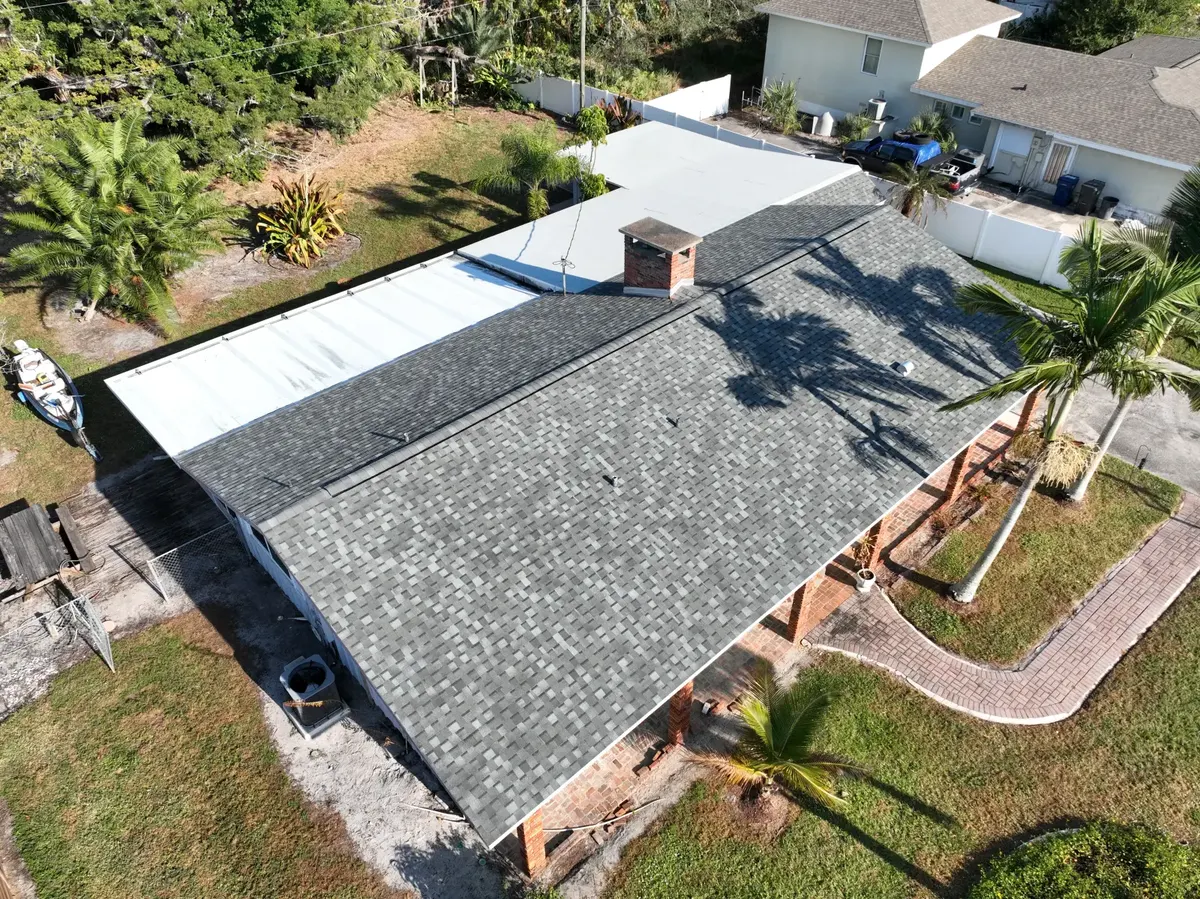
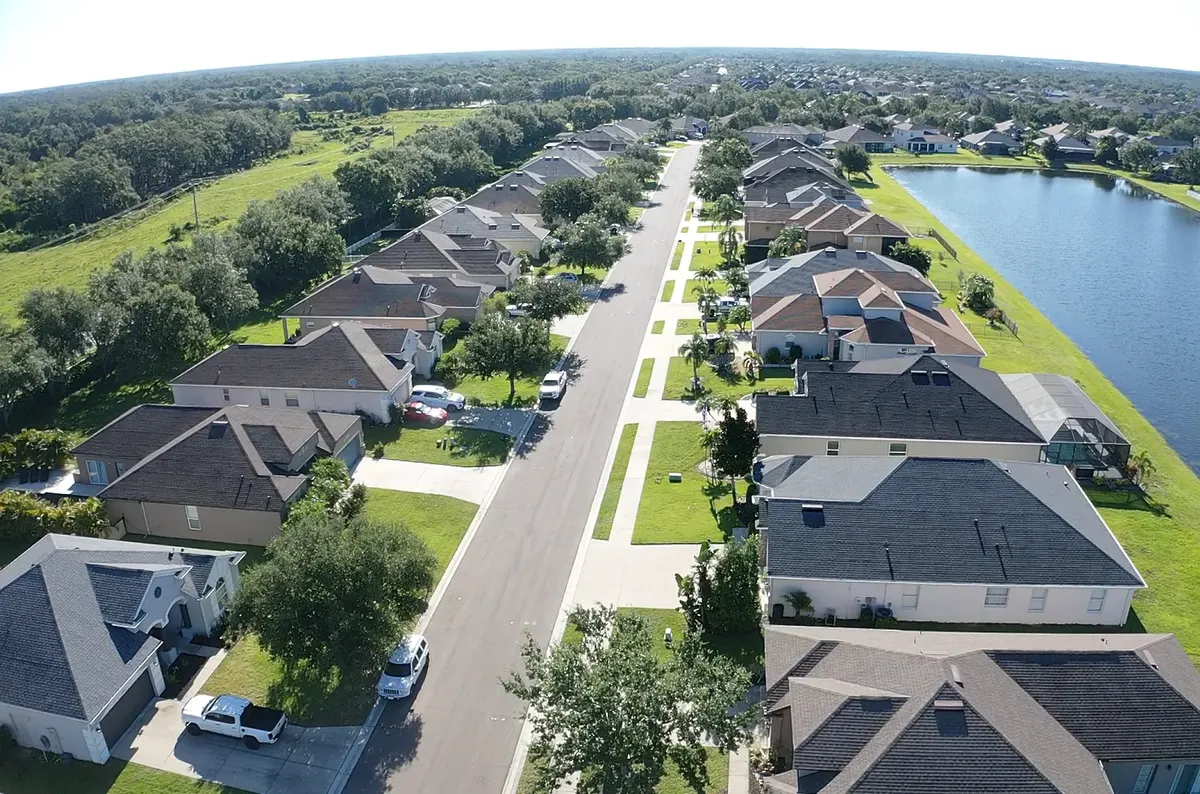
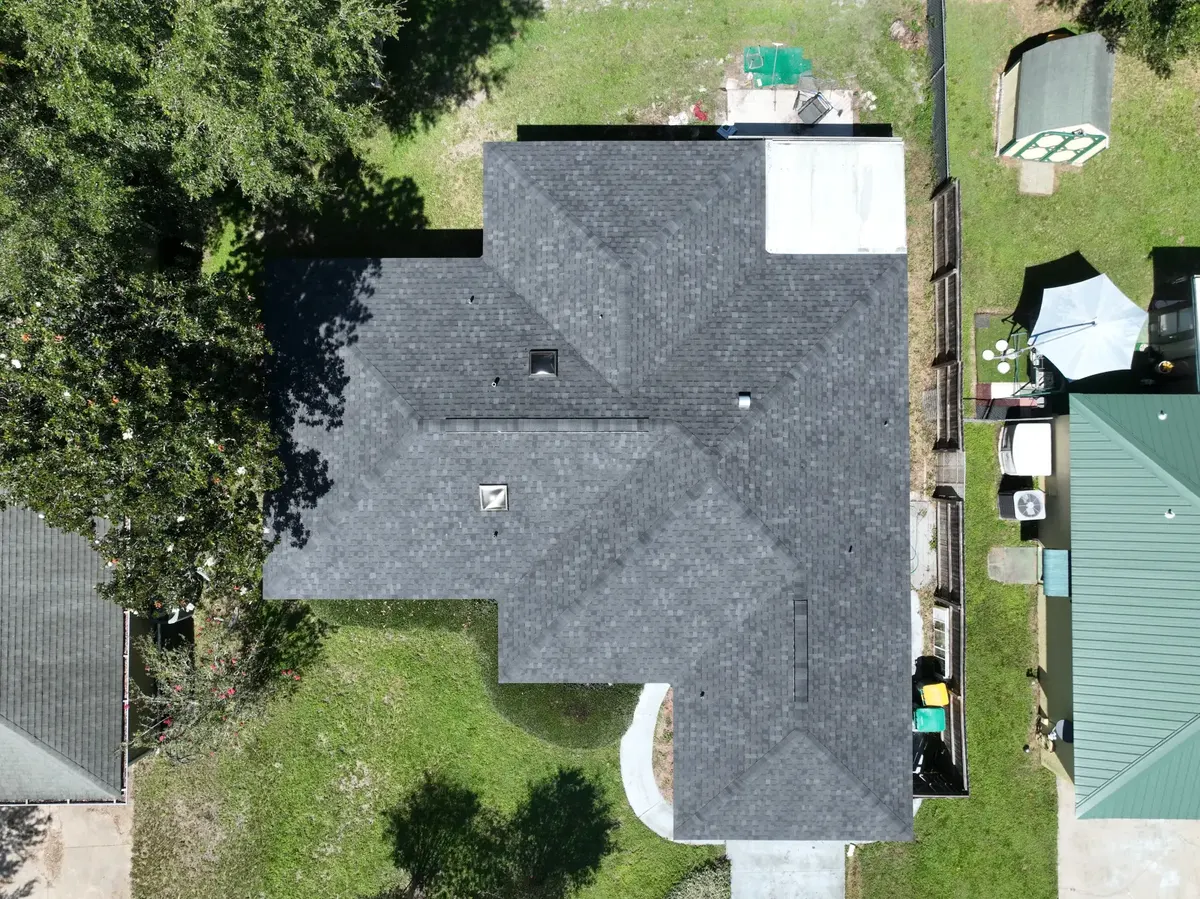
We walk the roof, clear and check the drains, look for sags and worn membrane, and give you a written photo report with an honest call: clean the drainage, rebuild the slope, recoat, or replace. No trip fee, no diagnostic fee, no pressure to do work you do not need.
Schedule your free assessment"Coastline was able to start my work within a week after Ian. Very professional and great quality work. Work was complete in less than a week."Anthony S.Hurricane Ian replacement, Florida Gulf Coast
"Josh and his crews are top notch, on time and professional. ... Thank you Coastline roofing for the great work."Kyle M.Parrish Fire Department, Parrish, FL
"Had another company put on a new roof and after inspection several issues with the work were obvious. Called in Coastline and within a week they had a crew of guys come make needed repairs. ... Would use them again."Dan H.Repair after a bad install, Florida Gulf Coast
The standard is 48 hours. After rain stops and the weather clears, a healthy flat roof should drain within two days. Water still standing after that is ponding, and it points to a blocked drain, a sagging low spot, or poor slope. Most membrane warranties also exclude damage from water that ponds longer than 48 hours, so it is not just a rule of thumb, it is the line the manufacturers themselves draw.
Yes, more than it looks. Standing water concentrates UV onto the membrane, grows algae in our humidity, adds real weight that deepens the low spot, and patiently works at every seam and fastener until it finds a way in. The ponded area ages faster than the rest of the roof, which is why leaks so often start exactly where the water sits. A small puddle ignored becomes wet insulation and a soaked deck later.
Often, yes. If the cause is clogged or undersized drains, clearing or adding drainage solves it. If it is a low spot, tapered insulation and crickets rebuild the slope so water runs to the drains. If the membrane is sound but worn in one area, a targeted repair or a recoat handles it. A full replacement is only the answer when the membrane is genuinely at the end of its life. The free assessment is how you find out which fix yours needs.
Because a flat roof is not actually flat. It is built with a slight slope toward drains or scuppers. When that slope is interrupted by a clogged drain, a sagging deck, settled framing, or a dead-level spot that never had enough fall, the water has nowhere to run and pools in place. Ponding is the visible sign that the built-in drainage is not working somewhere on the roof.
It can. Most flat-roof membrane warranties specifically exclude damage from water that ponds longer than 48 hours. Letting puddles sit can quietly undercut the coverage on an otherwise good roof. Documenting the ponding and correcting the drainage promptly protects both the roof and the warranty. We put the findings in a written photo report you can keep on file.
Yes. We walk the roof, clear and check the drains, look for sags and worn membrane, and give you a written photo report, all free, with no trip fee and no diagnostic fee. You get an honest read on whether you need a drainage fix, a slope rebuild, a recoat, or a replacement. Call (941) 896-7793 or text (941) 345-0072 to schedule.
Free flat-roof assessment, drains checked, written photo report, and an honest answer on what your roof actually needs.
Leave your name and number. We typically call back the same day during business hours. Consent to texts is not required.