
★★★★★
"Josh was extremely professional and walked me through every aspect of what he found with my roof. He even helped me with the insurance process and saved me thousands."Casey S.Insurance claim help, Florida Gulf Coast
Updated June 2026
Here is the hardest truth about roof leaks: water travels. The brown stain on your ceiling is almost never directly under the hole in your roof. Water enters high, runs along the underside of the deck, drips down a rafter or truss, and lands somewhere else entirely. That is why chasing the stain almost always wastes money. This page shows you how a leak is really traced, where Florida roofs usually let water in, and when it is time to stop guessing.
Picture water getting past a shingle near the top of a slope. It does not fall straight through onto your ceiling. It hits the underside of the roof deck, which is a sheet of plywood or OSB, and gravity pulls it to the lowest point it can find. That low point is usually a rafter or a truss. The water clings to the wood and runs along it, sometimes several feet, before it finally drips off and soaks into the insulation or the drywall below. By the time you see a stain, the water has already taken a hidden detour you cannot see from inside the room.
This is why the spot on your ceiling is the worst possible place to start a repair. The entry point can be two, six, even ten feet uphill from the stain, and on a different part of the roof than you would ever guess. A roofer who patches directly above the stain is sealing a piece of roof that was never leaking, and the real entry point keeps letting water in. You pay for a repair, the next storm rolls through, and the stain comes right back. Now you are convinced the roofer did a bad job when the truth is the leak was never found.
Tracing a leak is detective work, not guesswork. The path runs in reverse: start where the water lands, follow the wet trail back up the framing, and keep going until you reach the highest wet point on the deck. The entry is at or just above that highest wet mark. A flashlight in the attic shows you the trail. A controlled hose test confirms it. Skipping that work and patching the stain is the single most common reason a Florida homeowner pays twice for the same leak.
Every plumbing vent pokes through the roof, sealed by a rubber boot. As a boot ages, the rubber dries out and cracks, and a cracked boot can leave a stain nowhere near the vent itself. How to spot a vent pipe leak.
Valleys are where two slopes meet and dump a huge volume of water. The metal lining can corrode or the valley can pack with leaves and debris, forcing water sideways under the shingles. Wind-driven rain finds these gaps fast on the Gulf Coast.
Anywhere the roof meets a vertical surface, metal flashing bridges the gap. When the sealant ages or the flashing lifts, water runs straight down the wall behind the siding and into the ceiling. Skylight corners and chimney bases are classic offenders.
Fasteners that back out leave a tiny hole; shingles lifted or torn by wind expose the deck; and ridge vents along the peak can leak in wind-driven rain. Each one is small, easy to miss from the ground, and capable of soaking a ceiling several feet away.
There is a method to finding a leak, and it does not start on the roof. It starts inside, on a dry day, with a flashlight.
Most homeowners reach for the most natural assumption: the leak is above the stain. It almost never is. The patch goes on the wrong spot, dries clean for a few weeks, and then the next storm proves the leak was never touched. Now there is fresh sealant on a sound section of roof, an unsealed entry point still letting water in, and a homeowner out the cost of materials and a Saturday on a hot, slick roof. Walking a Florida roof is genuinely dangerous, and the loose granules and steep pitch are why even confident DIYers get hurt every storm season.
The harder problem is that Florida throws a curveball calm-day testing never catches: wind-driven rain. A garden hose runs water straight down. A summer squall drives rain sideways and upward, under the shingle edges, behind the flashing, and through gaps that simply do not leak on a still day. A roof can pass every casual once-over and still leak the moment a real storm hits. Finding those gaps takes someone who knows where wind pushes water on a Gulf Coast roof and what a wind-driven entry path looks like from inside the attic.
That combination, water that travels far from its source plus leaks that only show under storm conditions, is why a leak you cannot find is not a sign you are missing something obvious. It is a sign the leak is doing exactly what leaks do. The fix is a trained eye and a methodical trace, not another tube of roof cement on the ceiling stain. If the stain itself is what is worrying you, our guide on what a ceiling water stain really means walks through reading it.
You do not have to climb up there, and you do not have to keep guessing. Coastline runs a free roof inspection that pairs a drone flyover of the whole roof surface with an attic check from inside. The drone shows us the cracked boots, lifted shingles, corroded valleys, and failed flashing from above, while the attic reveals the wet trails that tell us where the water is actually traveling. Together they triangulate the entry point instead of patching a stain and hoping.
You get a written photo report: pictures of the real source, an honest explanation of how the water is getting in, and a clear repair plan. No trip fee, no diagnostic fee, no pressure. If the source is a single failed boot or a length of flashing, our roof repair crew handles it as a targeted fix. If you want the full diagnostic on record before anything else, that is exactly what our free roof inspection is built to deliver.
If water is actively pouring in during a storm, do not wait on a full diagnosis. Our 24/7 emergency tarping stops the damage now, and we trace the source properly once the weather clears. For a faulty flashing detail specifically, our guide on how roof flashing fails explains the most common culprit behind a leak that hides far from its stain. When you are ready, just contact us and we will get eyes on it.
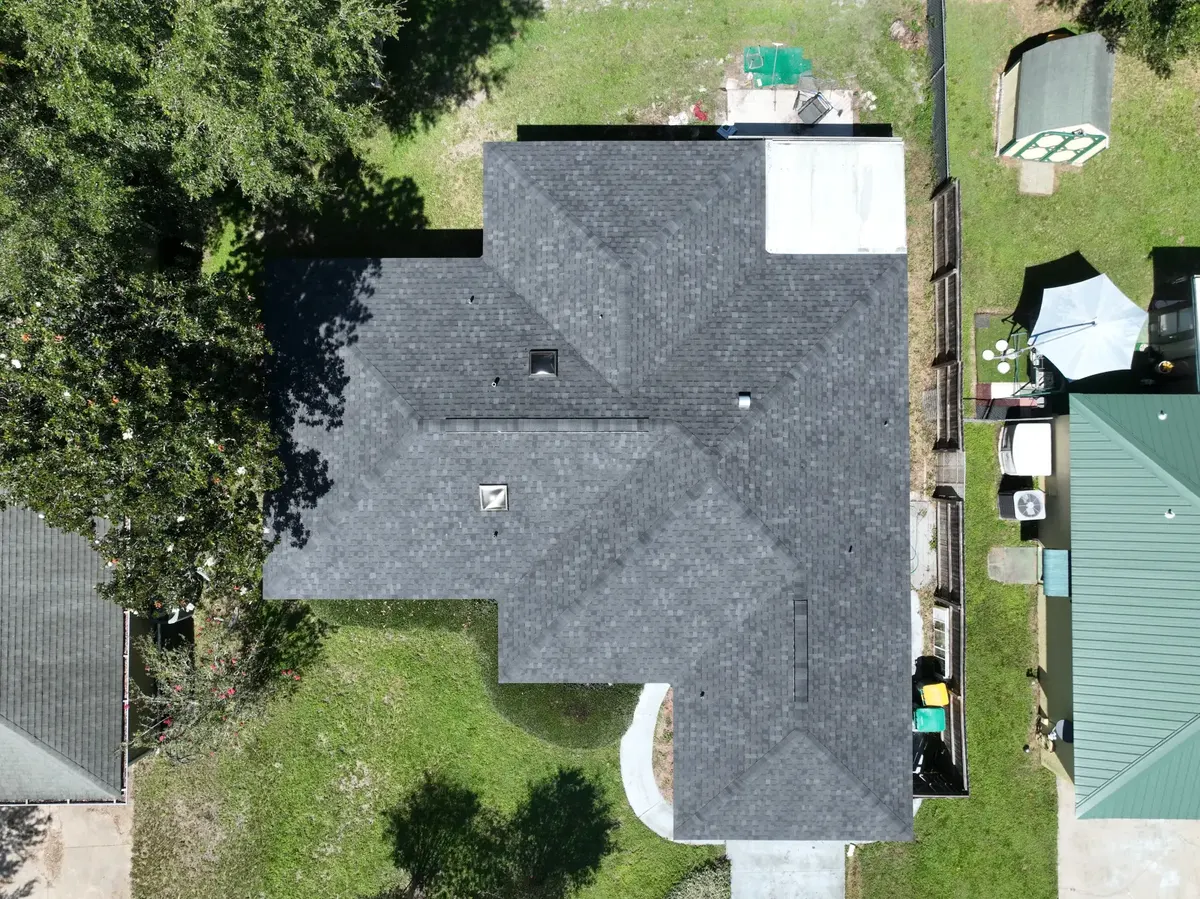
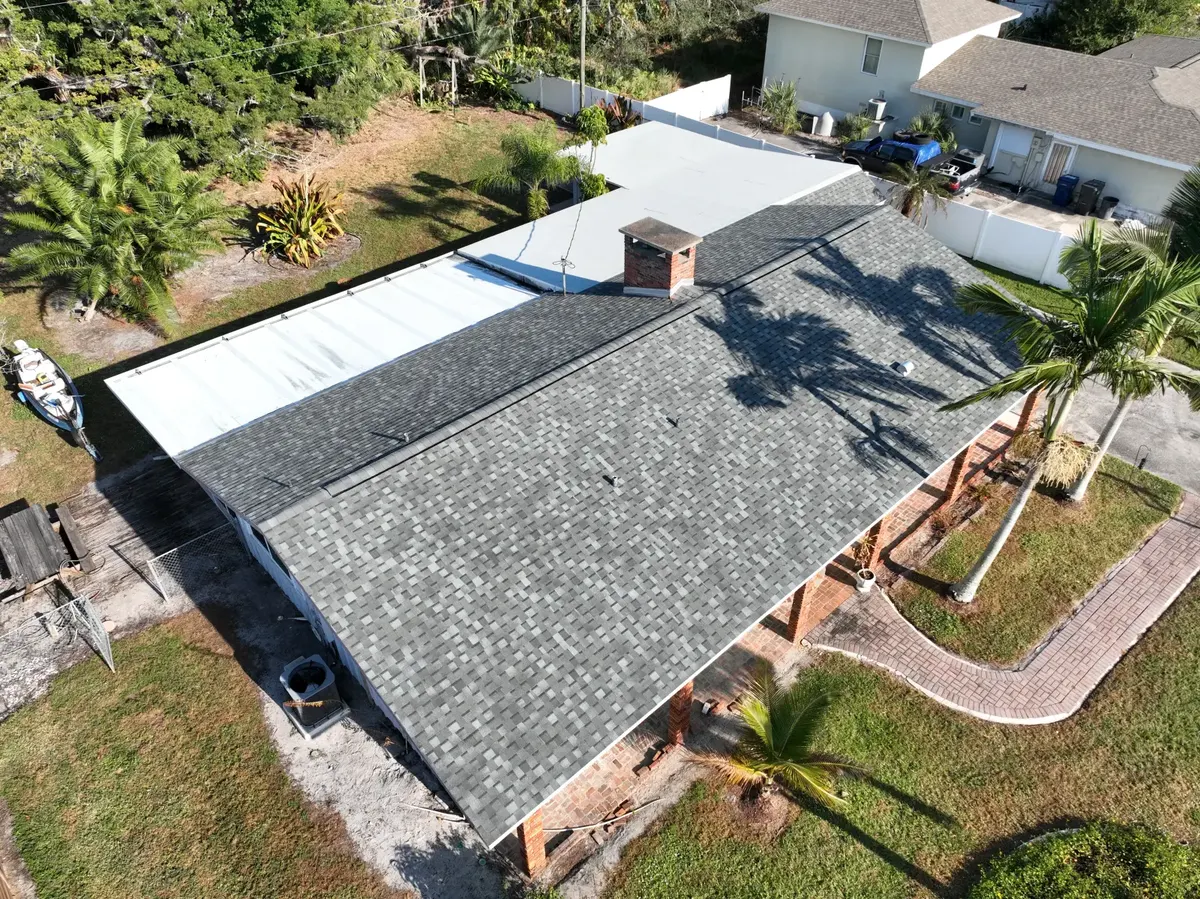
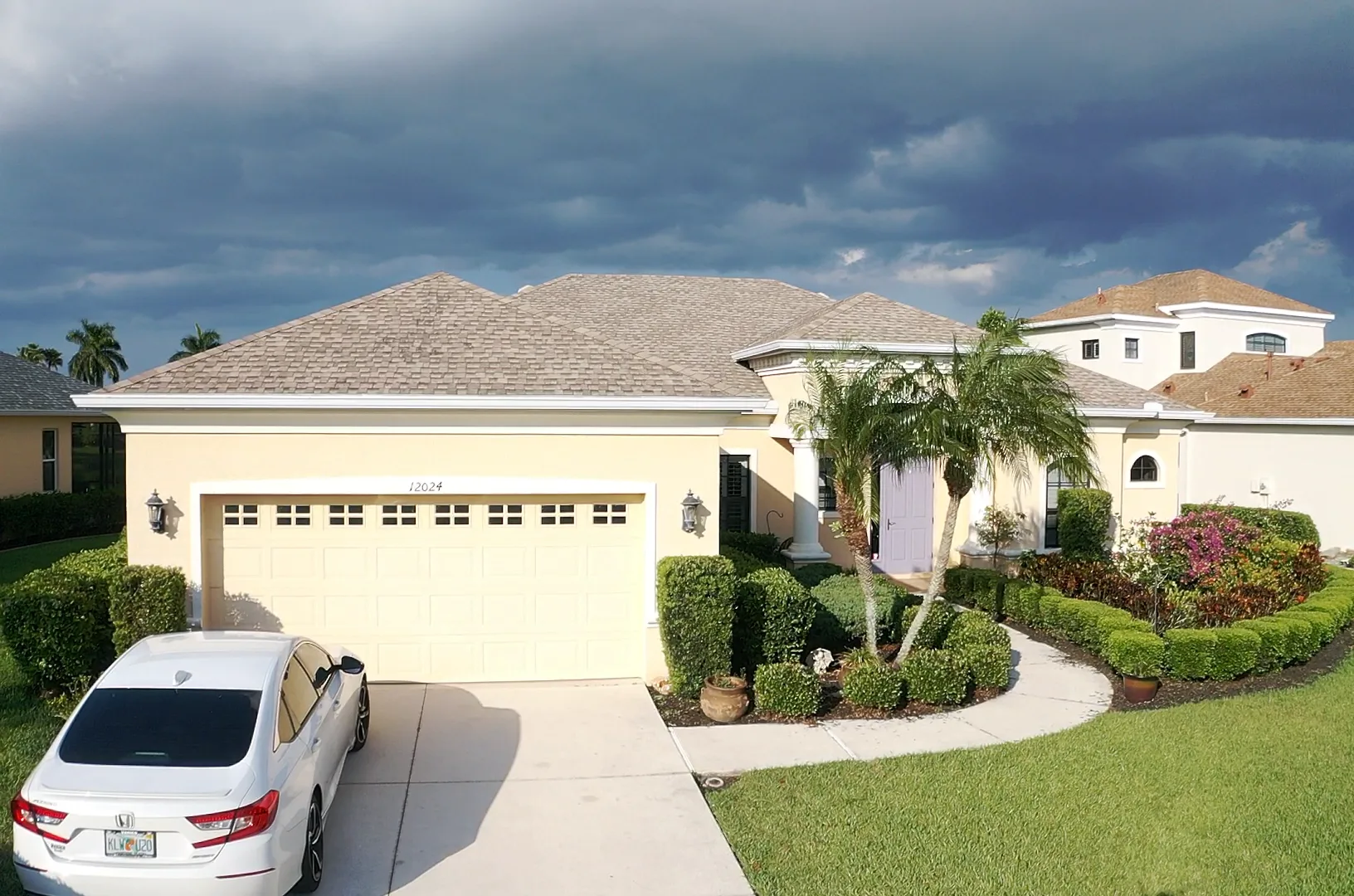
A drone flyover, an attic check, and a written photo report that shows where the water is actually getting in, all free. No trip fee, no diagnostic fee, no pressure to do work you do not need.
Schedule your free inspection"Josh was extremely professional and walked me through every aspect of what he found with my roof. He even helped me with the insurance process and saved me thousands."Casey S.Insurance claim help, Florida Gulf Coast
"Wonderful to work with this company very good people and professional."Paul P.Roof work, Florida Gulf Coast
"Josh was very thorough diagnosing a hard-to-find leak on a tile roof, after 2 other roofing companies tried but failed to catch the problem. ... Great work at a fair price, great service."Mark R.Tile leak diagnosis, Florida Gulf Coast
Because water travels before it drips. When water gets past the roof surface, it hits the underside of the deck and runs along the framing, a rafter or truss, to the lowest point it can reach before falling. That point can be several feet from where the water actually got in, and on a different part of the roof. The stain marks where the water landed, not where it entered, which is exactly why patching above the stain so often fails.
The usual suspects are cracked rubber pipe boots around plumbing vents, corroded or clogged valleys, failed flashing where the roof meets a wall, chimney, or skylight, and small openings like nail pops, lifted shingles, and ridge vents. Pipe boots are easy to overlook: as a boot ages, its rubber dries out and cracks, and the stain can show up far from the pipe.
They work backward. On a dry day, a flashlight in the attic reveals water staining and dried trails on the decking and rafters, which point uphill toward the entry. The highest wet mark is the closest clue. Then a controlled hose test, one person in the attic and one on the roof, runs water over small sections low to high until the leak reproduces. That proves the source instead of assuming it.
You can, but it usually costs more in the end. The natural guess, that the leak is straight above the stain, is almost always wrong, so the patch goes on a sound section and the real entry keeps leaking. On top of that, walking a Florida roof is genuinely dangerous with the steep pitch and loose granules. A free inspection finds the true source before a dollar of materials goes anywhere.
That is wind-driven rain, and it is a Florida specialty. A garden hose runs water straight down. A squall drives rain sideways and even upward, forcing it under shingle edges and behind flashing through gaps that never leak on a calm day. A roof can pass a casual once-over and still leak the moment a real storm hits, which is why finding it takes someone who knows where wind pushes water on a Gulf Coast roof. Our guide on why a roof leaks only in heavy rain goes deeper.
Yes. The drone flyover, the attic check, and the written photo report are all free, with no trip fee and no diagnostic fee. You get photos of the real source and an honest repair plan. If water is actively coming in during a storm, call us right away for 24/7 emergency tarping. Call (941) 896-7793 or text (941) 345-0072 to schedule.
Free drone and attic inspection, a written photo report, and an honest answer on where the water is actually getting in.
Leave your name and number. We typically call back the same day during business hours. Consent to texts is not required.