Roof Repair · Florida Gulf Coast

Why Does My Roof Leak at the Chimney, Wall, or Valley?

The water stain on your ceiling is almost never under a hole in the open field of shingles. It is under a chimney, where a wall meets the roof, in a valley, or around a pipe sticking up through the shingles. Those spots all have one thing in common: they rely on flashing, the metal and rubber pieces that seal the joints. When the flashing fails, the roof leaks even though the shingles look perfectly fine. This page explains where flashing lives, why it fails on Florida roofs, and how it gets fixed for good instead of smeared with caulk.

Licensed & InsuredFlorida CCC1331076
4.7 stars57 Google reviews
10 yearsFlorida-licensed
2,000+Roofs completed
What flashing actually is

A roof does not leak through the field. It leaks at the joints.

Picture the main slope of your roof, the wide open area covered in shingles or tiles. That field is the easy part. Water hits it, runs downhill, and rolls off the edge into the gutter. The field almost never leaks, because it is just one material doing one simple job. The trouble starts everywhere the roof has to stop being a clean slope: where it bumps into a wall, wraps around a chimney, folds into a valley, or has a pipe or skylight punched through it. Every one of those spots is a seam, and a seam is a place water can get in.

Flashing is how a roofer seals those seams. It is thin sheet metal, usually aluminum or galvanized steel, bent and tucked into the joint so water is forced to keep flowing over the top of the roof instead of sneaking behind it. Think of it as the metal collar and gutter system for every transition on your roof. Step flashing seals where the roof meets a wall. Counter flashing caps the metal around a chimney. Valley metal carries the heavy water where two slopes meet. Drip edge protects the raw edges. And a rubber pipe boot wraps the plumbing vents that stick up through the shingles. None of that is shingle. All of it is the actual waterproofing at the points that matter most.

Here is why this matters when you are staring at a ceiling stain: the leak you see inside is rarely under a hole in the field. It is under one of these transitions. The water finds a gap in the flashing, runs down the inside of the roof deck, travels along a rafter, and shows up as a stain several feet from where it actually got in. That is why a roofer who knows what he is doing does not just look at the shingles above your stain. He goes straight to the nearest chimney, wall, valley, or vent pipe, because that is where the money is. If you are trying to track the leak yourself, our guide on finding where a roof is leaking walks through how the water travels before it reaches the ceiling.

Where flashing fails

The four spots that cause most Florida roof leaks

Rubber pipe boots: the number one Florida leak

Every plumbing vent through your roof wears a rubber collar called a boot. Florida UV cracks that rubber, usually in 8 to 12 years, often sooner. Once the collar splits, water runs straight down the pipe and into the ceiling below. This is the single most common leak we find on Gulf Coast roofs, and the cheapest to fix if caught early.

Wall step flashing

Where a roof slope runs into a vertical wall, like a second story or a dormer, each course of shingle needs its own bent piece of step flashing woven behind it. When a builder skips this and relies on a bead of caulk, or when the flashing rusts or pulls loose, water runs down the wall and behind the shingles. A very common leak on additions and patios.

Chimney flashing

A chimney needs two layers: base flashing that tucks under the shingles, and counter flashing set into the masonry above it. Builders often seal the gap with roofing tar or caulk that dries out, cracks, and pulls away from the brick in a few Florida summers. Once that joint opens, every rain runs down the chimney and into the attic.

Valley metal

A valley is where two roof slopes meet and dump their combined water into one channel. It is the heaviest-flowing spot on the whole roof, so it gets metal underneath. If that metal corrodes, was nailed wrong, or the shingles over it lift in the wind, the valley becomes a fast-moving leak. Skylight flashing fails the same way, since a skylight is just a small box that has to be flashed on all four sides.

Why Florida is harder on flashing

The same things that age a roof here attack the seams first

Flashing fails faster on the Gulf Coast than almost anywhere, and the reasons all stack up at exactly the joints where you cannot afford a gap.

What to do about it

Caulk is a patch. A real flashing repair re-integrates the metal under the roof.

When a leak gets traced to flashing, the temptation, and what a lot of handymen will do, is to climb up and smear a tube of roofing caulk over the gap. It looks fixed. The stain dries. Everybody is happy for about a year. Then the Florida sun does to that bead of caulk exactly what it did to the original seal: it dries it, cracks it, and pulls it away from the surface. The leak comes back, usually worse, because now the water has been getting in behind the patch the whole time and quietly rotting the wood deck underneath.

A real flashing repair is not a surface smear. The shingles or tiles around the failed flashing get lifted, the old or wrong flashing comes out, and new metal goes back in the right order, tucked under the courses above it and over the courses below, so gravity does the sealing and the water is physically forced to stay on top of the roof. For a pipe boot, the cracked rubber collar is replaced, and we often upgrade it to a longer-life boot built to survive Florida UV. For a chimney, the base and counter flashing get reset into the masonry, not just tarred over. Done right, the joint is waterproof because of how the pieces overlap, not because of a bead of sealant praying to hold.

The first step is a free inspection. We send a roofer up with a drone, find every failing flashing point, and put it in a written photo report so you can see the cracked boot or the open chimney joint with your own eyes. From there it is usually a same-day or next-day repair through our roof repair service. If you want the whole roof checked, not just the leak, our free roof inspection covers every flashing, valley, and penetration. One more honest point: when a roof is already getting a full re-roof, the flashing should be replaced new, not reused. Old flashing on a new roof is a leak waiting to happen, which is why a proper roof replacement includes fresh metal at every transition.

Recent roof work

Roofs Coastline has repaired and replaced on the Gulf Coast

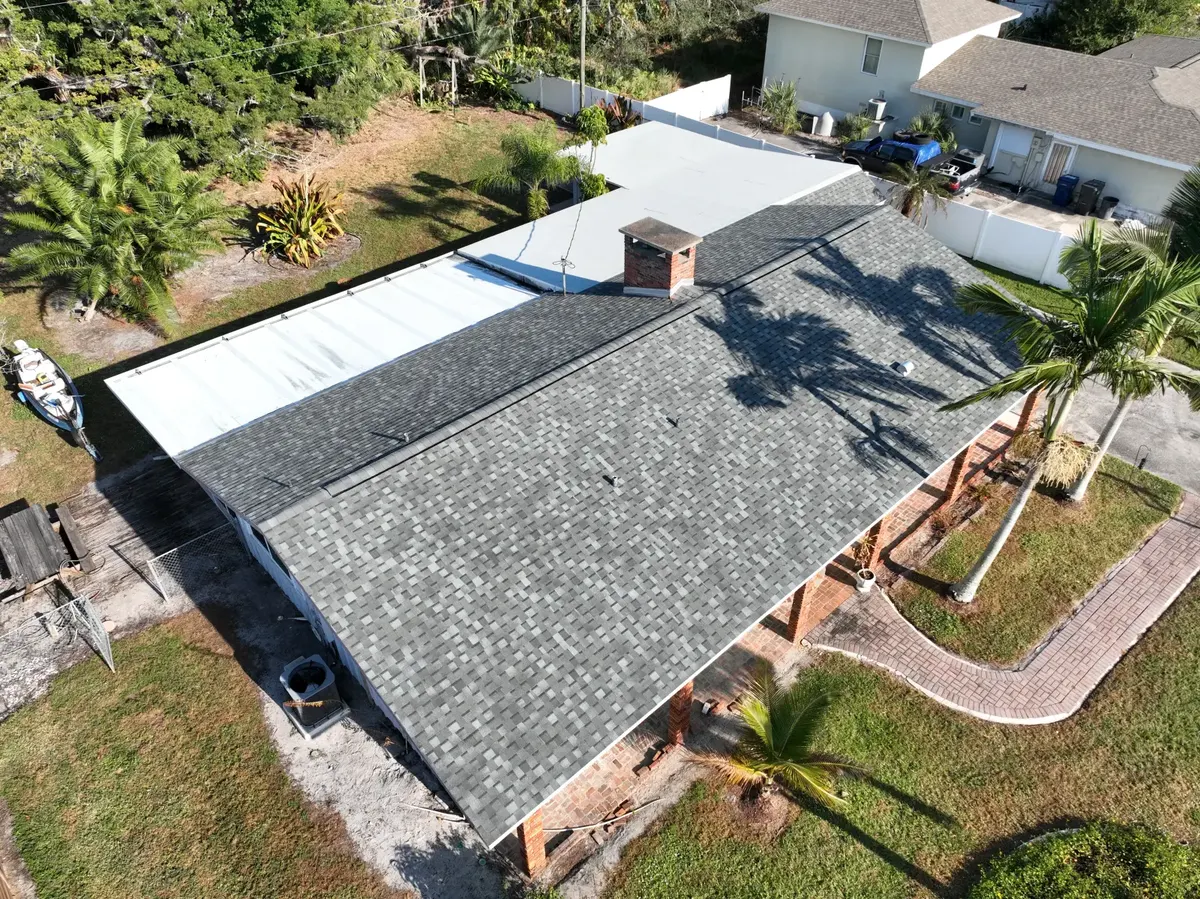
Aerial drone view of a roof showing shingle field meeting metal at the transitions and valleys
Drone view of a roof where shingle meets metal at the transitions, November 2025. Florida Gulf Coast.
Close-up of asphalt shingle courses at a roof detail showing the kind of seam where flashing seals the joint
Shingle detail at a roof transition, the kind of seam flashing has to seal. Florida Gulf Coast.
Completed asphalt shingle roof with new flashing at the wall and penetrations on a Gulf Coast home
Completed roof with fresh flashing at the wall and penetrations, February 2024. Florida Gulf Coast.
Free inspection

Find the leak before it rots the deck.

A drone flyover, a written photo report, and a straight answer on which flashing point is letting water in. We show you the cracked boot or the open chimney joint, then fix it right, tucked under the roof, not smeared over with caulk. No trip fee, no diagnostic fee, no pressure.

Schedule your free inspection
Reviews

What Florida homeowners say about Coastline leak repairs

★★★★★
They came out and repaired the leaky patio roof that another company installed. The roofer showed me pictures of the poor installation, there were at least 2 inch gaps. They fixed the problem.
Anne P.Roof leak repair, Florida Gulf Coast
★★★★★
They replaced the whole roof, plywood and fascia, and did it right.
munji s.Full roof replacement, Florida Gulf Coast
★★★★★
Very quick and professional. They fixed our problem and also checked the ceiling for any leaks. Thank you Coastline.
Christian P.Roof repair and leak check, Florida Gulf Coast
FAQ

Common questions about roof flashing leaks

What is roof flashing, in plain terms?

Flashing is the thin metal and rubber that seals every spot where your roof has to stop being a clean slope: walls, chimneys, valleys, skylights, and the pipes that stick up through the shingles. It forces water to keep flowing over the top of the roof instead of sneaking into the joints. The shingles cover the easy field. The flashing handles the hard transitions, which is exactly where most leaks start.

Why do pipe boots fail so often in Florida?

The boot is a rubber collar around a plumbing vent pipe, and rubber is the most UV-sensitive material on your roof. Year-round Florida sun cracks that collar, usually in 8 to 12 years and often sooner. Once it splits, water runs straight down the pipe and into the ceiling below. It is the single most common leak we find on Gulf Coast roofs, and one of the cheapest to fix when it is caught early.

Can't I just caulk the leak myself?

Caulk is a temporary patch, not a repair. The same Florida sun that cracked the original seal will dry and crack a fresh bead of caulk within a year or so, and the leak comes back, usually worse, because water has been getting behind the patch and rotting the deck the whole time. A real repair lifts the surrounding shingles, removes the failed flashing, and re-integrates new metal under the courses above and over the courses below so gravity does the sealing.

The stain on my ceiling is nowhere near my chimney. How can the chimney be the leak?

Water rarely shows up directly below where it got in. It enters at a flashing gap, runs down the inside of the roof deck, travels along a rafter, and drips onto the ceiling several feet away. That is why a stain on one side of a room can trace back to a flashing failure on the other side of the roof. Finding the true entry point is what a proper inspection is for.

Should flashing be replaced when I get a new roof?

Yes. When a roof is fully replaced, the flashing should be replaced with new metal at every transition, not reused. Old flashing on a brand-new roof is a leak waiting to happen, because the old metal is already corroded or fatigued and will fail long before the new shingles do. A proper roof replacement includes fresh flashing at every wall, chimney, valley, and penetration.

Is the inspection really free?

Yes. The roof inspection, the drone flyover, and the written photo report are free, with no trip fee and no diagnostic fee. We show you the exact flashing point that is leaking and give you an honest read on the fix. Call (941) 896-7793 or text (941) 345-0072 to schedule.

Leaking at a wall, chimney, or vent pipe? Let us find it.

Free drone inspection, a written photo report, and a real flashing repair, not a caulk smear that fails again next summer.

Call Text