Coastal roofs, explained

What Is the Best Roofing for a Coastal Florida Home?

On the Gulf or the bay, standing-seam metal is usually best, with a panel warranted for salt exposure, a PVDF (Kynar 500) finish, and stainless fasteners. Tile and architectural shingles work too if every nail, clip, and flashing is rated for salt air. Near salt water those metal parts corrode first and decide how long any roof lasts.

The trouble near the water usually starts small: a rusty nail head, a pitted strip of flashing, a fastener that lets go in the next storm. Choose a steel panel without checking and its warranty may not cover a house that close to salt water at all. We'll walk through what holds up on Anna Maria Island, Longboat Key, and the Sarasota shore, and what to get in writing.

Licensed & InsuredFlorida CCC1331076
4.7 stars65+ Google reviews
10 yearsFlorida-licensed
2,000+Roofs completed
Salt and your roof

What does salt air do to a roof?

Salt air speeds up rust on a roof's metal parts: nails, screws, clips, flashing, and vents. Those parts hold the roof down and seal its edges, so when they corrode, the roof can leak or loosen while the covering still looks fine.

In FEMA's words: "Metals corrode at a much faster rate near the ocean." The worst of it hits homes within 3,000 feet of the ocean, a little over half a mile. In that zone, FEMA calls for exposed roof fasteners and connectors to be hot-dipped galvanized or stainless steel, and it notes stainless works in virtually all locations.

After Hurricane Irma, a fastener supplier quoted in Metal Construction News said of metal roofs that came apart in Naples: "it wasn't the panels that failed; it was the carbon fasteners."

Every roof type has this weak spot. On tile, it's the fasteners, clips, and flashing. On shingles, it's the nails, the metal edge, and the flashing around walls and vents.

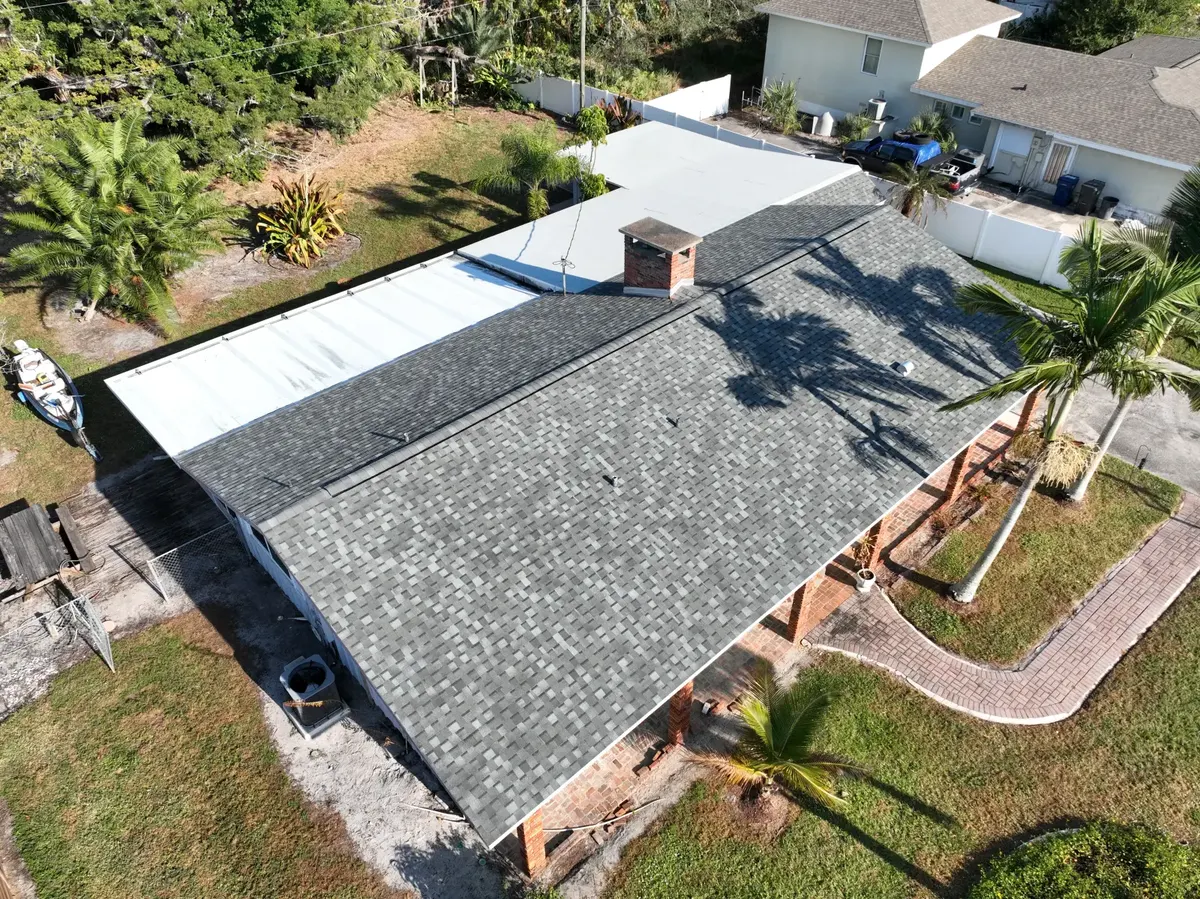
Aerial view of a roof with both shingle and metal sections on the Florida Gulf Coast, November 2025
A mixed shingle and metal roof from the air, Florida Gulf Coast, November 2025.
Metal, tile, or shingle

Which roofing holds up best near the water?

Right on the water, standing-seam metal with a salt-rated panel and stainless fasteners holds up best. Tile works well when its clips, fasteners, and flashing are built for salt. Architectural shingles cost the least and suit homes a few blocks back.

Metal, tile, and shingle roofs near salt water
On the coast Standing-seam metal Concrete or clay tile Architectural shingle
Salt air Depends on the panel. Many Galvalume steel warranties exclude homes near salt water. Salt attacks the fasteners, clips, straps, and flashing. Salt attacks the nails, metal edge, and flashing.
Wind Fasteners are the weak spot (see the Irma quote above). Mortar-set tile fared worse than other attachment methods in FEMA's Hurricane Charley review. Class H is the top uplift class, but check the product approval's exposure limits. The Florida approval for the Atlas Pinnacle Pristine we install (FL16305) lists Exposure B and C.
Sun and heat White metal saved the most cooling energy in a Florida test. White tile came close. Terra cotta barely helped. Even white shingles saved little.
What to ask for Salt-water coverage in the panel warranty, a PVDF finish, stainless clips and fasteners. Stainless straps, fasteners, and clips within 3,000 feet of the ocean (FEMA). Corrosion-resistant nails and flashing, and copper granules for algae.
Upfront cost Roughly 2 to 3 times shingles (Metal Roofing Alliance). More than shingles. Lowest of the three.

Atlas Pinnacle Pristine is our standard shingle, though we are not a certified Atlas installer. For lifespans, roof weight, and the inland picture, see our shingle vs. metal vs. tile breakdown for Florida.

Metal on the water

Is a metal roof a good idea right on the Gulf?

Yes, if the panel is warranted for your distance from salt water. Pair standing seam with a PVDF finish and the stainless clips and fasteners FEMA recommends within 3,000 feet of the ocean.

Many Galvalume steel warranties draw a line at salt water. Metal Sales excludes "areas within 1500 feet of salt water, marine atmospheres or salt spray." Sheffield Metals sets its Galvalume limits by the water nearby:

  • Breaking surf within 1,500 feet
  • A large bay within 800 feet
  • Marsh within 400 feet

Aluminum is common where salt exposure is heavy because it resists corrosion on its own (McElroy Metal), and Sheffield calls aluminum warranties better suited to salt water. Some require a yearly fresh-water rinse on pre-painted aluminum within a mile of a seacoast.

The finish matters too. PVDF finishes such as Kynar 500 use a resin that is 70% PVDF. The American Coatings Association credits them with excellent resistance to UV and salt spray, and their test standard is based on South Florida outdoor exposure.

An exposed-fastener roof has many screw holes, each sealed by a rubber washer that breaks down in the sun faster than the screw (Sheffield Metals). Standing seam hides its panel fasteners under the seams. FEMA still recommends exposed fasteners on the hip, ridge, and rake trim, so ask for those in stainless too.

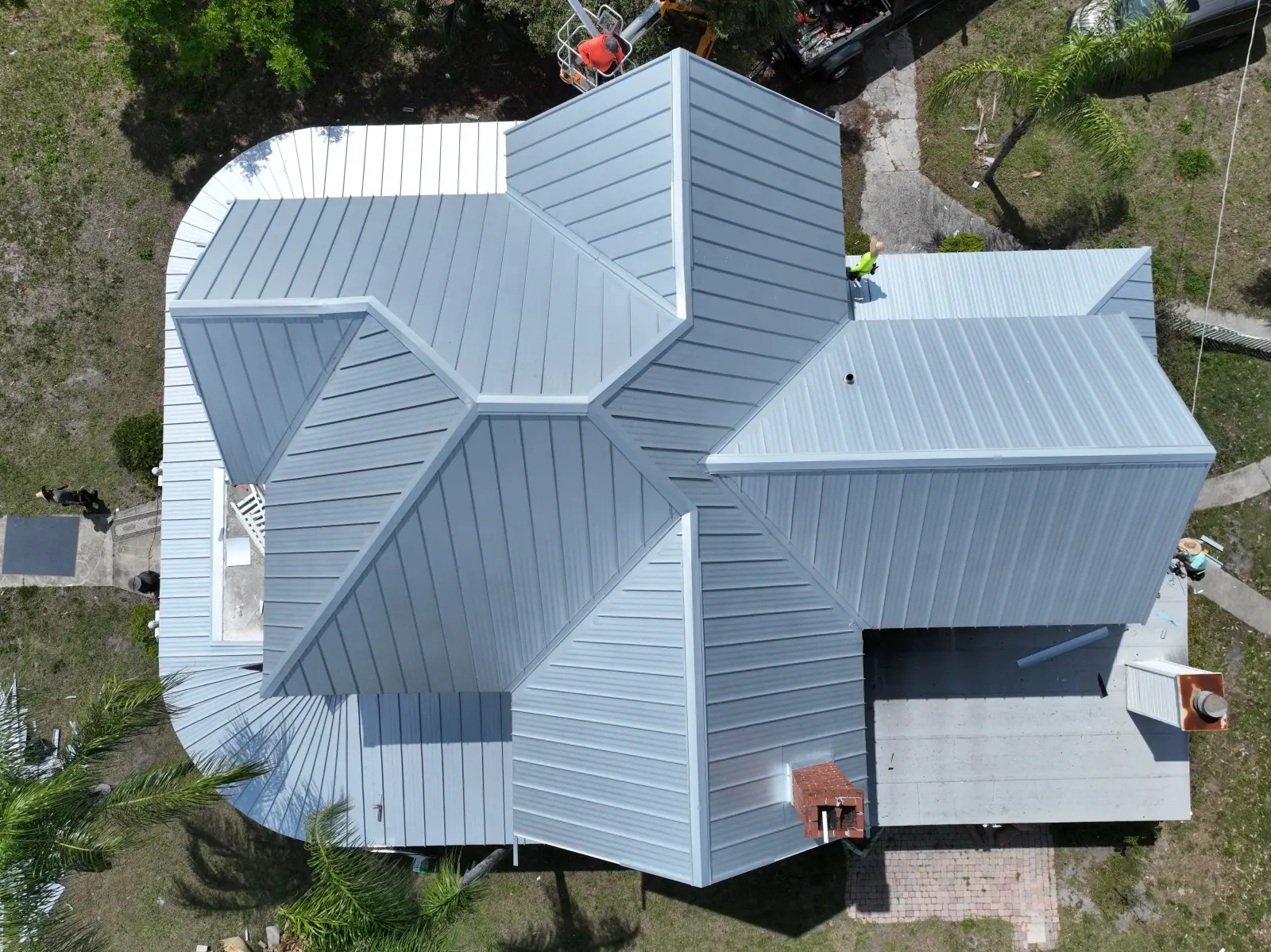
Drone aerial of a completed standing seam metal roof, March 2024
A completed standing seam metal roof from the air, March 2024.

Get the salt-water distance in writing

Before you sign, ask to see the salt-water exclusion in the panel warranty itself and check it against your house. Seeing orange on a metal roof you already have? Our page on rust on Florida metal roofs sorts stains from real trouble, and our metal roofing service page covers panels and finishes.

Wind on the waterfront

What wind rating does a waterfront roof need?

A house within about 600 feet of wide, open water is designed for Exposure D, the wind category with the largest pressure multiplier. Design wind speeds in Manatee and Sarasota counties run about 140 to 160 mph depending on location.

Exposure is about what the wind crosses before it hits your house. Florida Building Code Section 1609.4 treats water surfaces and flat, open ground as "Surface Roughness D." Where open water stretches at least 5,000 feet upwind, the shore is Exposure D, and so is a house within 600 feet of it (or 20 times the building height, if that is greater). Engineering Express calls D "the largest multiplier when converting wind velocity to wind pressure." The same storm pushes harder on a Gulf-front roof.

For the wind speed itself, Sarasota County's own map puts downtown Sarasota and Siesta Key at 150 mph and Venice at 160 mph.

On the islands, the roof permit goes through the city or town. The City of Anna Maria, the City of Holmes Beach, the City of Bradenton Beach, and the Town of Longboat Key (which sits in both Manatee and Sarasota counties) each run their own building department. Holmes Beach says new roofs and re-roofs need "a state certified or locally licensed contractor AND a building permit." Coastline is a Florida Certified Roofing Contractor, license CCC1331076.

The 2026 code change

Is the Florida code changing for coastal roofs?

Yes. The 9th edition of the Florida Building Code, taking effect December 31, 2026, adds corrosion rules for steel roof fasteners within 3,000 feet of a saltwater coastline, with extra requirements within 300 feet. Today's 8th edition has no distance rule like that.

The new Section 1711 (R332 in the residential code) covers steel fasteners near "a saltwater coastline, or other areas subject to salt corrosion." FRSA, Florida's roofing contractors association, lists the roof parts it reaches: fasteners in through-fastened metal panels and trim, plus exposed fasteners in coping, metal edge, counter flashing, and vents. For tile, nails within 3,000 feet and screws within 300 feet must meet it. Copper, bronze, aluminum, and plastic fasteners are not addressed.

Today, the Florida high-wind tile manual asks only for corrosion-resistant fasteners meeting a minimum zinc-coating standard (ASTM A641 Class 1), with nothing about distance from salt water.

What we use on the islands today

On Anna Maria Island and Longboat Key installs, Coastline already uses stainless steel or coated fasteners and corrosion-rated flashing as standard practice. Near salt water anywhere else, ask for the same parts on your next roof, and within 300 feet of salt water, ask for stainless.

Sun, heat, and streaks

How do sun and heat change the choice near the coast?

Color matters more than material. In a Florida Solar Energy Center test in Fort Myers, white metal cut cooling energy 23% compared with dark gray shingles, while terra cotta tile cut it just 3%.

Light color did most of the work. Tile helped little unless it was white, and the full set of results is in our roofing material comparison.

Warm, humid weather also grows the black algae streaks you see on older shingle roofs. ARMA, the asphalt roofing trade group, recommends copper-granule shingles to resist them. Our rundown of the best shingles for a Florida roof compares the options.

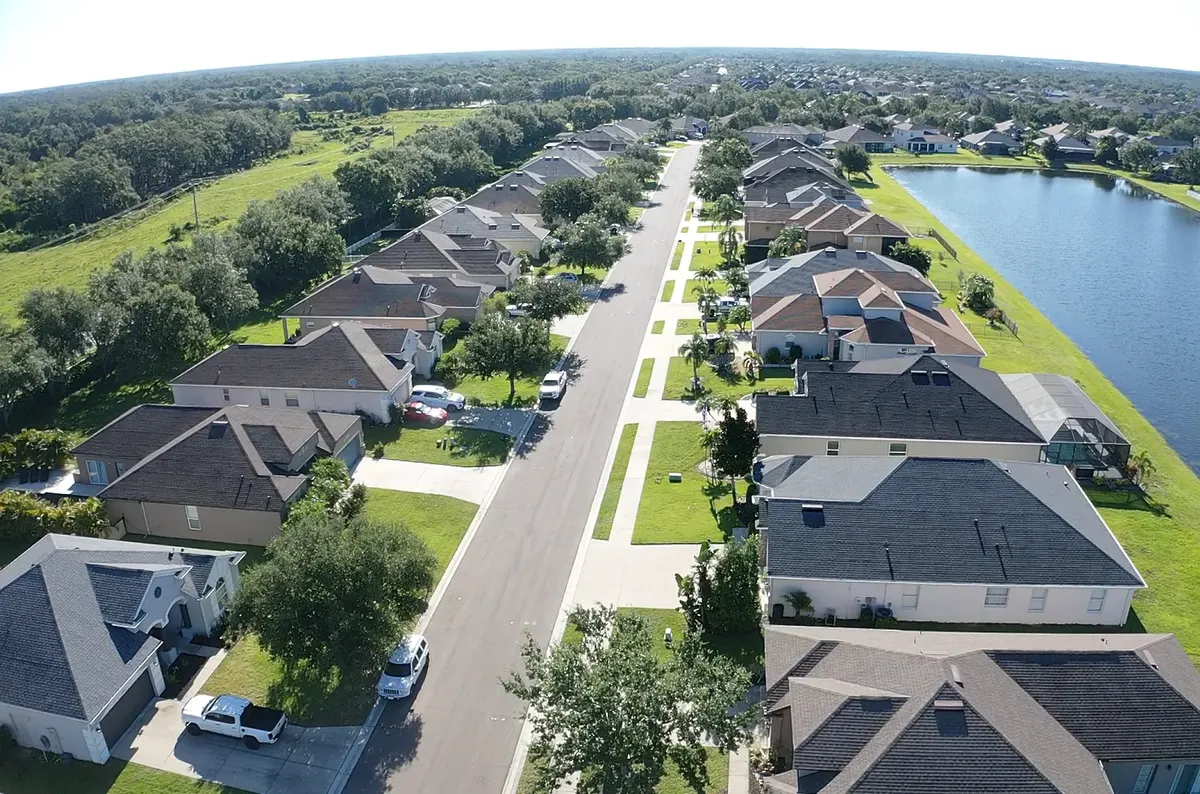
Aerial view of a Manatee County, Florida neighborhood with a mix of tile and shingle roofs
A Manatee County neighborhood from the air, with tile and shingle roofs side by side.
Our recommendation

What does Coastline recommend for a home near the water?

Our advice changes with your distance from open salt water.

On the Gulf or right on the bay

Anna Maria Island, Longboat Key, beachfront Sarasota. We lean toward standing-seam metal with salt-water coverage in the panel warranty, a PVDF finish, and stainless clips and fasteners. Where the HOA or the house calls for it, concrete or clay tile works too, with salt-rated metal underneath. More on roofing on Anna Maria Island and Longboat Key roofs.

Canal and bayside, a few blocks back

All three roof types work here if the nails, fasteners, and flashing are made for salt air. Budget and looks can decide it, and color will do more for your cooling bill than material.

Inland

Salt is less of a worry, and an architectural shingle is usually the best value. When it's time, our roof replacement process starts with a written, line-by-line quote that's good for 30 days.

Not sure which one you are?

Book a free drone-assisted roof inspection. The written photo report shows what salt has already done to your flashing and fasteners. No trip fee, no diagnostic fee. Or text roof photos to (941) 345-0072.

Reviews

Gulf Coast homeowners on their metal, shingle, and tile roofs

★★★★★
"Josh and his crew knocked it out of the park. After a year of back-and-forth with insurance, Josh and Rob got the roof covered. We paid the difference for a standing seam metal roof. That's the only way to go if you're wanting a metal roof."
Jason J.Standing seam metal roof, Florida Gulf Coast
★★★★★
"Coastline did a great job re-roofing our home. Then serious flying debris from both Hurricanes Ian and later Milton damaged the shingles twice. Each time, company owner Josh sent out a skilled crew to do repairs. We are happy that our roof still looks brand new."
Jim S.Re-roof and storm repairs, Florida Gulf Coast
★★★★★
"Quick response. Great customer service & quality of work. Very knowledgeable of tile roofs which is a plus in our neighborhood. Very good pricing."
Bobbi B.Tile roof work, Florida Gulf Coast
FAQ

More questions about roofs near salt water

How far from the water does salt air matter?

The rules cluster around a few distances. FEMA says metal corrosion is most pronounced within 3,000 feet of the ocean, and the new Florida code uses 3,000 and 300 feet from a saltwater coastline. Sheffield's Galvalume warranty limits run 400 to 1,500 feet depending on the water. If your house falls inside any of those, plan on salt-rated metal parts.

Does salt air void a metal roof warranty?

It can leave you uncovered if the panel was never warranted for your location. Many Galvalume steel warranties exclude homes within a set distance of salt water, and some aluminum warranties require a yearly rinse. Read the exclusions before you sign, not after the first rust spot.

Do I need stainless steel nails on a shingle roof near the beach?

Today's code has no salt-water distance rule for them. The new code taking effect December 31, 2026 ties roofing nails, screws, and clips to its new saltwater corrosion section, and FEMA already recommends hot-dipped galvanized or stainless steel for exposed roof fasteners within 3,000 feet of the coastline. If you're close to the water, ask for corrosion-resistant nails and flashing by name.

Do you roof homes on Anna Maria Island and Longboat Key?

Yes. We work in Anna Maria, Holmes Beach, Bradenton Beach, and Longboat Key, plus Manatee County and Sarasota County communities like Sarasota, Venice, and North Port. We respond the same day on active leaks, run 24/7 emergency tarping, and inspect for free with no trip fee.

Sources

  1. FEMA: P-499 Technical Fact Sheet 1.7, Coastal Building Materials (hosted copy)
  2. FEMA: P-2181 Fact Sheet 3.3.1, Roof Systems, Sloped Roofs
  3. FEMA: Hurricane Ike Recovery Advisory on metal roofing (hosted copy)
  4. FEMA: Hurricane Charley Recovery Advisory, Tile Roofing for Hurricane-Prone Areas
  5. Metal Construction News: The 411 on Metal Fasteners
  6. Atlas Roofing: Florida Product Approval FL16305 evaluation (2023 FBC)
  7. FRSA: New FBC Corrosion Resistance Requirements
  8. FRSA: 2026 Tile Code Update
  9. Florida Building Commission: 2026 FBC Workplan
  10. FRSA/TRI: Florida High Wind Tile Installation Manual, 7th Edition (hosted copy)
  11. Metal Sales: AZ55 Galvalume Warranty
  12. Sheffield Metals: Metal Roof Warranty Types
  13. Sheffield Metals: Standing Seam vs. Exposed Fastener Metal Roofing
  14. McElroy Metal: Metal Roofing in Coastal Areas
  15. American Coatings Association: Fluoropolymer Coatings for Architectural Applications
  16. Arkema: Kynar 500 PVDF
  17. Florida Building Commission: FBC Section 1609.4 exposure reference material
  18. Engineering Express: ASCE 7 Exposure D
  19. Sarasota County: Wind Load Category, 8th Edition map layer
  20. City of Anna Maria: Building Department
  21. City of Holmes Beach: Do I Need a Permit? (2025)
  22. City of Bradenton Beach: Building and Planning
  23. Town of Longboat Key: Building Division
  24. Town of Longboat Key: Elections (two-county location)
  25. Florida Solar Energy Center: FSEC-CR-1220-00, Fort Myers reflective roof study (Parker et al., 2000)
  26. Metal Roofing Alliance: FAQs
  27. Atlas Roofing: Pinnacle Pristine specifications
  28. ARMA: Algae Discoloration of Roofs
  29. ARMA: Algae and Moss Prevention and Cleaning

Find out what the salt has already done to your roof

A free drone-assisted inspection and a written photo report of your flashing and fasteners, with no trip or diagnostic fee. Then you decide what, if anything, to do next.

Call Text