
★★★★★
"I called Will about a roof repair I needed for a 4-point inspection and needed it done quickly. He gave a fair price, showed up on time, and completed the repairs as promised."Ron L.4-point inspection repair, Florida Gulf Coast
Updated June 2026
If a storm hit your Manatee County roof and you are staring at a claim form with no idea what happens next, this is the calm walkthrough we wish every homeowner read first. Below is the actual Florida roof insurance claim process in order: documenting the damage, the notice deadline, the adjuster inspection, the scope, the difference between ACV and RCV, your deductible, and how a roofer fits in. No jargon, no scare tactics, just the steps.
After a named storm rolls through Bradenton, Palmetto, or Parrish, most homeowners freeze on the same question: do I call my roofer first or my insurance company first? Do I climb up there myself? What if I miss a deadline? The fear is reasonable. Florida property insurance changed a lot after the 2022 legislative reforms, the timelines got shorter, and the rules are genuinely different than they were a few years ago.
Here is the calm truth. A Florida roof insurance claim is a sequence of seven steps, and each one has a clear job. When you do them in order and document everything, the process is far less stressful than it looks. The steps below are how it actually works in Manatee County, written by a roofer who has walked hundreds of homeowners through it. We will also be honest about the one thing a roofer is not allowed to do for you.
Follow them in order. Document at every stage. This is the path we walk Manatee County homeowners through.
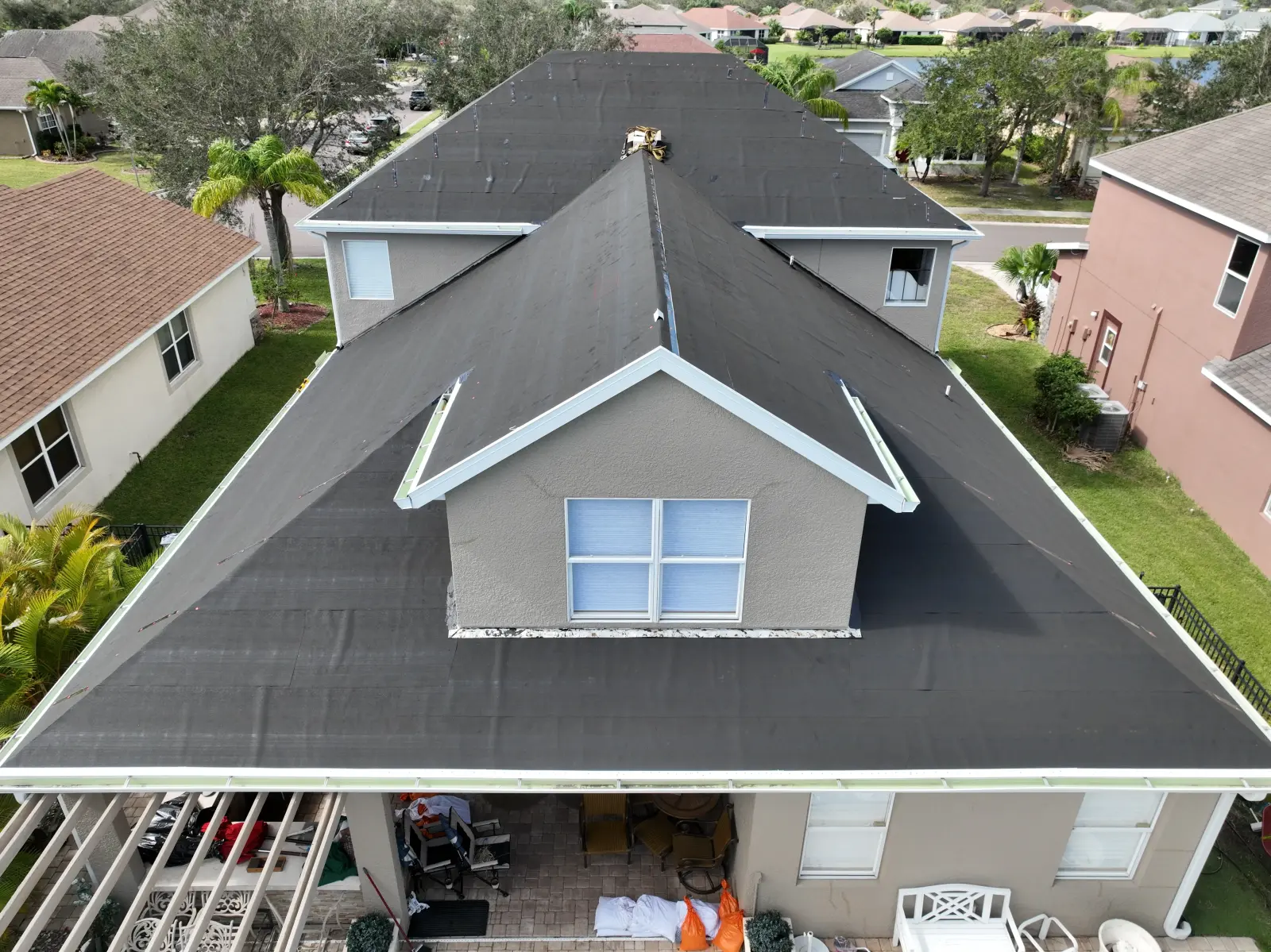
Before you touch the claim form, build your evidence. Take dated, timestamped photos of every angle you can safely reach from the ground: missing or lifted shingles, displaced tile, debris in the yard, water stains on ceilings, and any interior damage. Do not climb the roof yourself, especially after a storm. This is where a roofer earns their keep. Coastline flies a drone over the full roof, photographs every slope, valley, and penetration, and gives you a written report you can attach to the claim. Aerial photos taken right after the event carry weight an adjuster cannot easily dispute.
This is the deadline that catches people. Under Florida Statute 627.70132, a new or reopened property insurance claim is barred unless you give your insurer notice within one year of the date of loss. A supplemental claim, meaning additional damage from the same event discovered later, must be reported within 18 months of the date of loss. These shortened windows took effect December 16, 2022, under the state's property insurance reforms. Do not wait. Read the current statute yourself at the Florida Senate (627.70132). File promptly, in writing, and keep your claim number and the date you filed.
Your insurer sends a field adjuster to inspect the damage and decide what they will pay. This is the single most important meeting in the whole process, and most homeowners attend it with no one on their side who knows roofs. Have your roofer there, on the roof, during the adjuster's inspection. The adjuster is moving fast and covering many claims. A roofer who already flew the drone and wrote the scope can walk the adjuster to every soft spot, lifted course, and failed flashing so nothing gets missed. We are not there to argue dollars. We are there to make sure the damage that is actually present gets seen and recorded.
After the inspection, the insurer issues a scope of loss: an itemized list of what they agree was damaged and what they will pay to fix or replace. Read it line by line against your roofer's written scope. Insurers commonly write estimates using software like Xactimate, and it is normal for the first scope to miss items a roofer included, such as code-required underlayment, drip edge, or ridge venting. If your roofer's documented scope shows damage the insurer's scope left out, that is the basis for a supplement request. Mismatches here are common and are exactly why having a written roofer scope from step one matters.
Two acronyms decide how the money arrives. ACV is Actual Cash Value: the depreciated worth of your roof today, after age and wear are subtracted. RCV is Replacement Cost Value: what it costs to put a new roof on at current prices. If you carry an RCV policy, the insurer typically pays you the ACV amount first and holds back the difference as recoverable depreciation. You recover that held-back amount after the work is completed and you submit the final invoice and documentation. In plain terms: you get the first check up front, complete the job, then send proof of completion to release the rest. This is why finishing the work and documenting it (step seven) directly affects how much you ultimately collect.
Your deductible is the amount you pay before insurance pays anything, and it is subtracted from the settlement. Florida homeowners almost always carry two: a standard deductible for ordinary claims, and a separate hurricane deductible that applies when the National Hurricane Center names the storm. The hurricane deductible is usually written as a percentage of your dwelling coverage, commonly 2 percent, 5 percent, or 10 percent, not a flat dollar figure, so on a hurricane claim it can be substantially larger than your standard deductible. Find both numbers on your policy declarations page before you assume what your out-of-pocket cost will be. A contractor who offers to waive or absorb your deductible is breaking Florida law, and that is a red flag to walk away from.
Once the scope and payment are settled, the work gets done. Whether the outcome is a targeted repair or a full replacement depends on the extent of damage and Florida Building Code. Note one important change: the old rule that often forced a full roof replacement when more than 25 percent was damaged was modified by Senate Bill 4-D in 2022. If your existing roof was built or repaired in compliance with the 2007 Florida Building Code or a later edition, you are generally no longer automatically forced to replace the entire roof, and only the repaired section must be brought up to current code (see the 2022 reforms and your roofer's read of current code). After the work, your roofer delivers a final photo report and invoice. You submit that to the insurer to release any recoverable depreciation. Keep every document. The paper trail is what closes the claim cleanly.
We are roofers, not public adjusters. By Florida law we cannot negotiate your settlement, adjust your claim on your behalf, or advise you on the terms of your policy. We document the roof honestly and accurately. Negotiating the dollar amount of your settlement is the role of you, your insurer, or a licensed public adjuster you hire separately. We will say this plainly: if a roofing company promises to "handle your whole claim" and get you a bigger check, be cautious.
After every major storm, crews fan out across Manatee County knocking on doors, offering to "handle everything," and asking you to sign an Assignment of Benefits, or AOB. An AOB hands your insurance rights and claim payments over to the contractor. Once you sign, you can lose control of your own claim. You never need to sign an AOB to have a reputable local roofer help you. We do not use them. If someone pressures you to sign one on your doorstep, that is your signal to stop and call a licensed local company instead.
Storm chasers are often unlicensed and gone by next season, leaving you with no warranty and no recourse. Verify any contractor's license yourself at myfloridalicense.com before signing anything. A licensed Florida roofing contractor will give you their license number without hesitation. Coastline Roofing is a Florida Certified Roofing Contractor, license CCC1331076, fully insured, with a local Palmetto address you can verify.
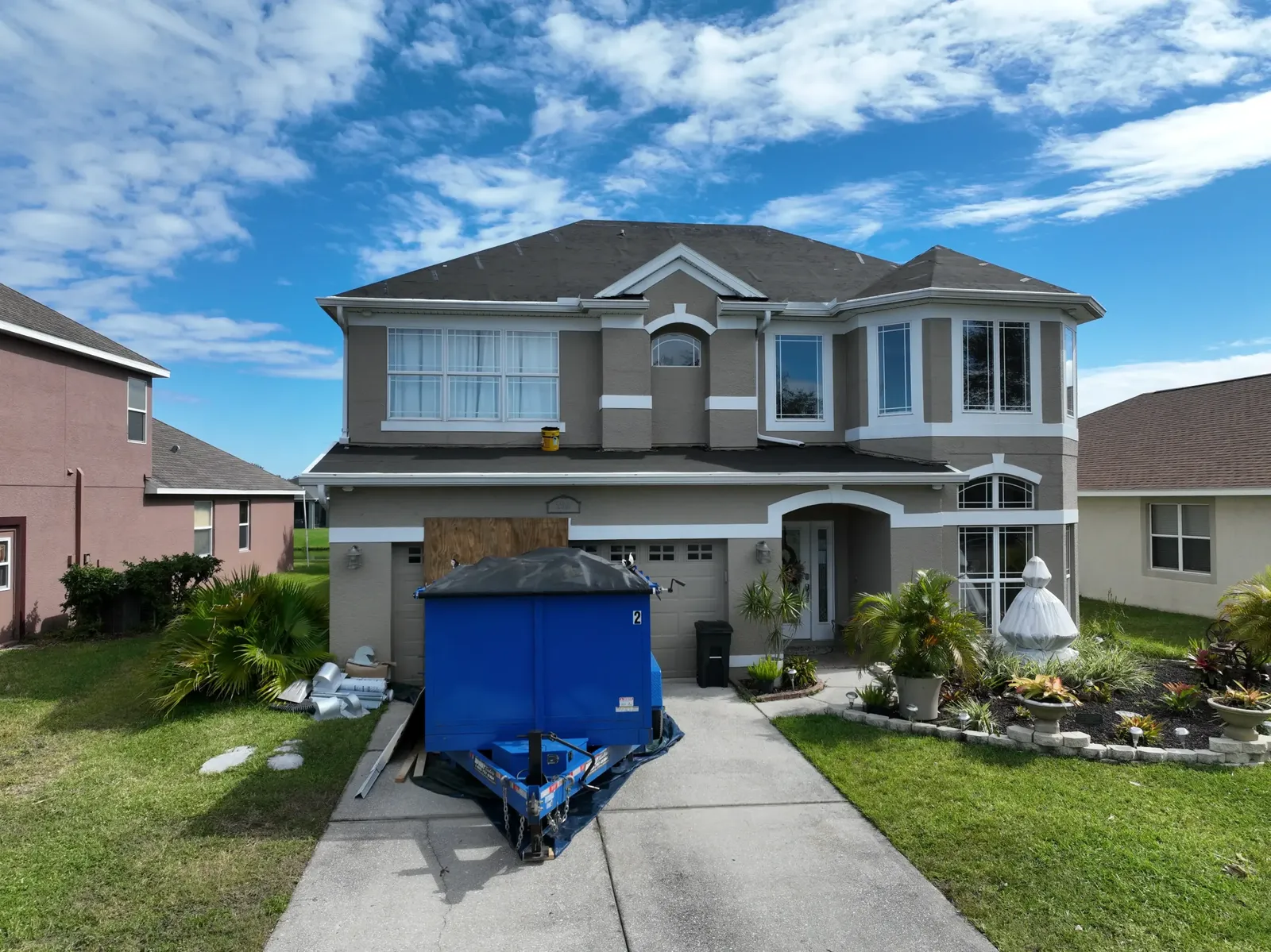
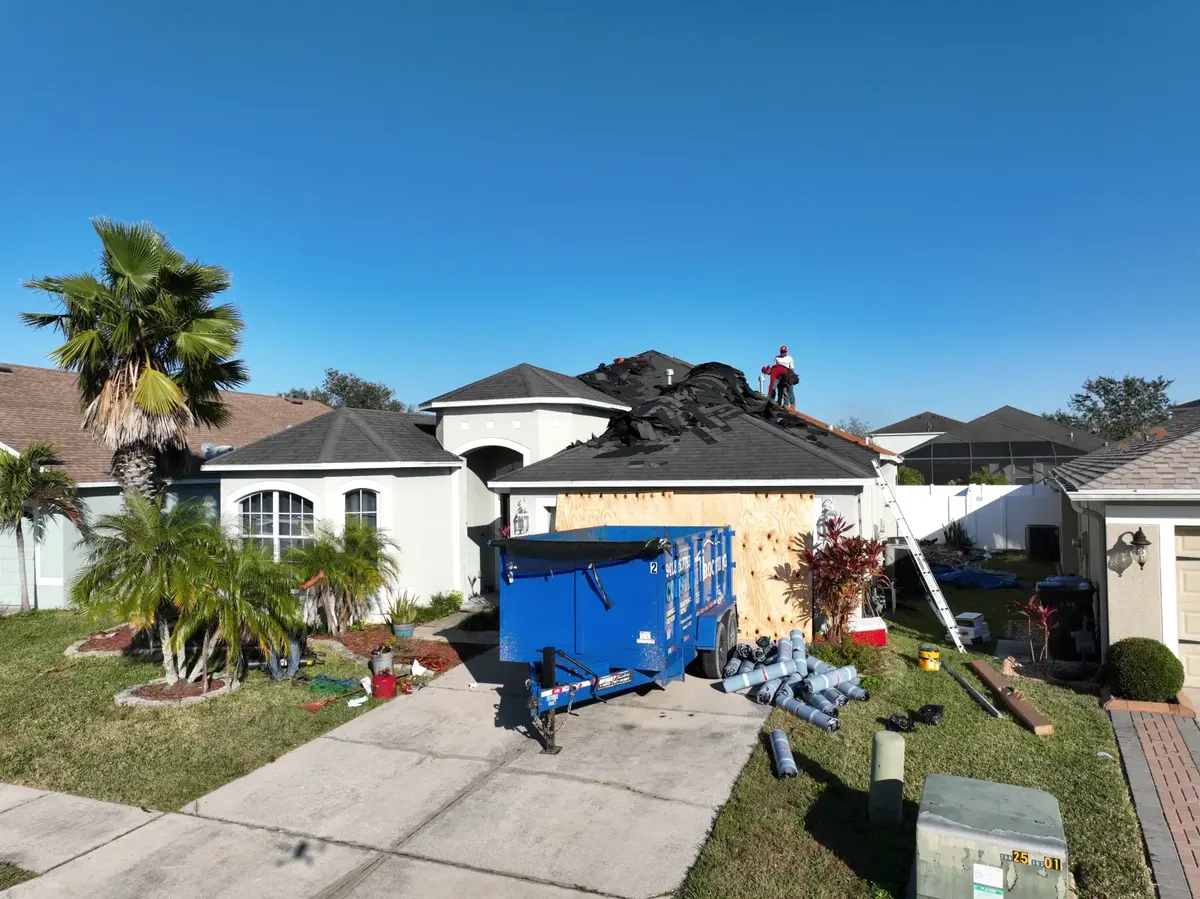
"I called Will about a roof repair I needed for a 4-point inspection and needed it done quickly. He gave a fair price, showed up on time, and completed the repairs as promised."Ron L.4-point inspection repair, Florida Gulf Coast
"Excellent service at every level, from the rep who came out, to the office manager, to the crew manager. Respectful, responsive, and professional."René B.Roof replacement, Florida Gulf Coast
"Coastline brought the absolute best quality of work for a fiercely competitive price. Over 30 sheets of plywood replaced, and they knocked it all out in 3 days from tear-out to install."Dylan K.Storm damage replacement, Florida Gulf Coast
Under Florida Statute 627.70132, you have one year from the date of loss to give notice of a new or reopened claim, and 18 months from the date of loss for a supplemental claim. These shortened deadlines took effect December 16, 2022. File as soon as you reasonably can, because damage can worsen and evidence fades. You can read the current statute at the Florida Senate.
Get your roofer out to document the damage first, ideally with a drone survey and a written scope, so that when you file you already have evidence in hand. Then file with your insurer inside the notice deadline. Having documentation before the adjuster arrives means nothing real gets overlooked during the inspection.
ACV, Actual Cash Value, is the depreciated value of your roof after age and wear are subtracted. RCV, Replacement Cost Value, is the full current cost to replace it. On an RCV policy the insurer usually pays ACV first and holds back the depreciation, then releases that recoverable depreciation once the work is completed and you submit the final invoice and documentation.
No. We are licensed roofers, not public adjusters, and Florida law does not allow us to negotiate or adjust your claim. What we do is document the roof accurately, write a clear damage scope, attend the adjuster meeting, and complete the work to code. Negotiating the settlement amount is the role of you, your insurer, or a licensed public adjuster you hire separately.
No. In Florida it is illegal for a contractor to waive, rebate, or absorb your insurance deductible, and an offer to do so is a clear warning sign. Your deductible, including any separate percentage-based hurricane deductible on your declarations page, is your out-of-pocket responsibility. A reputable roofer will be upfront about that.
An Assignment of Benefits, or AOB, transfers your insurance claim rights and payments to a contractor. You do not need to sign one to get help from a licensed local roofer. Coastline does not use AOBs. If a post-storm door-knocker pressures you to sign one on the spot, treat it as a reason to stop and call a licensed local company you can verify at myfloridalicense.com.
Drone documentation, a written damage scope, and an honest read on repair vs replace. Free inspection across Manatee County.
Leave your name and number. We typically call back the same day during business hours. Consent to texts is not required.