
★★★★★
"Great customer service and quality of work. Josh and his crew helped us all the way through the process and did a great job. Full replacement done in 2 days."Casey S.Full replacement, Florida Gulf Coast
Updated June 2026
Those dark, dirty-looking streaks running down your roof are not mold, not dirt, and not soot from a chimney. They are a living blue-green algae, and on the Gulf Coast they are about as common as palm trees. The good news: streaking by itself is mostly cosmetic and rarely means your roof needs to come off. The catch: how you deal with it matters, because the wrong cleaning method can wreck a perfectly good roof. Here is what the streaks really are and how to handle them.
The dark streaks are a blue-green algae with a tongue-twisting name: Gleocapsa magma. It is not mold, it is not mildew, and it is not the same thing that grows on a damp bathroom wall. It is an airborne algae that lands on your roof, takes hold, and feeds. What it feeds on is the surprising part. Asphalt shingles contain a limestone filler mixed into the granule layer, and that limestone is a food source for this particular algae. Once it has a colony established, it keeps growing, and the dark protective sheath the algae forms over itself is what you see as the black streak.
Florida is close to a perfect home for it. Gleocapsa magma loves heat and humidity, and the Gulf Coast hands it both nearly year-round. Warm nights, heavy moisture in the air, frequent rain, and a long growing season mean an algae colony that might take years to show up in a dry climate can streak a Florida roof in a season or two. That is also why it spreads the way it does. The algae reproduces by releasing spores that ride the wind, which is exactly why your neighbor's roof has the same streaks and why a whole street can look matched after a few humid summers. One roof seeds the next.
Here is the part that keeps homeowners from overreacting: in the early years this is a cosmetic problem, not a structural one. A roof with light streaking is usually still doing its job of keeping water out. The honest concern is what happens over the long haul. The algae mat holds moisture against the shingle surface instead of letting it dry, and it darkens the roof so it absorbs more heat. Held moisture plus extra heat, repeated across many Florida summers, can age the shingle faster and shave time off the roof's life. So streaking is not an emergency, but it is also not nothing. It is a wear factor worth managing before it compounds.
The streaks form vertical lines down the slope because the algae spreads with the water. Rain washes spores and bits of the colony downhill, seeding new growth lower and lower, so the stain runs in the direction the water flows. That is why you almost never see a streak running sideways.
Algae needs moisture, and the slopes that get the least direct sun stay damp the longest. North-facing sides and any area shaded by trees dry out slowly, so the colony thrives there first and heaviest. The sunny south slope often stays cleaner because it bakes dry every day.
Thin streaks on a roof that is still in good shape, with full granule coverage and no bald or curling shingles, are a cosmetic issue. The roof is doing its job. A soft wash cleans it up and a few preventive steps slow it from coming back.
When the streaking comes with bald patches, curling or cupping shingles, heavy granule loss, or a roof well into its second decade, the algae is not the real story. The roof is genuinely aged, and cleaning it only buys a little cosmetic time. That is when an honest inspection matters.
This is the part most homeowners get wrong, often with the best intentions. The instinct is to blast the streaks off with a pressure washer, the same way you would clean a driveway. On a shingle roof that is a serious mistake. Remember that the granule layer is the shingle's armor against the sun. High-pressure water strips those granules off by the thousands, leaving bald, exposed asphalt that then ages fast under Florida UV. You can trade a cosmetic streak for genuine, permanent damage in an afternoon. Worse, a hard stream of water can drive moisture up under the shingle edges and into places it was never meant to go.
There is a financial sting too. Most shingle manufacturer warranties specifically exclude damage from pressure washing, so a well-meaning DIY cleaning can void the coverage on a roof that was otherwise protected. You spend a Saturday on a ladder, lose granules, and forfeit the warranty all at once. It is one of the few maintenance mistakes that can actually shorten a roof's life rather than extend it.
The correct method is a soft wash. Soft washing uses low pressure, no more than a garden hose would put out, paired with a roof-safe cleaning solution that kills the algae at the root rather than blasting it off the surface. The solution does the work, not the water. Done right, a soft wash lifts the streaks, leaves the granules where they belong, and keeps the warranty intact. It also tends to last longer than a pressure clean because it actually kills the colony instead of just knocking the visible part loose.
Florida's climate guarantees the spores are always in the air, so the goal is not to make streaking impossible. It is to slow it down and keep it from aging your roof early. A few things genuinely help.
The single most useful thing you can do is find out which problem you actually have. Light streaking on a sound roof and heavy streaking on a roof that is genuinely worn out look similar from the driveway but call for completely different answers. One needs a soft wash. The other needs a replacement plan. Guessing wrong in either direction costs you money: you either pay to clean a roof that should be replaced, or you panic-replace a roof that just needed a wash.
Coastline does a free roof inspection with a drone flyover and a written photo report. We get close-up images of the streaked slopes, check the granule coverage underneath the algae, look for curling, cupping, and bald spots, and pull your roof's age into the read. Then you get an honest call: a soft wash will handle it, or the roof is aged out and cleaning is only cosmetic. No trip fee, no diagnostic fee, no pressure to replace a roof with good life left. If you want the bigger picture of how we keep roofs healthy between major work, our roof maintenance page lays it out, and our free roof inspection is where most homeowners start.
When a replacement is genuinely the right answer, our default shingle is the Atlas Pinnacle Pristine architectural shingle, which builds the algae resistance right into the granules so the streaking problem largely solves itself for years. It also carries a 130 mph wind rating and a Class 3 impact rating. We are not a certified Atlas installer, and we will never tell you to replace a roof that does not need it. The full shingle breakdown lives on our shingle roofing page.
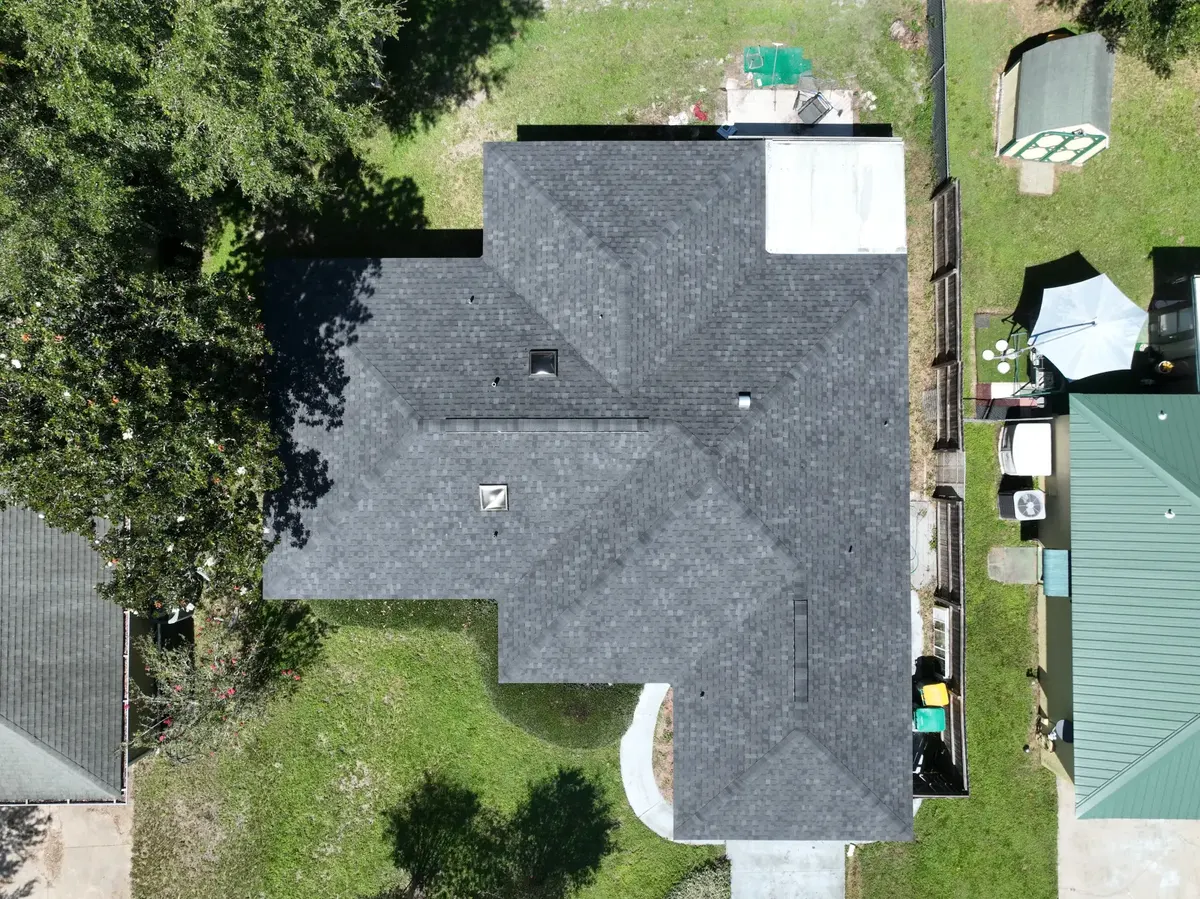
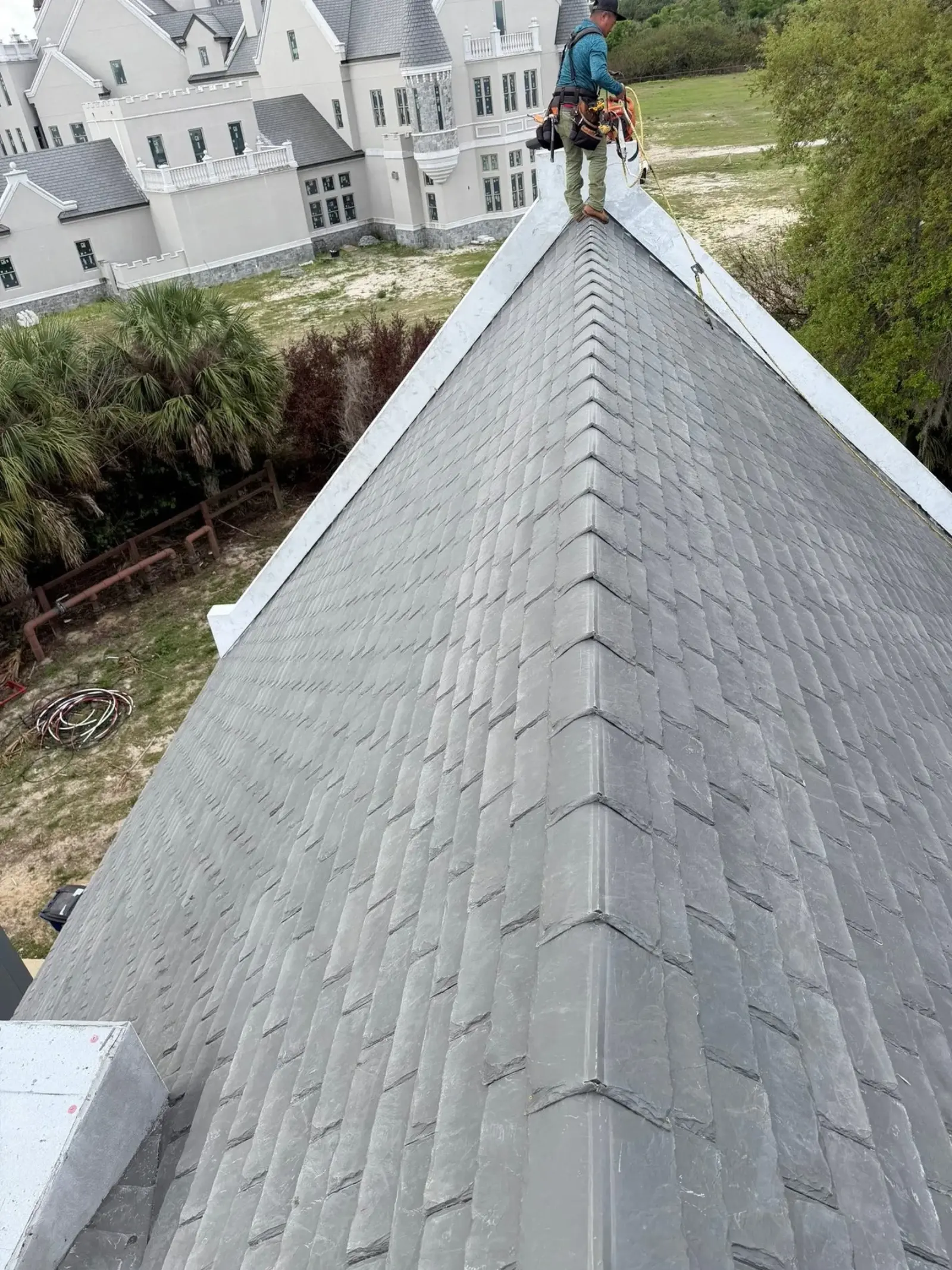
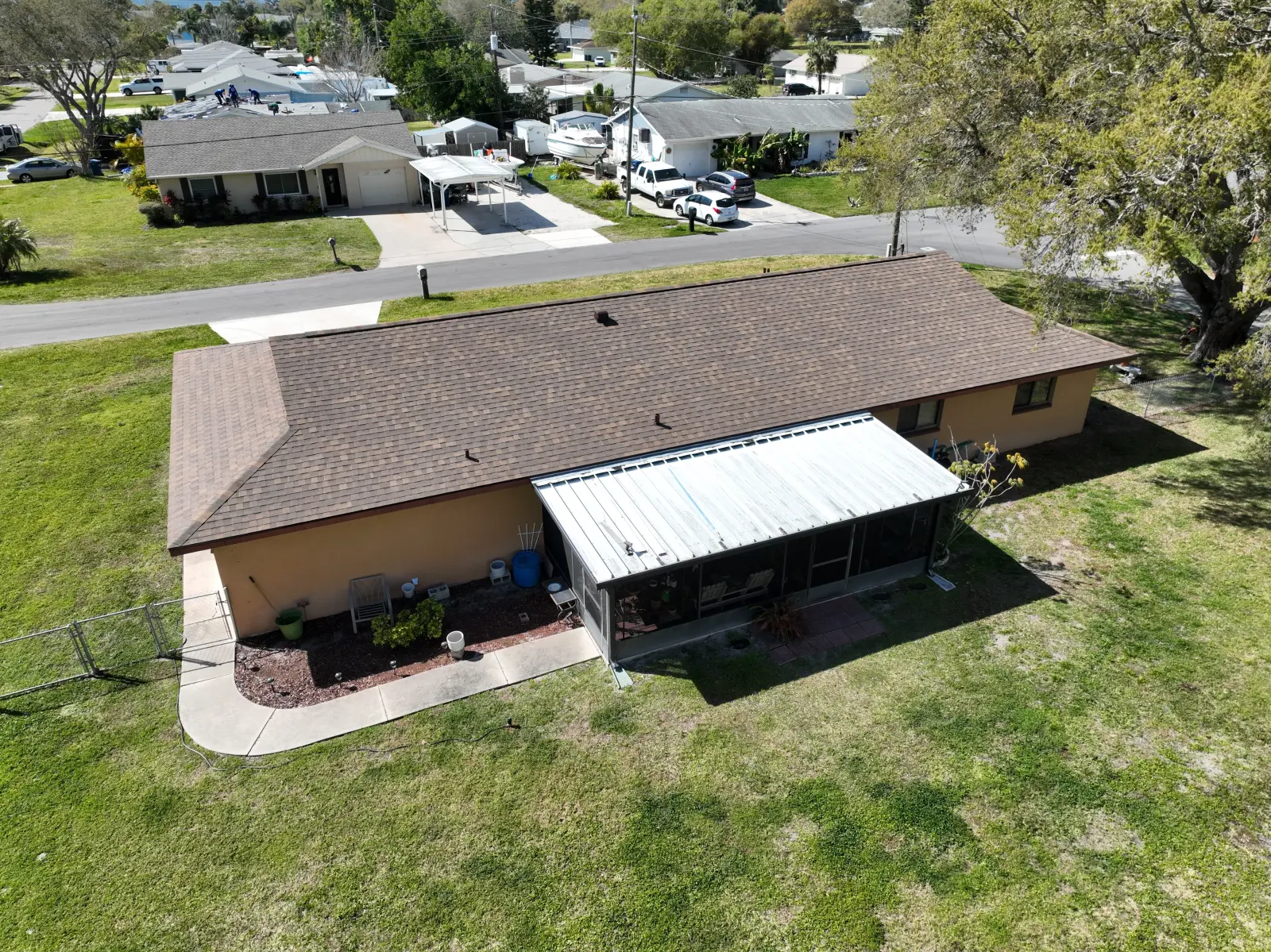
A drone flyover, a written photo report, and an honest read on your streaking, all free. We tell you whether a soft wash handles it or the roof is genuinely near the end. No trip fee, no diagnostic fee, no pressure.
Schedule your free inspection"Great customer service and quality of work. Josh and his crew helped us all the way through the process and did a great job. Full replacement done in 2 days."Casey S.Full replacement, Florida Gulf Coast
"Josh and his professional crew did an excellent job replacing my roof."Bob A.Roof replacement, Florida Gulf Coast
"The work was excellent. Members of the crew were very skillful and professional and did an outstanding job. I would definitely use them again."Diane G.Roof replacement, Florida Gulf Coast
No. The streaks are a blue-green algae called Gleocapsa magma, not mold or mildew. It lives on the roof surface and feeds on the limestone filler in asphalt shingles. It is not the same as mold growing inside your home and it does not mean you have a mold problem indoors. It is an outdoor, surface-level algae that is extremely common on Gulf Coast roofs.
Usually not. In the early years, streaking is a cosmetic problem and the roof is still doing its job. A soft wash cleans it up. The streaks only point to replacement when they come alongside real wear: bald spots, heavy granule loss, curling or cupping shingles, or a roof well into its second decade. A free inspection tells you which situation you are in before you spend a dollar.
Please do not. A pressure washer strips the protective granules off the shingles, leaving bald asphalt that ages fast under Florida sun, and the high-pressure water can force moisture under the shingles. It also voids most shingle warranties. You can turn a cosmetic streak into permanent damage in an afternoon. The correct method is a low-pressure soft wash with a roof-safe cleaning solution.
Algae needs moisture to thrive, and the north-facing and shaded slopes get the least direct sun, so they stay damp the longest. That dampness lets the colony grow heaviest there. The sunny south slope often looks cleaner because it dries out every day. Trimming back trees that shade the roof helps those slopes dry and slows the algae.
You cannot make a Florida roof permanently streak-proof because the spores are always in the air, but you can slow it a lot. Algae-resistant shingles with copper or zinc granules, like the Atlas Pinnacle Pristine with Scotchgard we install, release trace metals that hold algae back for years. Trimming overhanging branches, keeping gutters clear, and a periodic professional soft wash all help keep it in check.
Yes. The roof inspection, the drone flyover, and the written photo report are free, with no trip fee and no diagnostic fee. You get the photos and an honest read on whether a soft wash handles your streaking or the roof is genuinely aged out. If it has good years left, we will tell you that plainly. Call (941) 896-7793 or text (941) 345-0072 to schedule.
Free drone inspection, written photo report, and an honest answer on whether a soft wash fixes it or your roof is aged out.
Leave your name and number. We typically call back the same day during business hours. Consent to texts is not required.