Shingle Roofing · Florida Gulf Coast

Granules in the Gutters: Is My Shingle Roof Failing?

You cleaned the gutters and found a pile of coarse, black, sand-like grit, the same stuff that coats your shingles. It is a fair question to ask whether the roof is on its way out. Sometimes it is nothing. Sometimes it is the first honest warning a Florida shingle roof gives you. This page explains the difference, and how to tell which one you are looking at before you spend a dollar.

Licensed & InsuredFlorida CCC1331076
4.7 stars57 Google reviews
10 yearsFlorida-licensed
2,000+Roofs completed
What those granules actually are

The grit in your gutter is your roof's sunscreen.

Every asphalt shingle is built in layers. At the core is a mat soaked in asphalt, which is what actually waterproofs your home. Asphalt by itself hates the sun: raw, exposed asphalt dries out, hardens, and cracks fast under ultraviolet light. So the manufacturer coats the top surface in a dense layer of ceramic-coated mineral granules. That granule layer is the shingle's armor. It blocks UV from reaching the asphalt, helps the roof shed water, adds a measure of fire and impact resistance, and gives the roof its color. The dark sand washing into your gutter is that armor, shed off the shingles above.

So losing granules is not a cosmetic problem. Granules are the one thing standing between Florida's sun and the asphalt that keeps your living room dry. Once a patch of shingle goes bald and the asphalt is exposed, that spot ages far faster than the shingle around it. The sun bakes it, it dries and cracks, and it sheds even more granules. It becomes a downward spiral: the more asphalt shows, the faster the shingle breaks down, and the faster the next round of granules lets go. That is why a roofer takes granule loss seriously even when the roof still looks fine from the street.

Here is the part that keeps homeowners calm: a brand-new shingle roof sheds loose granules too, and that is completely normal. During manufacturing and shipping, extra granules that never bonded to the asphalt ride along on the surface. For the first few months and the first several rainstorms after a new roof goes on, those loose granules rinse off into the gutters. It looks alarming the first time you see it. It is not. As long as it tapers off and does not keep getting worse month after month, a little grit from a young roof is just the roof settling in.

Normal vs. warning sign

How to read what you are seeing

Normal: a young roof in its first months

A roof installed in the last year sheds the loose, unbonded granules left over from manufacturing and shipping. You see grit in the gutter after the first few storms, then it tapers off. This is expected and is not a sign of failure.

Normal: a small, steady amount over the years

A healthy shingle loses some granules slowly across its whole life, on the order of a modest fraction over decades. A light dusting at the downspout, with no bald patches up on the roof, usually means the shingle is simply aging at a normal pace.

Warning: bald, shiny patches you can see

If you can spot smooth, shiny, dark areas of exposed asphalt on the roof itself, or dark blotches where the color has worn away, the armor is gone in those spots. Heavy grit in the gutters paired with visible bald patches is the roof telling you it is wearing out.

Warning: heavy loss on an older roof, or a sudden surge after a storm

Heavy granule loss on a shingle roof that is 12 to 18 years old or older often means it is near the end. A sudden surge of granules in the gutters right after a hail or wind event is also a red flag: impact knocks granules off in concentrated spots, leaving exposed asphalt that ages fast. After any storm, get it documented.

Why Florida is harder on shingles

Your roof works on a shorter clock here

An asphalt shingle that might last 20 to 30 years up north often gives you 5 to 10 fewer years on the Gulf Coast. The reasons are not a mystery, and they all point at the granule layer.

What to do about it

A free inspection tells you which of three situations you are in.

You do not need to guess, and you do not need to panic. Granule loss lands a roof in one of three places, and a proper look settles it quickly. Either you have years of life left and the grit is normal aging, or you have a localized problem that a targeted spot repair handles, or the roof is genuinely near the end and it is smarter to plan a replacement than to keep patching. The only way to know which is to get eyes on the actual surface, not a guess from the driveway.

Coastline does a free shingle roof inspection with a drone flyover and a written photo report. We look at the granule coverage across every slope, check for bald and shiny spots, read the wear pattern, and pull your roof's age into the picture. You get the photos and an honest call: leave it alone, repair a section, or start planning a replacement. No trip fee, no diagnostic fee, no pressure to do work you do not need. If you are seeing other symptoms alongside the granules, our guide on what to do when your roof is leaking walks through the next steps.

When a replacement is the right answer, our default shingle is the Atlas Pinnacle Pristine architectural shingle. It carries a 130 mph wind rating and a Class 3 impact rating, and its Scotchgard protection uses copper-infused granules to resist the dark algae streaking that plagues Gulf Coast roofs. We are not a certified Atlas installer, and we will never tell you to replace a roof that has good life left in it. The full breakdown of shingle options lives on our shingle roofing page.

Recent shingle work

Shingle roofs Coastline has completed on the Gulf Coast

Close-up of asphalt shingle courses showing intact granule coverage at sunset
Architectural shingle detail with full granule coverage. Shingle roof, Florida Gulf Coast.
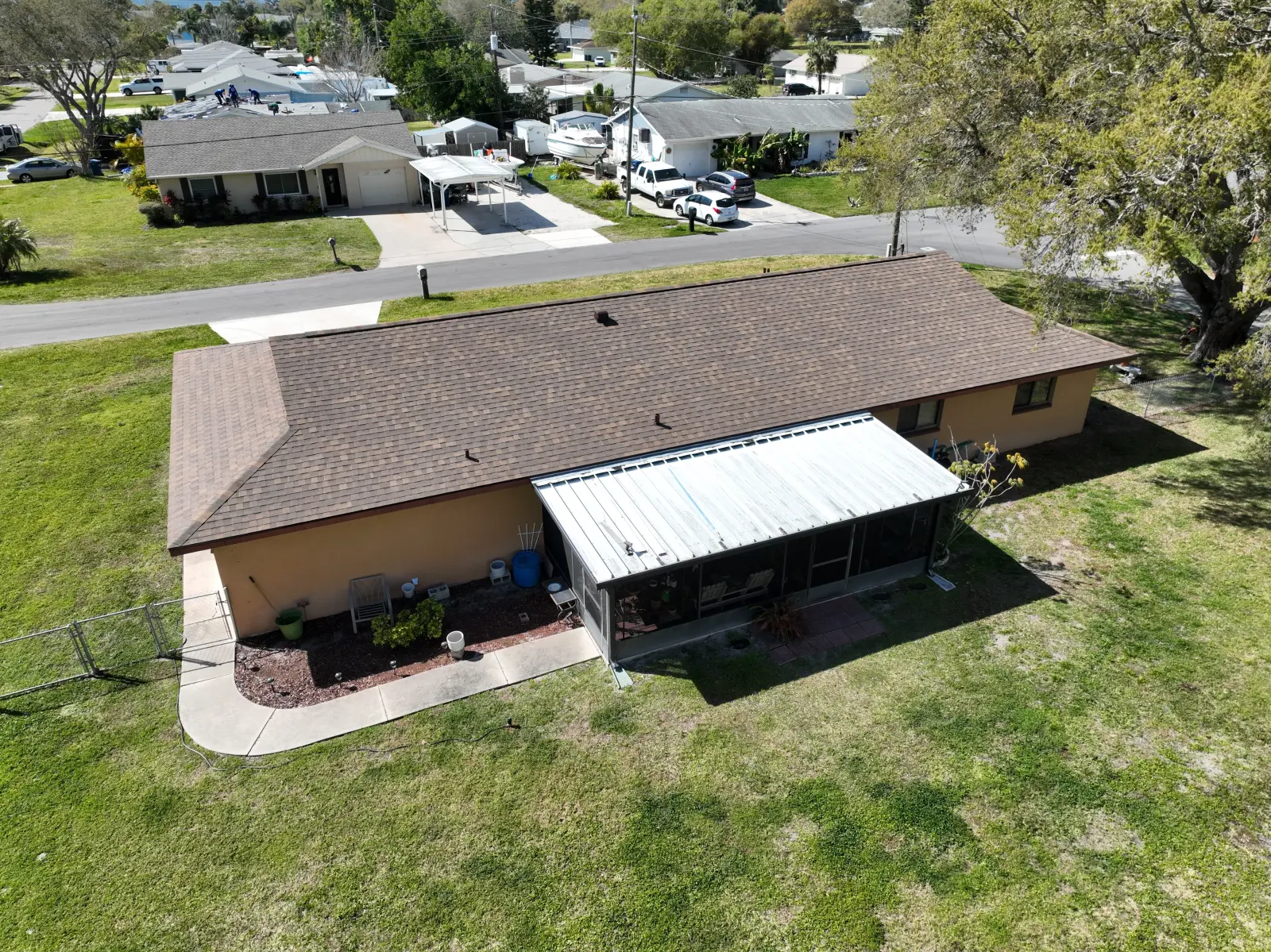
Completed asphalt shingle roof on a single-family Gulf Coast home
Completed shingle roof replacement, February 2024. Florida Gulf Coast.
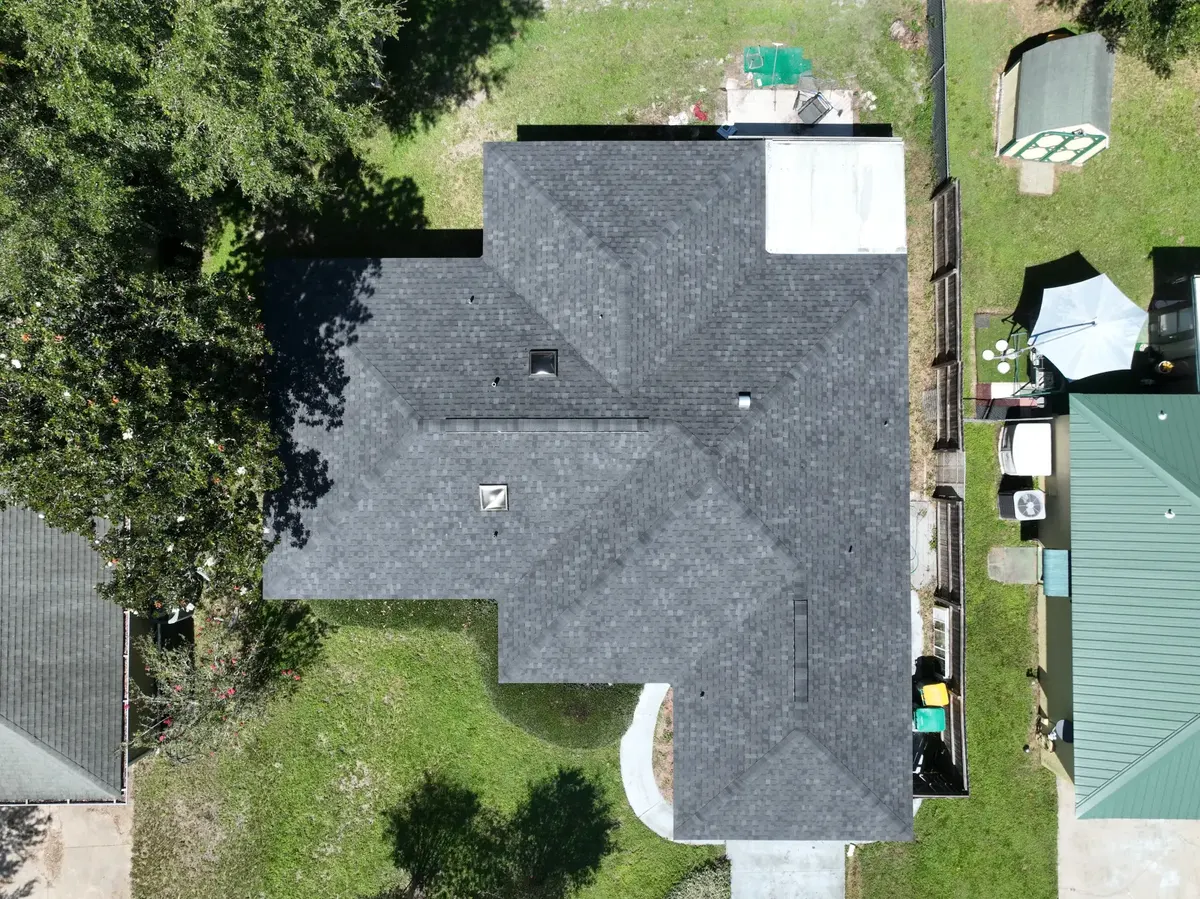
Aerial drone view of a charcoal architectural shingle roof
Drone view of a charcoal shingle roof, August 2024. Manatee County, FL.
Free inspection

Find out exactly how much roof you have left.

A drone flyover, a written photo report, and an honest read on your granule loss, all free. We tell you whether you are years from a replacement, a spot repair away, or near the end. No trip fee, no diagnostic fee, no pressure.

Schedule your free inspection
Reviews

What Florida homeowners say about Coastline shingle work

★★★★★
Knowledgeable firm with quality material options. The installation team was quick and precise. Best of all their price was great. I highly recommend.
Jeff K.Shingle roof replacement, Florida Gulf Coast
★★★★★
Extremely professional and punctual. They provided a detailed estimate upfront with no hidden costs, and the quality of their workmanship is outstanding.
John L.Roof replacement, Florida Gulf Coast
★★★★★
Their team worked really hard, were all super polite and respectful, did a great job cleaning up. Wouldn't even know they were there except for my beautiful new roof!
Kevin F.Shingle roof replacement, Manatee County, FL
FAQ

Common questions about granules in the gutters

How many granules in the gutter is too many?

There is no exact cup measurement, but the pattern matters more than the pile. A light dusting that tapers off, with no bald spots visible on the roof, is usually normal aging. A heavy, steady accumulation, especially paired with shiny exposed-asphalt patches you can see from the ground or after a storm, is the line where it stops being normal. The most reliable way to read it is a close look at the actual shingle surface, which is what a free inspection gives you.

My roof is new and I am already seeing granules. Should I worry?

Almost certainly not. A new shingle roof sheds the loose granules left over from manufacturing and shipping during its first few months and first several rainstorms. It looks like a lot the first time you clean the gutters. As long as it tapers off and does not keep getting heavier month after month, it is the roof settling in, not failing.

Can granule loss be repaired, or do I need a whole new roof?

It depends on how far it has gone. If the loss is localized to a few worn shingles or one slope, a targeted repair often handles it. If the granules are gone across large areas and the roof is well into its second decade, patching becomes throwing good money after bad and a replacement is the smarter call. A free inspection tells you which situation you are in before you commit to anything.

How long does an asphalt shingle roof last in Florida?

Less time than the brochure number, which is usually written for milder climates. An asphalt shingle roof that might run 20 to 30 years up north commonly loses 5 to 10 of those years on the Gulf Coast because of the intense UV, heat, and storms. Heavy granule loss on a roof that is 12 to 18 years old or older is a normal sign that it is approaching the end here.

I saw a surge of granules after a hailstorm. Is that storm damage?

It can be. Hail and hard wind-driven debris knock granules off in concentrated spots on impact, leaving small areas of exposed asphalt that then age faster than the rest of the roof. A sudden jump in granule loss right after a storm is worth documenting. Get a drone photo report on file promptly, because if it is storm damage, the insurance claim window does not stay open forever.

Is the inspection really free?

Yes. The shingle roof inspection, the drone flyover, and the written photo report are free, with no trip fee and no diagnostic fee. You get the photos and an honest read on your roof's remaining life. If it has good years left, we will tell you that plainly. Call (941) 896-7793 or text (941) 345-0072 to schedule.

Not sure if those granules mean trouble? Let us look.

Free drone inspection, written photo report, and an honest answer on how much roof you have left.

Call Text