
★★★★★
"Josh was very thorough diagnosing a hard-to-find leak on a tile roof, after 2 other roofing companies tried but failed to catch the problem. Great work at a fair price."Mark R.Tile leak diagnosis, Florida Gulf Coast
Updated June 2026
Two neighbors get the same storm, the same damage, the same roofer, and two very different checks from their insurance company. The reason is almost always three letters on the policy: ACV or RCV. One pays to replace your roof at today's cost. The other pays what your old roof was worth after years of wear, which can be a fraction of the bill. This page explains both in plain English, walks a real dollar example, and shows you how to recover what you are owed.
Every homeowner policy in Florida settles a roof claim one of two ways, and the difference is enormous. Replacement Cost Value, or RCV, is what it costs to replace your roof right now, at today's labor and material prices, with no deduction for age. Actual Cash Value, or ACV, is that same replacement cost minus depreciation: the value your roof has lost from years of sun, heat, and wear. A new roof and a fifteen-year-old roof cost the same to physically replace, but under ACV the older one is treated as worth far less, so the check is far smaller.
Think of it like a car. RCV is being handed enough to buy the same car brand new off the lot. ACV is being handed what your high-mileage version was worth on the used market the day before it was totaled. The repair bill is identical either way. What changes is how much of that bill the insurance company is on the hook for, and an ACV policy on an aging roof can leave you covering a big chunk out of pocket.
Here is the catch that surprises people: even an RCV policy does not hand you the full replacement cost up front. It pays you the ACV first, holds back the depreciation, and releases that held-back money, called recoverable depreciation, only after the work is actually done and invoiced. So whether your roof gets fully paid for often comes down to a detail buried in your declarations page and on whether you complete the job and submit the paperwork. We document the damage and hand you and your adjuster a detailed, code-compliant estimate, so the number your claim is built on is accurate from the start.
Say a wind event damages a fifteen-year-old shingle roof, and the full cost to replace it today is $20,000. Picture a $2,500 deductible for simplicity. Watch what happens under each kind of policy.
Under an RCV policy: the insurer first calculates depreciation for the roof's age and wear. Say that is $7,000. They pay you the ACV portion now: $20,000 minus $7,000 in depreciation, minus your $2,500 deductible, which is $10,500 to start the work. That $7,000 of depreciation is the recoverable depreciation. Once Coastline completes the roof and submits the final invoice, you send it to the carrier and they release that held-back $7,000. End result: your out-of-pocket is just the $2,500 deductible, and the roof is fully covered.
Under an ACV-only policy: there is no held-back money to recover. The insurer pays the depreciated value once and stops. On the same roof that is $20,000 minus $7,000 depreciation, minus the $2,500 deductible, so roughly $10,500 total, and that is all you will ever get. The remaining $7,000 comes out of your pocket no matter how good the work is or how complete the paperwork. Same storm, same damage, same roofer, and you are $7,000 worse off because of three letters on the policy.
The full cost to replace your roof at today's prices, with no deduction for age. With an RCV policy and the work completed, your out-of-pocket is essentially just your deductible. This is the coverage you want.
Replacement cost minus depreciation for age and wear. An older roof has lost more value, so the check is smaller. An ACV-only policy pays this once and stops, so the rest is yours to cover.
On an RCV policy, the depreciation the insurer holds back at first. You recover it after the work is finished and the invoice is submitted. Non-recoverable depreciation is gone for good and never paid.
In Florida this is usually a percentage of your dwelling coverage, not a flat dollar amount. On a $300,000 home a 2 percent deductible is $6,000. It is often far larger than people expect, so check your policy before a storm.
A decade ago most Florida policies paid replacement cost on the roof. That has changed. Reading these details on your own policy now matters more than ever on the Gulf Coast.
Start by pulling out your policy declarations page and looking for the words "actual cash value," "replacement cost," or "roof payment schedule" in the roof or windstorm section. If you see ACV or a schedule, you know the check will be smaller and you can plan for it. If it says replacement cost, your job is to complete the work and submit the invoice so you recover every dollar of the held-back depreciation. Either way, the claim is only as strong as the documentation behind it.
That is where Coastline comes in. We do a free roof inspection with a drone flyover and a written photo report, then build a detailed, code-compliant estimate your adjuster can work from. We document every slope, every point of damage, and the code-required items a proper replacement involves, so the scope is complete and the number is accurate from day one. To be clear about what we are and are not: we are not a public adjuster, we do not negotiate your claim for a fee, and we never tell you to file a claim that is not warranted. Public adjusters are licensed and governed separately under Florida Statute 626.854. Our role is to give you and your adjuster honest, thorough documentation. For the bigger picture, read our guide on how Florida roof insurance claims work and on what insurance actually covers on a roof.
If your roof is already past the age where carriers pay replacement cost, that affects more than a single claim. A roof too old for coverage can raise your premium or get you non-renewed, which our guide on a roof that is too old for insurance walks through. When the inspection shows it is time, our roof replacement crew handles it with hurricane-rated fastening and a 5-year workmanship warranty, and a fresh roof usually brings your insurance back in line.
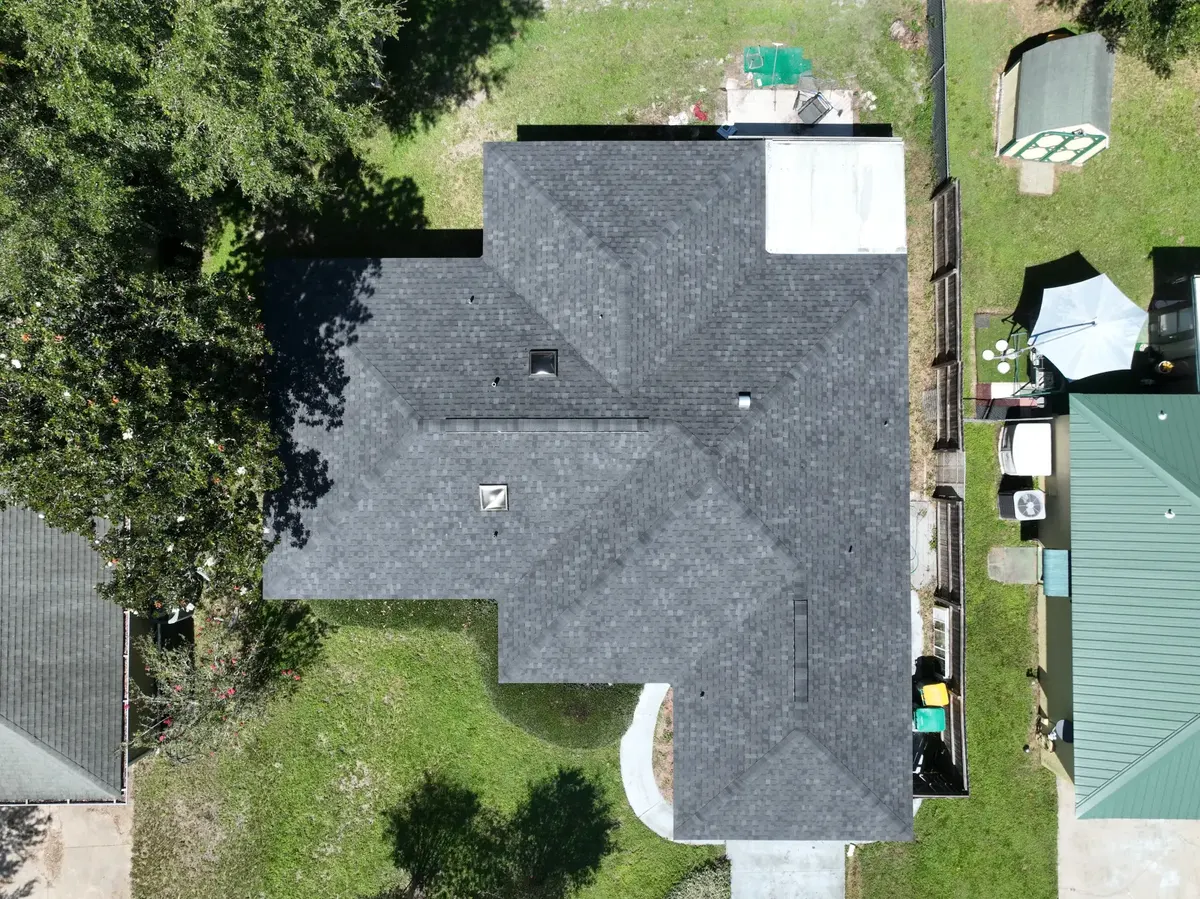
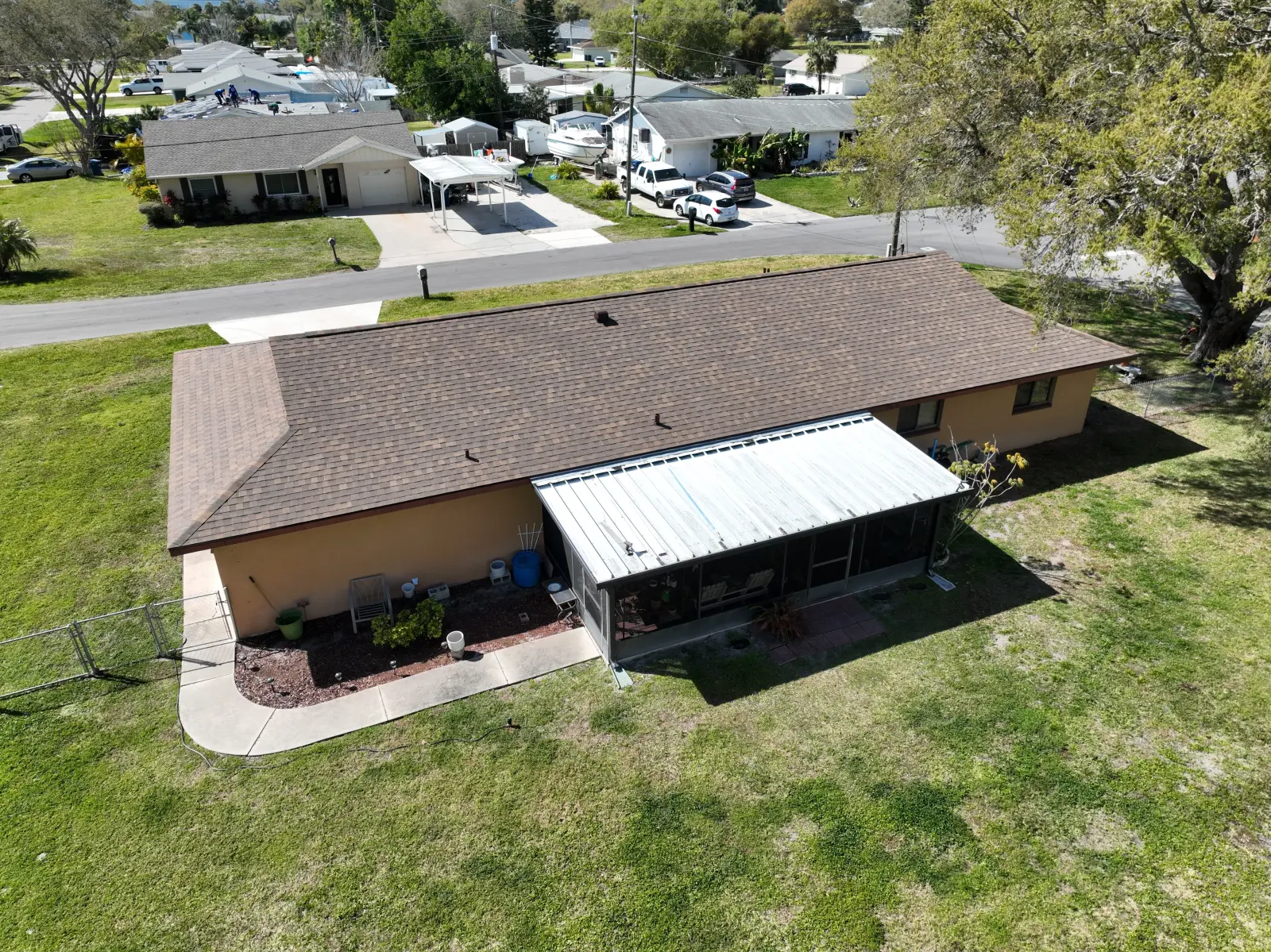
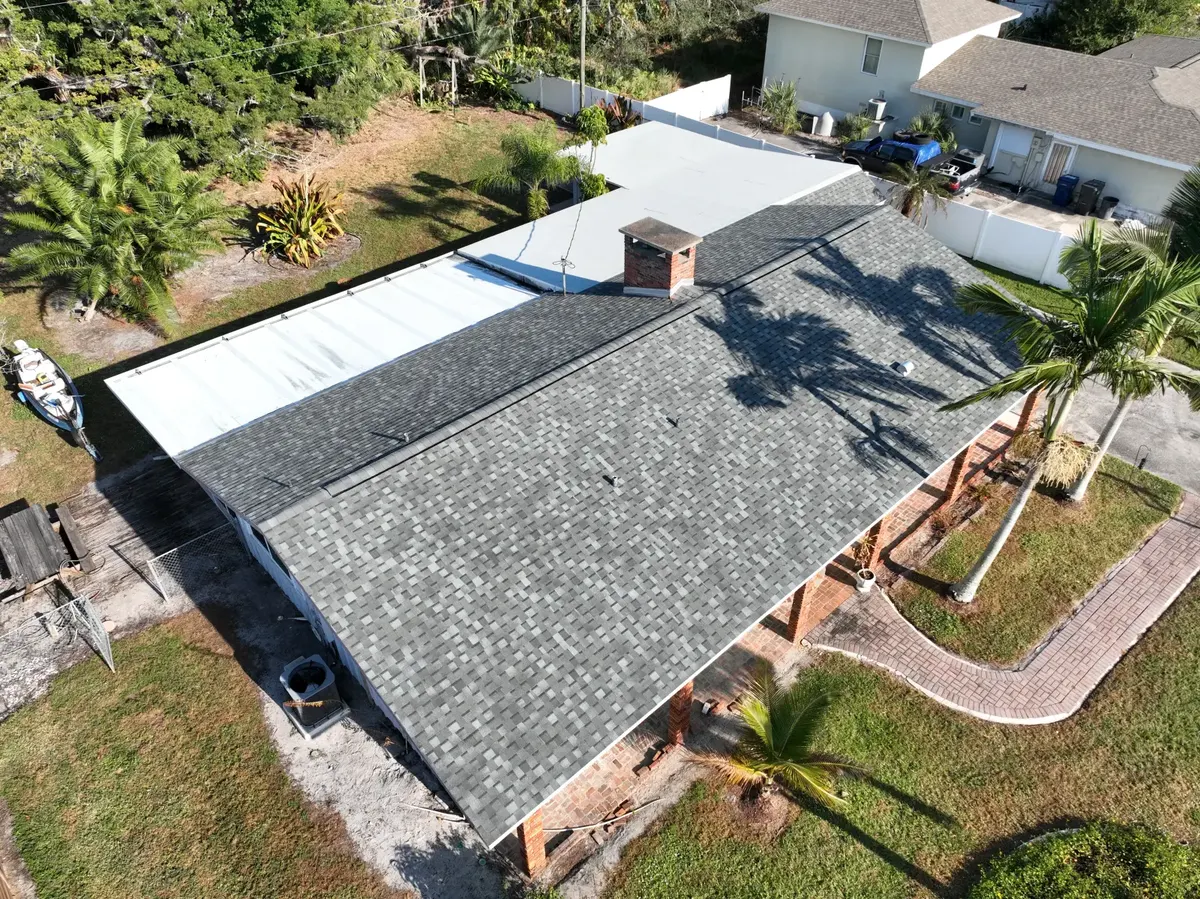
A drone flyover, a written photo report, and a detailed, code-compliant estimate your adjuster can work from, all free. We are not a public adjuster: we document the damage and hand you an honest, thorough scope. No trip fee, no diagnostic fee, no pressure.
Schedule your free inspection"Josh was very thorough diagnosing a hard-to-find leak on a tile roof, after 2 other roofing companies tried but failed to catch the problem. Great work at a fair price."Mark R.Tile leak diagnosis, Florida Gulf Coast
"I chose Coastline mainly due to the excellent customer service and the fact that it is a local company. Other estimates came in lower but they were at least 4 months out. Coastline made my house and my insurance deadline a priority."TL O.Hurricane Ian, insurance, Florida Gulf Coast
"Exceptional and professional service from start to finish. Loved how Josh used his drone to identify cracked and slipped roof tiles and sent us the photos. Photos also taken of completed work."Felicity K.Drone tile inspection, Florida Gulf Coast
Look at your policy declarations page and the roof, dwelling, or windstorm sections for the words "actual cash value," "replacement cost," or "roof payment schedule." Many Florida policies now list the roof separately from the rest of the home. If it is not clear, your agent can confirm in one phone call. It is worth knowing before a storm, not after.
On an RCV policy, the insurer holds back the depreciation amount at first and pays you the depreciated value, the ACV, up front. That held-back money is the recoverable depreciation. You recover it only after the work is completed and you submit the final invoice to the carrier. If you take the first check and never finish the work, that money is forfeited, so completing the job and turning in the paperwork is how you get fully paid.
Because many Florida carriers now write older roofs on an ACV basis or a roof payment schedule. Both deduct for age and wear, so an eighteen or twenty-year-old roof is valued at a small share of what it costs to replace today. The physical replacement bill is the same as a new roof, but the policy only pays the depreciated value, leaving the rest to you.
In Florida the hurricane or named-storm deductible is usually a percentage of your dwelling coverage, commonly 2 to 5 percent, rather than a flat dollar figure. On a $300,000 home, a 2 percent deductible is $6,000 you pay before the carrier contributes. It is often much larger than the standard all-other-perils deductible, so check your declarations page so it does not surprise you.
No. We are a licensed Florida roofing contractor, not a public adjuster, and we do not negotiate your claim for a fee. Public adjusters are licensed and governed separately under Florida Statute 626.854. What we do is document the damage with a drone photo report and provide a detailed, code-compliant estimate that you and your own adjuster can work from. Accurate, thorough documentation is what keeps a claim fair.
Under Florida Statute 627.70132, you have one year from the date of loss to file a new or reopened claim and 18 months for a supplemental claim. Do not wait. Get the damage documented promptly so you have a written record on file. Call (941) 896-7793 or text (941) 345-0072 to schedule a free inspection.
Free drone inspection, a written photo report, and a detailed, code-compliant estimate your adjuster can work from.
Leave your name and number. We typically call back the same day during business hours. Consent to texts is not required.